

New Mexico, United States
Our 10 Day New Mexico Road Trip for Culture & Outdoors
We spent 10 days driving through New Mexico, and I found it to be a deeply transformative place – culturally, mentally, in a nourishing way. From the 19 Native American Pueblos to hiking up to ancient dwellings to the incredibly pivotal history of the atomic bomb to stargazing under internationally designated dark skies to experiencing the extreme heat and dry desert topography that forces you to slow down, be present, and become more attuned to your surroundings. It’s no wonder brilliant minds and artists like Oppenheimer and Georgia O’Keeffe were drawn to this landscape and chose to make homes here.
New Mexico is one of the few places in the world where you can experience such rich, deep cultural heritage alongside these uniquely mountainous desert landscapes.
I’m going to break down each stop, the travel logistics, costs, and exactly what to do and see.
But first, here’s a quick overview of our trip: We started in Albuquerque, then drove out to the Very Large Array before heading to Glenwood for the Catwalk Trail and the Cosmic Campground – home to some of the darkest skies in the world. We made a quick stop in the historic mining “ghost” town of Mogollon, then stationed ourselves in Silver City to explore the Gila National Forest, where you can visit Gila Cliff Dwellings, Mimbres Cultural Center, City of Rocks State Park, and more.
From there, we drove to Las Cruces, the second-largest city in the state – very cute and a perfect launching pad for White Sands National Park. Whew. What a place.
Then we stopped in Truth or Consequences, a town famous for its healing, mineral-rich geothermal hot springs, before lastly basing ourselves in Santa Fe – the state capital and a destination I actually have some mixed feelings about. With Santa Fe as a base, we visited Valles Caldera and Taos. Finishing in Albuquerque, which is one of the most culturally significant cities in the USA.
There is a lot to unpack here. So, let’s get into ALL of it.
Table of Contents
I. Getting There & Around
Flight: We flew nonstop from NYC to Albuquerque on JetBlue, which offers a seasonal direct service from JFK. Again, Albuquerque, the largest city in New Mexico, should not be slept on. But more on that later.
The flight varies between $300 and $600+ per person, plus baggage and seat selection fees. Price depends on the season and how far ahead you book it. JetBlue’s nonstop NYC to Albuquerque runs from April through October.
The return flight, however, is a red-eye, which I couldn’t do. So instead, we took a morning Delta flight with a quick connection in Atlanta.
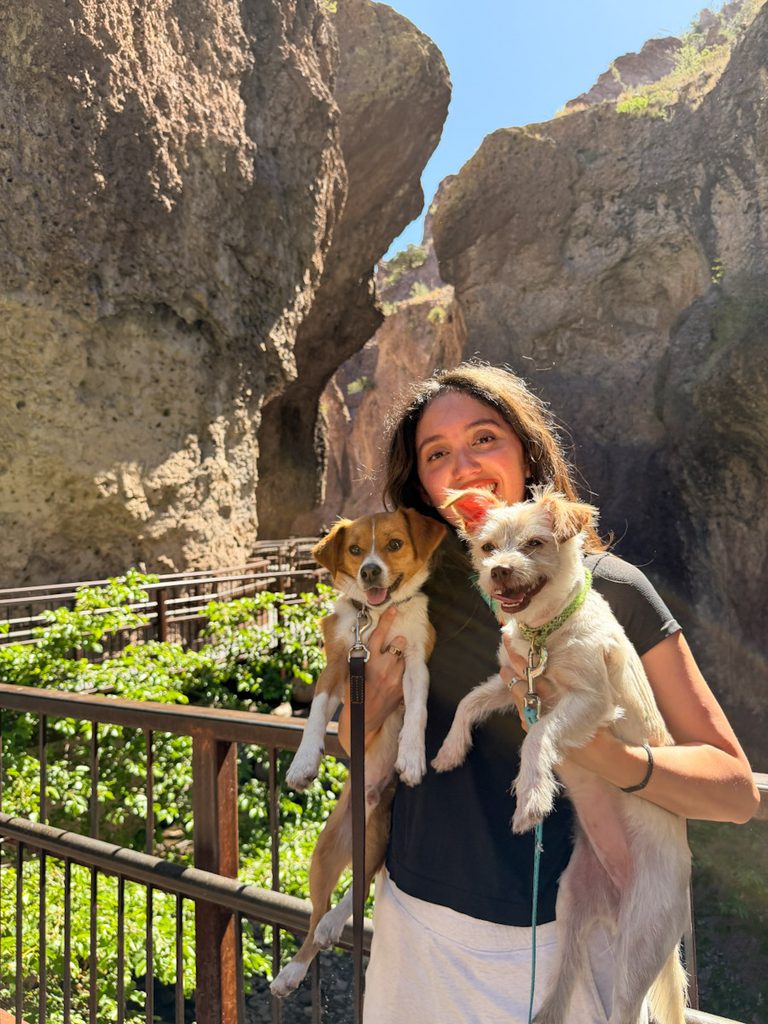
Car: You have to rent a car. New Mexico is a big state; many of the places we visited are remote.
We rented with Avis and prepaid for the car with priority pickup, which ended up saving our behinds. Our flight was delayed and arrived super late. Even though the rental counter had closed at 11:00 p.m., they left our car for us to pick up. It was a lifesaver. Other travelers were unfortunately left stranded without cars because of the hard closing time.
Budget Rent a Car was still open until 1:00 a.m., so that’s another option worth looking into if you have a late arrival. Either way, double-check your rental counter’s closing time if you’re flying late.
As for driving, it was easy and straightforward. The roads are well-kept, and for much of the trip, we practically had the major roads to ourselves. The only busy roads we encountered were in Albuquerque once during rush hour and on the highway between White Sands and Las Cruces around 8:00 p.m. That’s it. No major traffic, potholes, or road issues.
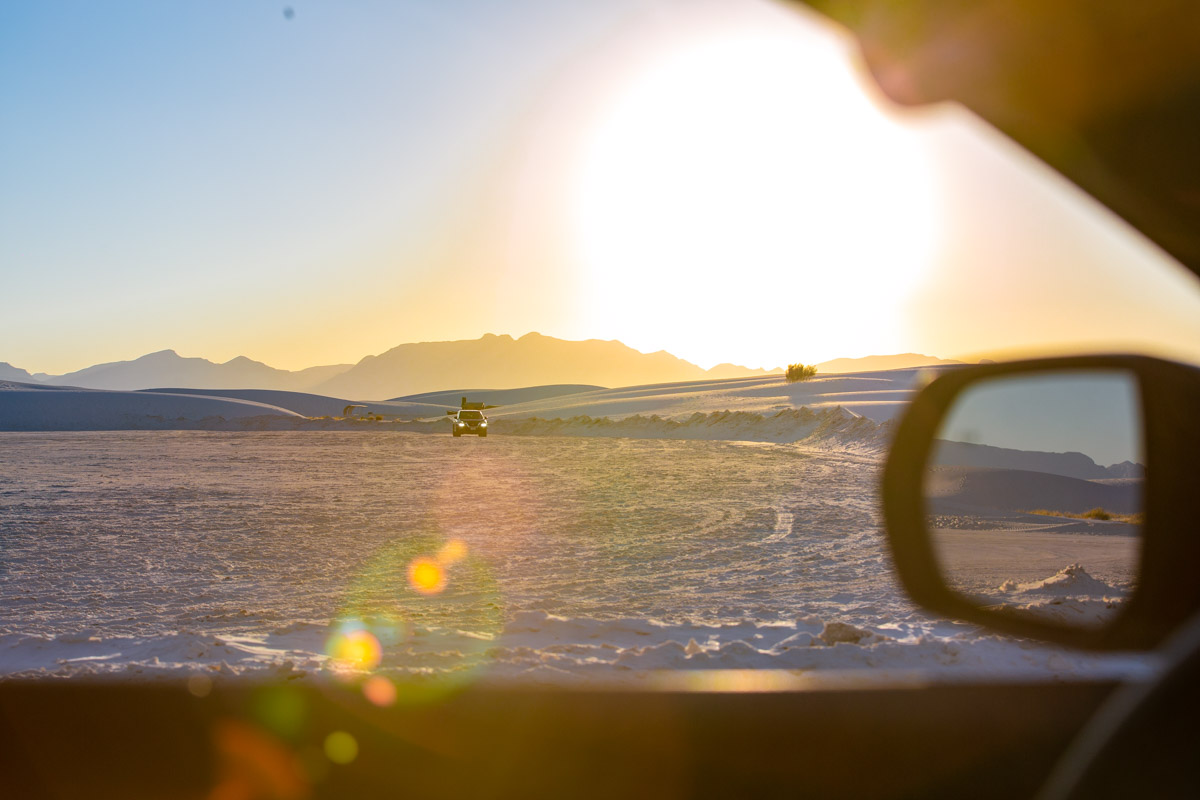
The only strange car experience we had was at White Sands, where some kids were doing donuts and speeding around in their cars. It made us a little nervous, but once they saw us, they left. We moved our car next to another area with vehicles, just to be safe.
Otherwise, driving around New Mexico felt incredibly easy, and we rarely had to pay for parking.
II. Introduction to the State of New Mexico: Fun Facts + Quick History
Before we start the road trip, I want to get you oriented.
Geographically, New Mexico is in the heart of the American Southwest, sandwiched between Arizona and Texas, with Mexico to the south. Albuquerque is the state’s largest city; Las Cruces is the second-largest; and Santa Fe is the capital.
While New Mexico’s history dates back thousands of years, today indigenous heritage isn’t limited to museums. It’s very much alive. New Mexico is home to 19 Pueblos + Navajo and Apache nations. These are sovereign, federally recognized Native American tribes with their own community, traditions, languages, and government. Many of which you can visit on guided tours, archaeological sites, and cultural centers – more on that later.
And when I said New Mexico’s history goes way back? I mean WAY back. For decades, archaeologists believed humans first arrived in North America around 13,000 years ago. But at White Sands National Park, scientists just recently discovered human footprints dating back as far as 23,000 years.
Speaking of national parks, New Mexico is home to two: White Sands and Carlsbad Caverns. And three UNESCO World Heritage Sites. Some states don’t have either national parks or UNESCO World Heritage Sites; New Mexico has 5.
Then the Spanish began invading the land now called New Mexico at the end of the 1500s. For 223 years (the US is 250 years old, for context), from 1598 to 1821, this was Spain.
In between, the Pueblo nations coordinated one of the most successful Indigenous uprisings in North American history: the Pueblo Revolt. This drove the Spanish government out of New Mexico for 12 years and allowed Pueblo communities to restore traditions that, even after the Spanish returned, were preserved to this day.
Then Mexico gained independence from Spain (1821), which meant that the Spanish territory officially became Mexico!
But not for long; many American settlers there didn’t want to give up slavery after Mexico abolished it. So Americans triggered a war and took Texas, New Mexico, and more from Mexico. And this land became a U.S. colony/territory called New Mexico for 62 years before becoming a U.S. state in 1912!
That long period of legal gray authority is where New Mexico gets its Wild West history.
Lastly, somehow, this state also becomes central to World War II and scientific history. Los Alamos, the Manhattan Project, and the world’s first atomic bomb were developed and detonated here in New Mexico. We’ll get into all of that later.
Today, New Mexico is naturally 50% Latino/Hispanic, and it was incredible to experience that, along with its warm, welcoming culture.
Now that you’re caught up! Let’s start.
III. DAY ONE: WESTERN NEW MEXICO. ALBUQUERQUE → VERY LARGE ARRAY → COSMIC CAMPGROUND
Because our flight arrived so late, we spent our first night in a $50 Airbnb in Albuquerque. It was just a room inside someone’s gorgeous home, but honestly, it was perfect for what we needed. Our host was also nice enough to receive a few packages for us ahead of time – things we would need later in the road trip, like dog crates and toiletries.
The next morning, we stopped at Walmart and Sprouts to pick up a cooler, ice, road-trip snacks, and groceries we could cook at our Airbnbs along the way.
And just like that, we were off.
A Very Large Array
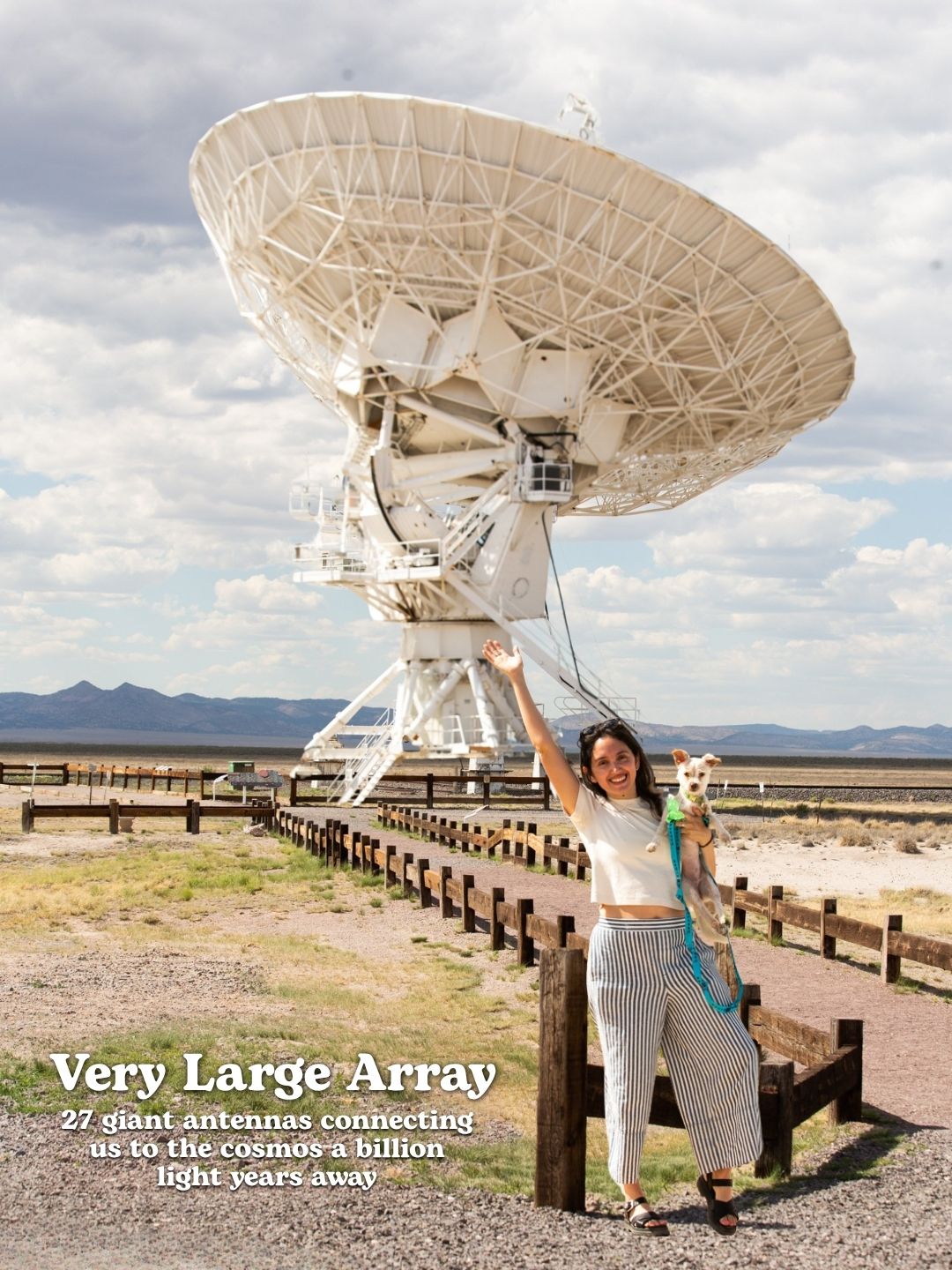
Our first stop was the Very Large Array, or VLA. Most travelers do not venture to western New Mexico, so we had most of these gems all to ourselves. VLA is located just two hours west of Albuquerque; yet most visitors to New Mexico have no idea this hidden gem exists. But we love science, stargazing, history, and really remote landscapes, and this part of New Mexico offers a unique combination.
If you’ve ever seen Contact (1997) or photographs of enormous white satellite-looking dishes scattered across a completely empty landscape, there’s a good chance you’ve seen this place.
The Very Large Array is one of the world’s premier radio astronomy observatories that connects us to the cosmos a billion plus light-years away. Instead of looking at visible light with a traditional telescope, these enormous antennas detect radio waves from space, allowing scientists to study things our eyes and optical telescopes can’t see – from black holes and distant galaxies to newborn stars and clouds of gas and dust.
There are 27 active antennas, and each dish is 82 feet across. But here’s the really cool part: they work together as essentially one enormous telescope. The antennas can even be physically moved along railroad tracks into different configurations.
You can book a tour, walk around the visitor area, and get close to the antennas.
One important thing to know: because these instruments are literally trying to detect incredibly faint radio signals from space, your electronics can interfere with the science. Visitors are asked to turn off phones and other Bluetooth devices, or set them to airplane mode.
Also, you’re at about 7,000 feet in elevation here, even though the landscape looks deceptively flat. Bring water and sun protection.
It is remote. It is weird. It is fascinating. And for us, completely worth the pit stop.
Glenwood, NM
From the VLA, we continued deeper into southwestern New Mexico and based ourselves in Glenwood, a tiny community of only about 300 people at the base of the western Gila National Forest, the Catwalk Trail, the ghost town of Mogollon, the Cosmic Campground and other Gila wilderness gems.
This whole region has remarkably little light pollution. Which brings us to that night.
Cosmic Campground International Dark Sky Sanctuary
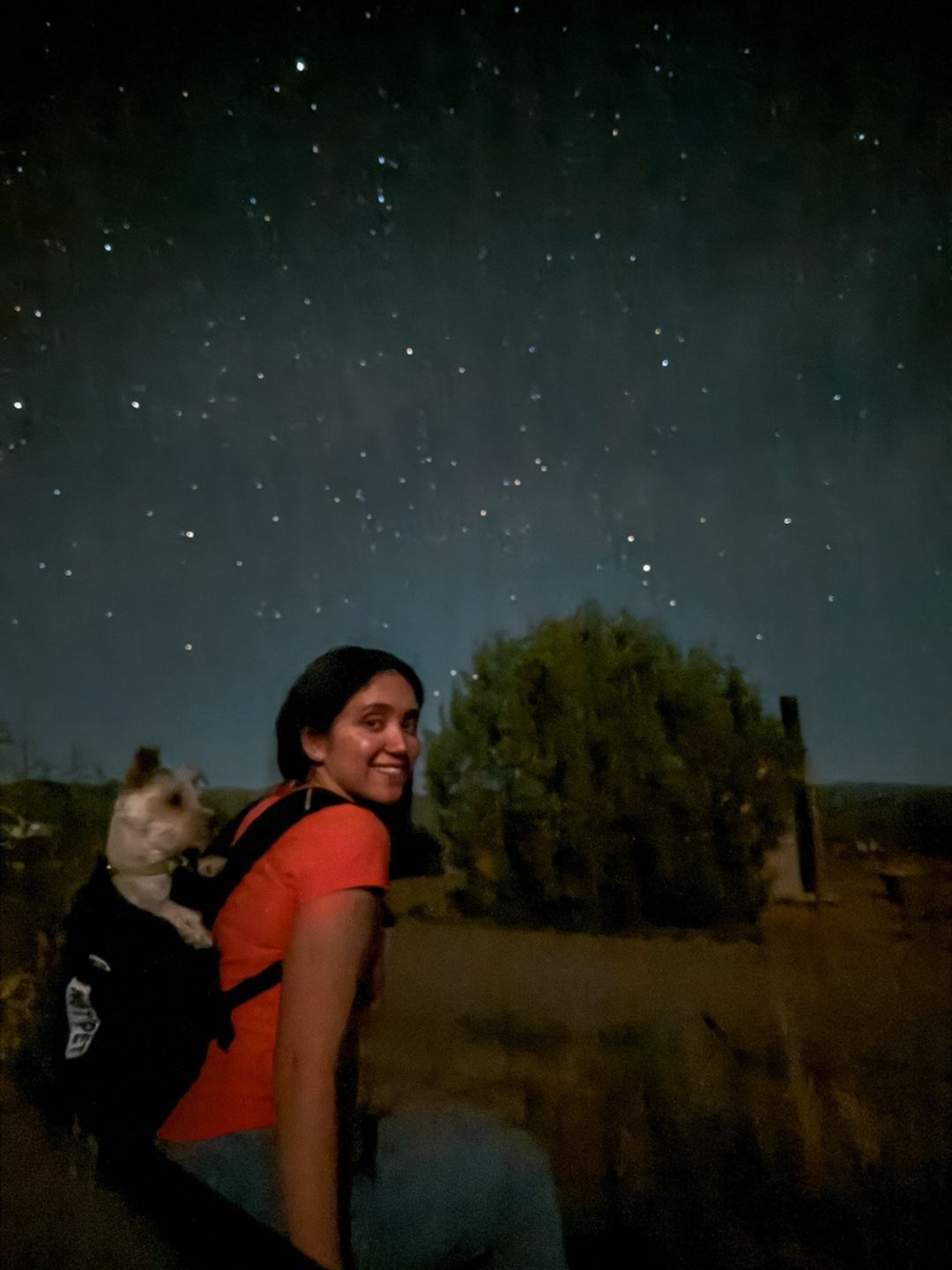
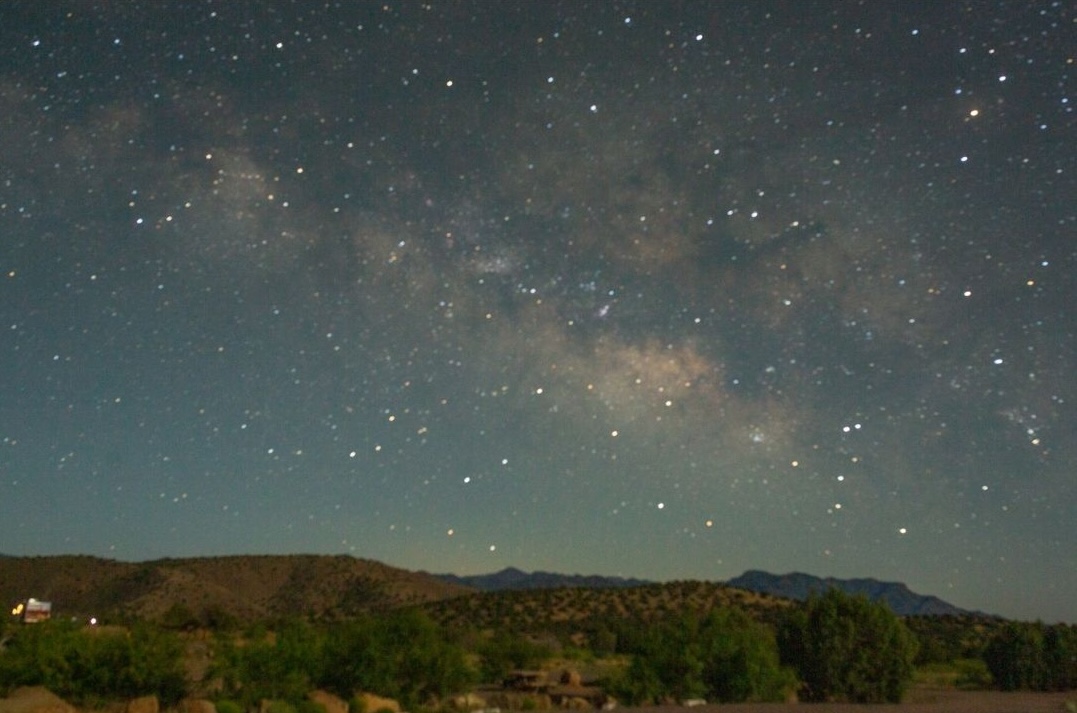
That night, we drove out to Cosmic Campground.
This isn’t just a campground with a nice view of the stars. Cosmic Campground was the first International Dark Sky Sanctuary on National Forest System land – and the first in North America.
If you’re planning your trip specifically for stargazing, check the moon phase before you come. Ideally, you want to visit around a new moon, when there’s little to no moonlight washing out the stars. The darker the sky, the more you’re going to see.
And give your eyes time to adjust. Once you’re in true darkness for 20 or 30 minutes, you start seeing stars that weren’t visible when you first arrived.
One thing that did frustrate us here was that not everyone was particularly observant of dark-sky etiquette. Even around 10:00 p.m., some people were using these huge, bright headlights and flashlights.
So if you come here, please be mindful of that. Avoid unnecessary light, keep your headlights off once you’re settled, and use a dim red light when possible.
We actually felt a little nervous about parking somewhere more isolated, but if you’re comfortable doing that, arriving before sunset is key. Get your bearings while you can still see. Know where you’re parked, where you’re walking, and where everything you need is before it becomes completely dark.
Honestly, I think the best way to experience Cosmic Campground is to camp here overnight rather than drive in and out. Coming and going in a car means headlights, which can disrupt both your own night vision and everyone else’s experience.
But guess what? When we eventually drove the 10 minutes back to our Airbnb in Glenwood, we got out of the car, looked up…and the stars were even brighter there.
And that’s when we realized: if you’re already staying somewhere remote around Glenwood with a clear, unobstructed view of the sky, you don’t necessarily need to go to Cosmic Campground to experience incredible stargazing.
The designation is special, and it’s absolutely worth experiencing if you’re interested in dark skies. But the bigger takeaway for me was just how genuinely dark this entire part of New Mexico is.
IV. DAY TWO: Catwalk → Mogollon → Silver City
Today accidentally became a day of old mining relics, taking us back to New Mexico’s Wild West era and the gold and silver rush.
Catwalk National Recreation Trail
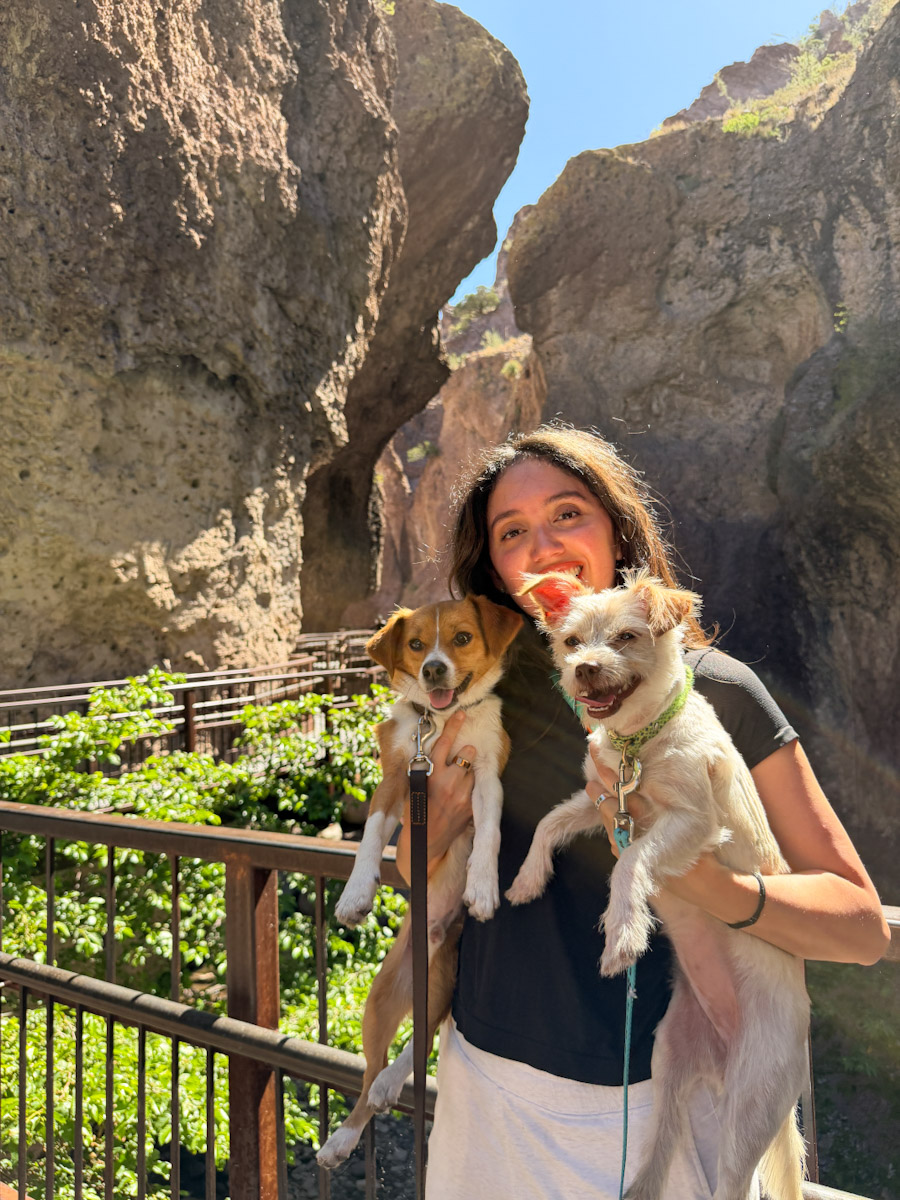
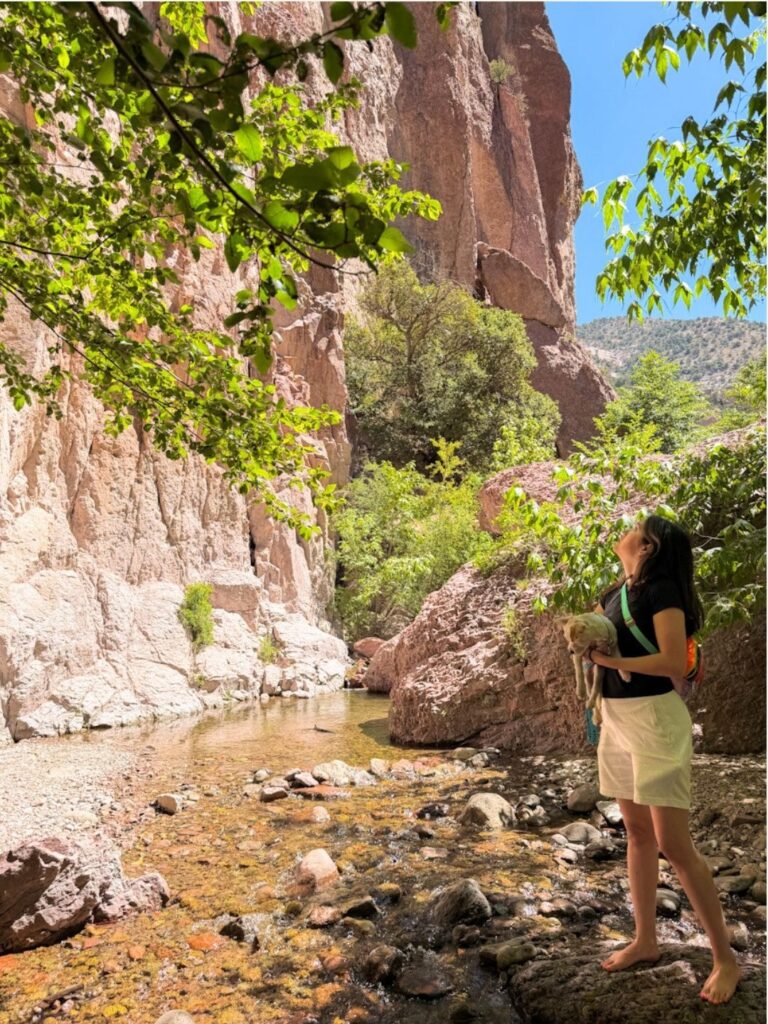
Our first stop was the Catwalk National Recreation Trail, just 5 minutes from our Airbnb, located along Whitewater Canyon in the Gila National Forest.
This is such a unique little hike. You’re walking through a narrow canyon surrounded by massive volcanic rock walls, with Whitewater Creek running beneath you. And eventually, the trail takes you onto the actual “catwalks” – elevated metal walkways suspended above the creek and along the canyon walls. But why are they here?
Gold and silver were discovered in the Mogollon Mountains in the late 1800s, and in 1893, a mill was built near what is now the Whitewater Picnic Area to process ore coming down from the mines. The problem was that they needed power.
So workers built a pipeline running several miles up Whitewater Canyon to carry water to the mill’s generators. The original pipeline is long gone, but the route it followed eventually became the Catwalk. In the 1930s, the Civilian Conservation Corps rebuilt it as a recreational attraction for the Gila National Forest.
So you’re essentially hiking along a piece of old mining infrastructure that nature has slowly reclaimed.
You have the creek, little pools of water, narrow passages between these towering canyon walls, bridges, and the elevated metal catwalks themselves.
The main Catwalk portion is relatively easy. Sneakers were perfectly fine for us, and dogs are allowed on leash. Eventually, however, the trail becomes much rockier and more of a scramble – and that’s where we decided to turn around. But if you have the time and proper footwear, you can continue farther into the canyon toward additional bridges and swimming areas.
While the Catwalk tells the industrial story of this canyon, humans were living and moving through this landscape long ago. This broader region is also part of the ancestral homeland of Apache peoples.
Mogollon Ghost Town
Accidental next stop: the ghost town of Mogollon. Located literally just off the road from Catwalk Trail.
But first, getting there is an experience in itself. The road climbs into the mountains and becomes steep, narrow, and very curvy. Eventually, tucked into this canyon, you arrive at a former historic mining town, now considered a ghost town, although a handful of people do still live here.
In the late 1800s, Mogollon became one of the richest mining towns in the West after gold and silver were discovered in the surrounding mountains. I can’t imagine the stories here. What was it like for the people who lived in this tucked-away, remote mountain town that made itself from the ground up around mining? At its peak, somewhere between 3,000 and 6,000 people lived here. Mining continued, on and off, well into the 20th century.
Today, much of that population is gone, but the town itself hasn’t disappeared.
You can still walk down the old main street past a couple of historic wooden and adobe buildings surrounded by these enormous mountains. There’s a small mining museum, a shop, a café, and a tiny few other businesses.
Sadly, we came when a lot of places were closed. Everyone we did meet was incredibly nice, and it was cool getting to physically walk through an old Wild West mining town. But I don’t think I would make the long, winding detour here if you’re short on time unless you’ve checked what’s actually open first.
Most visitor businesses operate seasonally, primarily on weekends from roughly May through October.
And from Mogollon, we got back in the car and continued toward Silver City, our base for the next part of the trip – and our gateway into the most popular part of Gila National Forest.
V. DAY THREE: CLIFF DWELLINGS → MIMBRES → CITY OF ROCKS → WHITE SANDS
This was probably my favorite day of the entire road trip. We squeezed so much out of this day, but somehow it didn’t feel like we were just checking things off a list. It was one of those unforgettable travel days where one interesting place just kept leading us to another.
We left Silver City in the morning and drove straight toward the Gila Cliff Dwellings National Monument.
Gila Cliff Dwellings
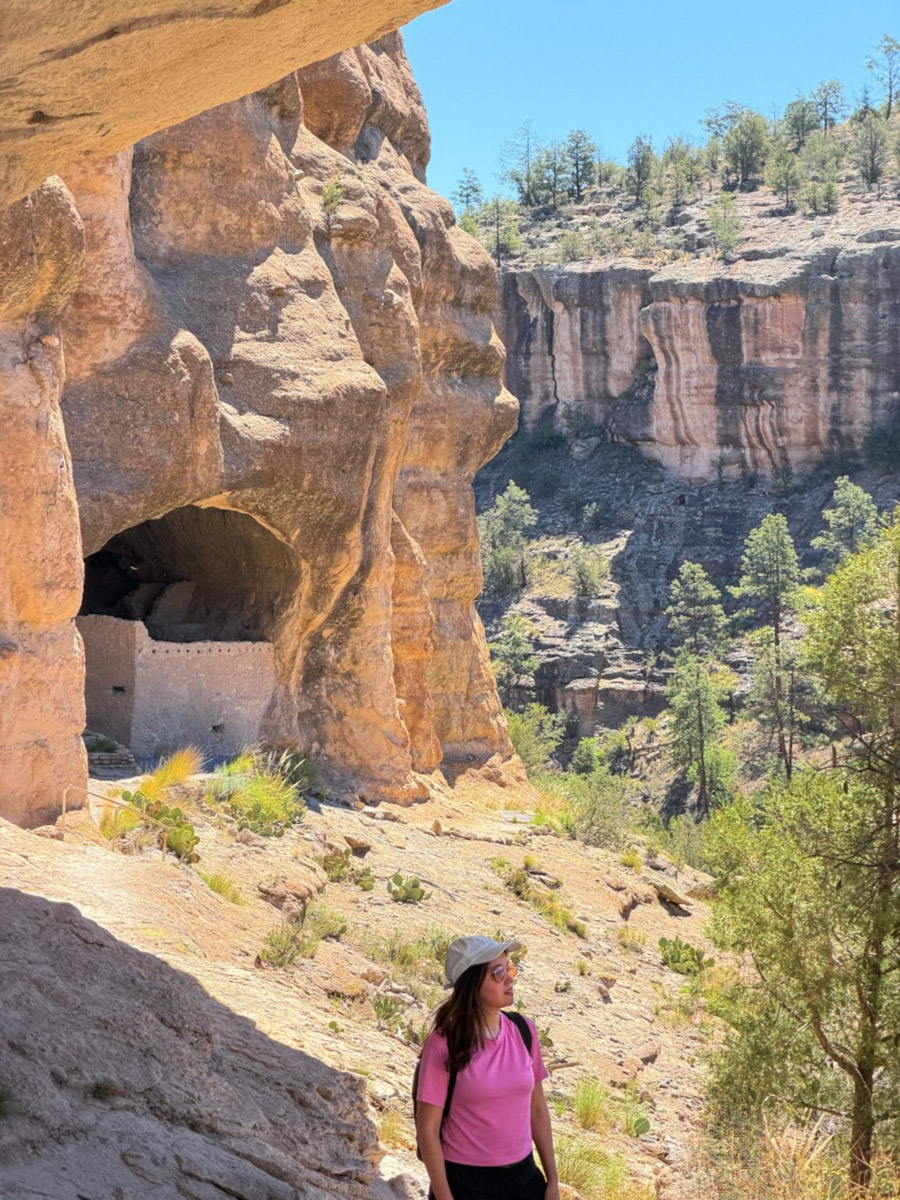
There are two main routes you can take from Silver City to the Gila Cliff Dwellings.
First, we went up steep, narrow, winding Highway 15, which takes you directly through the mountains and ancient volcanic calderas. You pass tall trees, especially pines, indicative of a different climate and soil topography, unlike much of New Mexico.
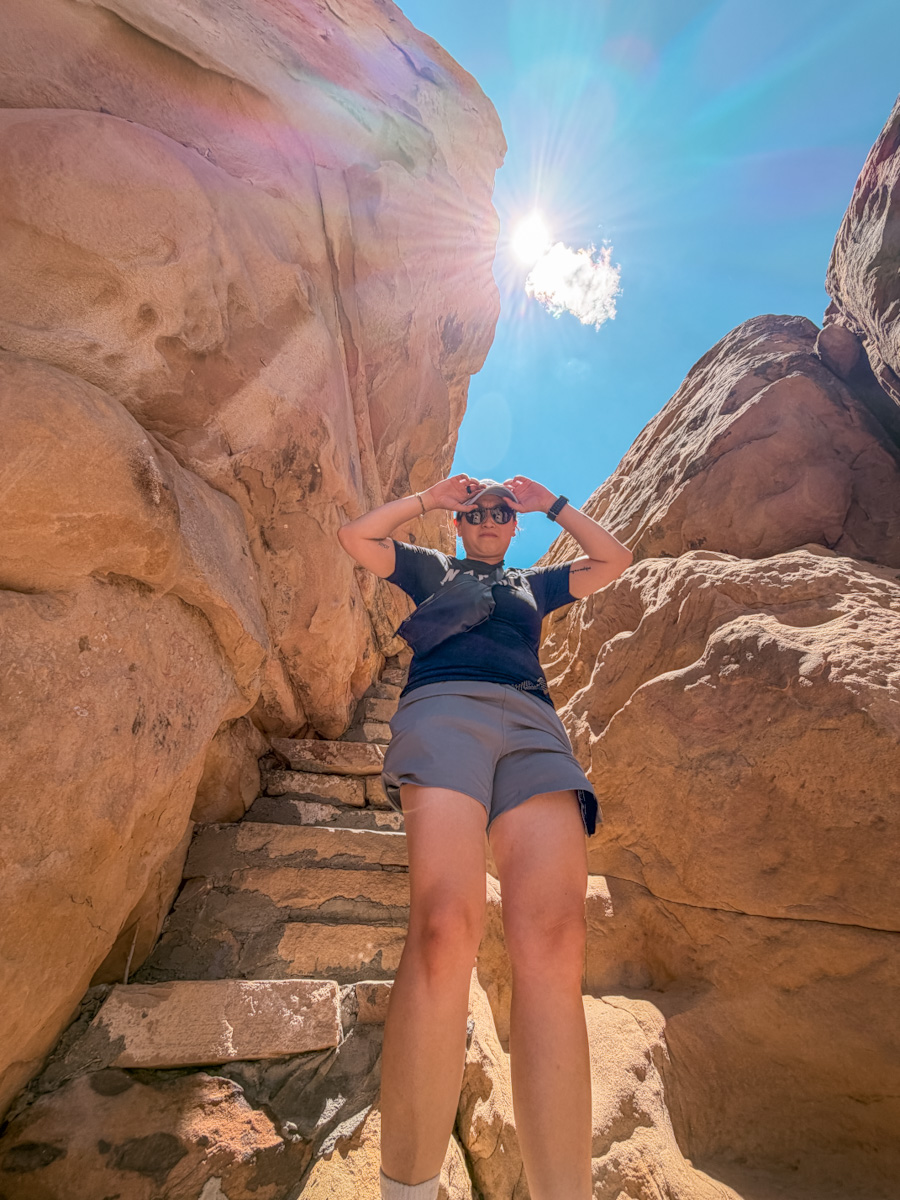
Eventually, we arrived at the Gila Cliff Dwellings, built more than 700 years ago by the Tularosa Mogollon people, who constructed rooms inside natural caves high above the canyon floor.
The hike is only about a one-mile loop, but you’re climbing roughly 180 feet with rocky terrain and uneven stone stairs, about half of it in the hot sun, so give yourself at least an hour and a half round trip. Bring water and wear sturdy shoes.
Here, you’re standing inside homes built into these caves more than seven centuries ago, looking out over this massive wilderness, and trying to imagine what daily life looked like in people’s homes overlooking a gorgeous view from the caves to the green and rocky red mountains.
If you’re traveling with a dog, pets aren’t allowed on the cliff dwelling trail, but there are complimentary kennels available near the trailhead on a first-come, first-served basis.
Gila Hot Springs (Town + Actual Springs)
This entire region has a fascinating volcanic history, which also means there are natural hot springs scattered throughout the Gila.
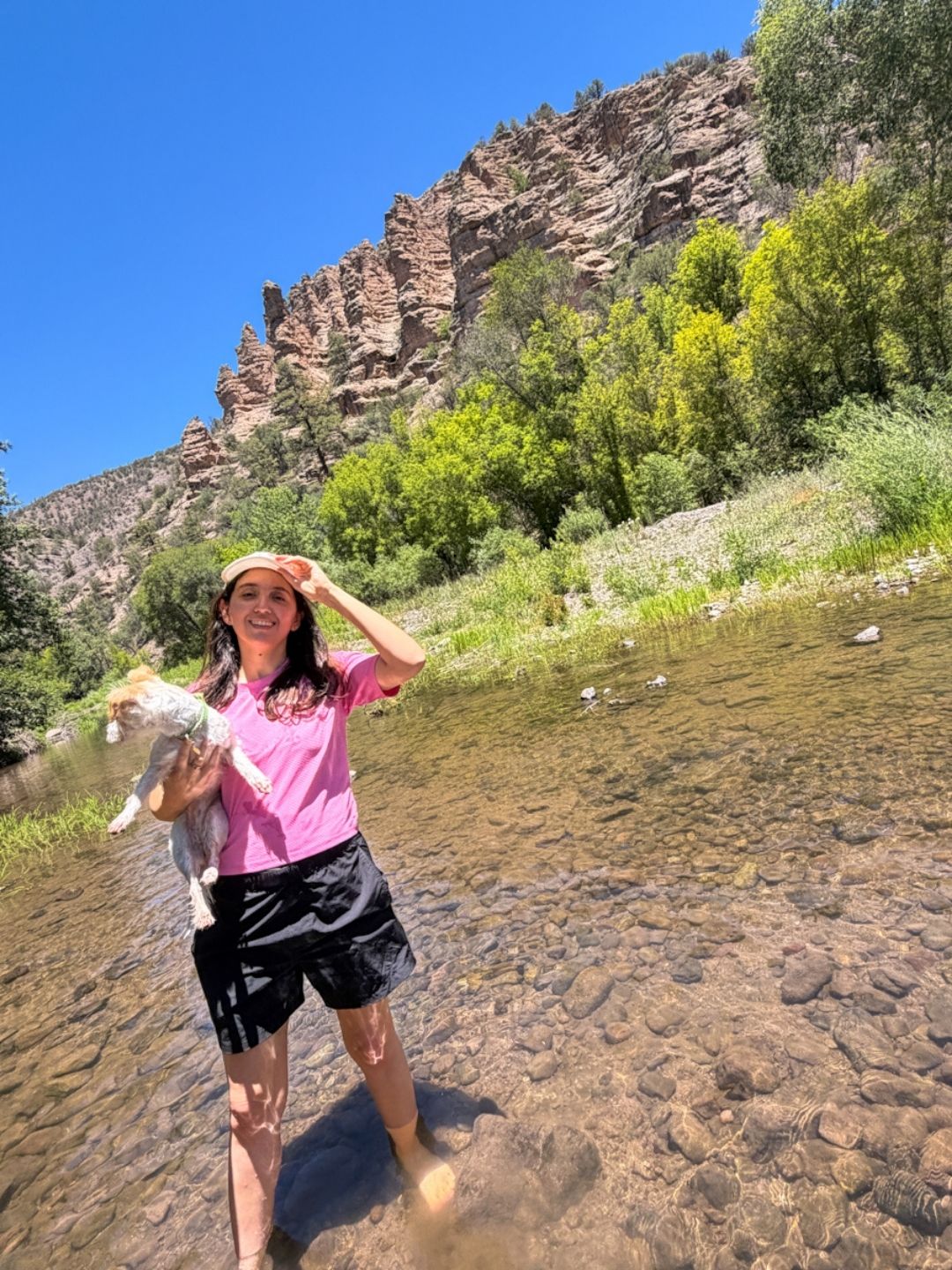
There’s actually a natural hot spring called Lightfeather Hot Spring very close to the Gila Visitor Center. And we also drove a few miles to the tiny community of Gila Hot Springs to explore a hot spring spot along the river, located at the end of this little lodging and ranch property. This wasn’t really a swimming place. We took off our shoes, put our feet in the river, and just sat there for a while.
The water was lukewarm, neither hot nor cold, but the setting was beautiful. You’re sitting in this river surrounded by towering canyon walls with the water flowing around you.
And then we headed south.
The Amazing Alternative Road We Accidentally Found
Instead of coming back down the same way we came on Highway 15, we accidentally ended up taking Highway 35 through the Mimbres Valley. It was incredible. Flatter, calmer, and far less intimidating. And also completely by accident, it brought us through several places that became highlights of the day.
The first was Mimbres.
Mimbres Cultural Heritage Site
We stumbled upon the Mimbres Cultural Heritage Site when we saw a sign for it. We promptly slowed down, turned, and decided to check it out. It turns out, we had arrived right around their closing time. But one of the volunteers was incredibly kind and not only let us in, she gave us an entire guided history tour!
I was deeply touched by this place. After physically walking through the Gila Cliff Dwellings earlier that morning, we were now learning much more about the broader Mimbres culture and the Indigenous history of this region before European colonization.
The people working here are volunteers who genuinely care about keeping these stories alive and accessible. There was also a group of students studying here during our visit, and the site has been connected to archaeological field schools and student research for decades.
What a gem.
City of Rocks State Park
Highway 35 eventually became Highway 61, and it was the gift that kept on giving.
We passed La Esperanza Vineyard and Winery, this adorable little family-run vineyard tucked just off Highway 61 that seemed to appear out of nowhere in the desert.
And then we came across City of Rocks State Park – an incredibly easy pit stop. You can literally drive through the park, stop wherever something catches your attention, explore for a bit, and continue on your way. These enormous volcanic rock formations rise from the Chihuahuan Desert like buildings, with narrow pathways between them that look like streets in a stone city. But they’re completely natural. They’re the eroded remains of an enormous volcanic eruption around 35 million years ago.
Highway 61 still wasn’t finished with us just yet. Just down the road from City of Rocks is Faywood Hot Springs, a natural geothermal hot springs resort.
I was so bummed we didn’t have time to stop! At this point, we were racing the clock because we had somewhere very important to be for sunset.
This whole drive was also just gorgeous, with Cooke’s Peak towering over the landscape – a dramatic, pointed mountain that looks like a giant arrowhead rising out of the desert.
Las Cruces (Check-in)
Eventually, Highway 61 brought us toward US-180, and from there we continued toward Las Cruces. We checked into our Airbnb in Las Cruces, the second-largest city in New Mexico. And I immediately liked it.
It’s quiet and laid-back, almost sleepy, but you can still feel this vibrant, creative energy underneath it – art, local businesses, university life, and this very down-to-earth, small-city feel.
We dropped off our things, got back in the car, and drove for about 50 minutes toward one of the places I had been most excited to see on this entire trip.
White Sands National Park
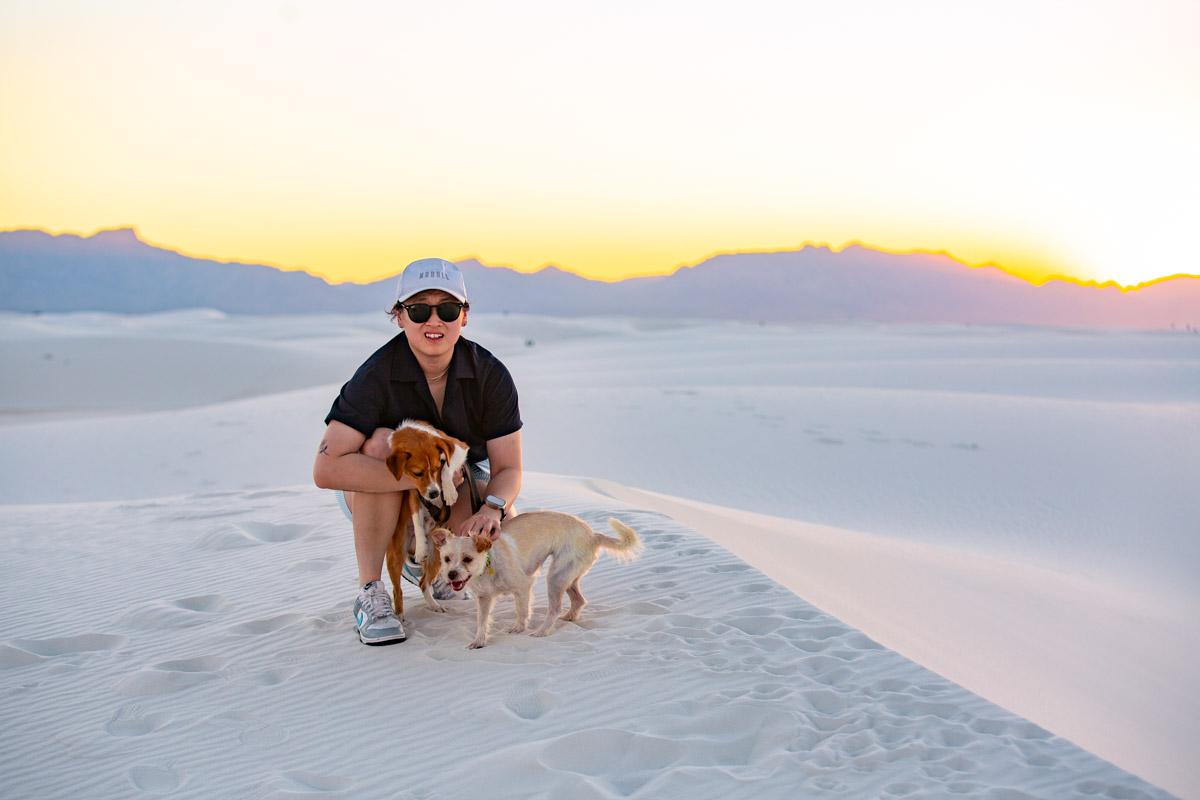
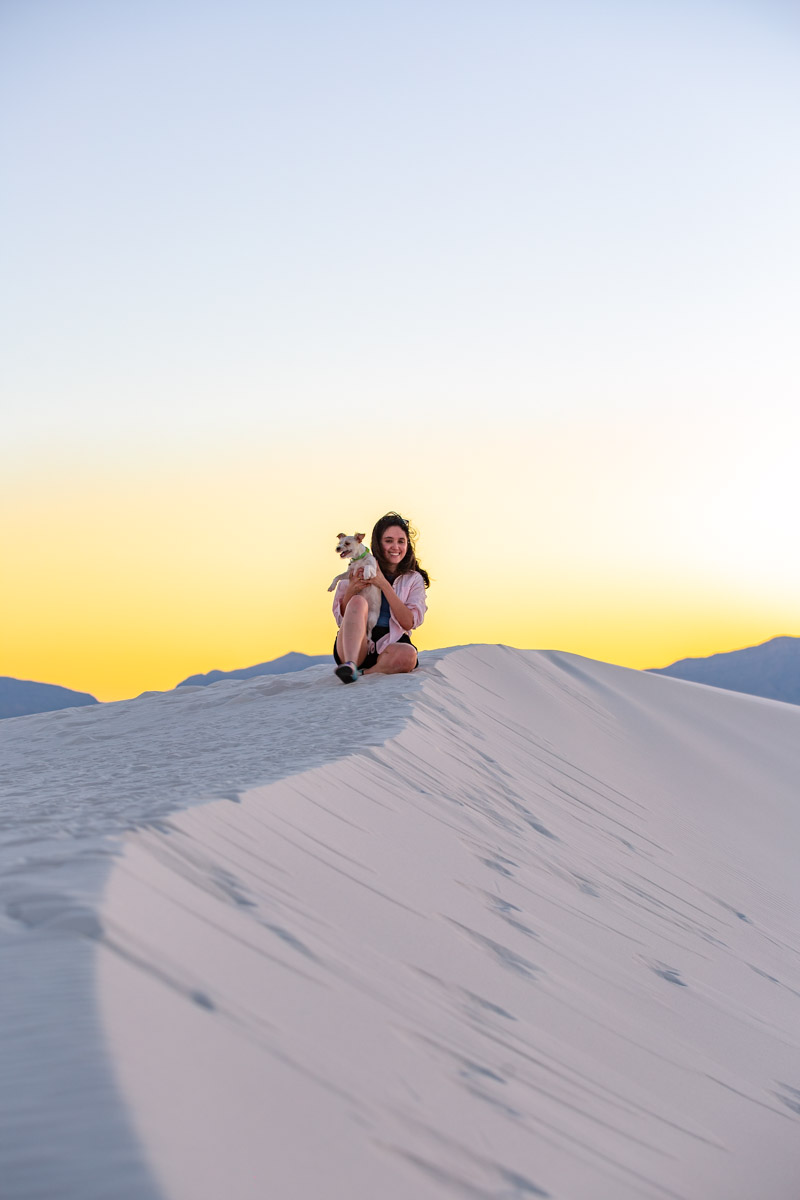
Whew. What a place.
You drive into what looks like an endless landscape of brilliant white dunes. It almost feels like Antarctica – except what looks like snow is actually sand; you’re standing in the Chihuahuan Desert, and the air is dry and incredibly hot.
White Sands contains the largest gypsum dunefield on Earth – about 275 square miles of white gypsum dunes. And experiencing the park is surprisingly easy.
There’s essentially one main road, Dunes Drive, that takes you eight miles into the dunes. You drive in, choose different places to stop and park, and then simply walk out and explore the dunes.
You can hike. You can picnic. You can even buy or rent a sled and literally sled down the dunes. Or you can do what we mostly did: drive around, stop whenever the landscape looks irresistible, take off our shoes, and wander.
And I highly recommend coming later in the day, especially during summer. Not only are you avoiding the worst of the midday heat, but sunset completely transforms this place.
The white dunes start reflecting pinks, purples, and blues. The mountains turn into silhouettes. And don’t immediately leave once the sun disappears. Stay for dusk. That transition from sunset into blue hour was one of the most beautiful moments of our entire trip.
Why Is White Sands White?
Millions of years ago, this area was covered by a shallow sea that left behind huge deposits of gypsum – the mineral that makes White Sands white.
Over time, rain and melting snow carried that gypsum down from the surrounding mountains into this basin, where it had nowhere to drain. An enormous Ice Age lake formed here, and when it eventually dried up, it left behind gypsum crystals.
Wind and water slowly broke those crystals down into the white sand we see today.
And surprisingly, there’s still water underneath the dunes. That moisture helps hold the sand in place – which is part of why this massive dunefield doesn’t simply blow away.
The White Sands Footprints That Changed Our Understanding of Human History
This place has also helped completely change what we thought we knew about when humans arrived in North America. For decades, the dominant archaeological theory placed the arrival of humans in North America at roughly 13,000 years ago.
But recently, scientists discovered fossilized human footprints at White Sands dating back as far as roughly 23,000 years. That almost doubles our original theory! And it means people were walking across what is now New Mexico during the Ice Age, alongside mammoths, giant ground sloths, ancient camels, and other enormous Ice Age animals. Wow.
And back then, this landscape looked completely different. Instead of an endless white desert, humans were walking along the shores and wetlands surrounding Lake Otero.
One Important White Sands Tip
White Sands National Park sits beside the White Sands Missile Range, which is still an active military testing facility.
Because of missile testing, the park and sections of Highway 70 can occasionally close temporarily. So check for scheduled closures before you drive out here, especially if you’re trying to time your visit for sunset.
And because this is an active missile-testing area, unexploded or unidentified debris can occasionally be found in the broader region. If you ever see anything suspicious, don’t touch it or pick it up. Report it to park staff.
There’s also a visitor center near the entrance with exhibits, a film, bookstore, gift shop, and information about the park.
VI. DAY FOUR: LAS CRUCES → TRUTH OR CONSEQUENCES → SANTA FE
After yesterday’s marathon, today was intentionally much slower.
Las Cruces, NM
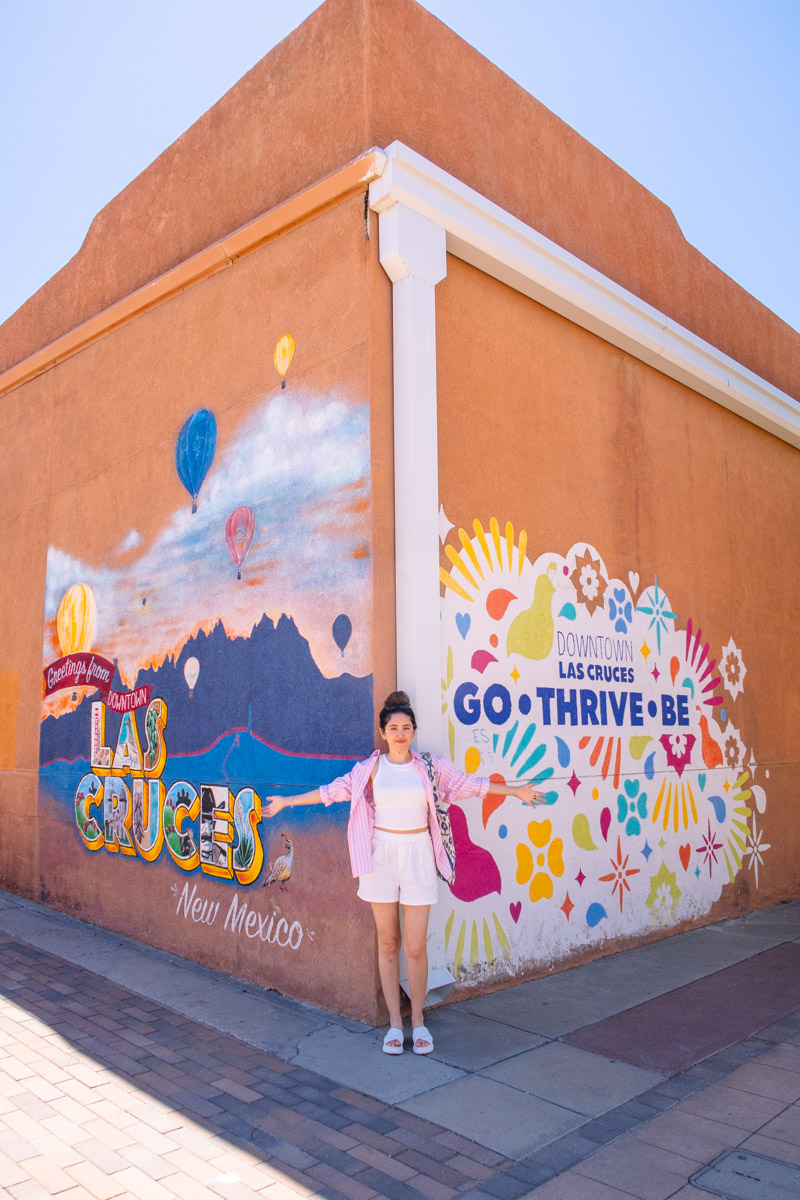
We spent the morning actually exploring Las Cruces, the second-largest city in New Mexico, which I really enjoyed. It’s laid-back and quiet, but there’s this lovely little creative community here of independent bookstores, cafés, local artists, and small shops.
We started in an historic old town, aka Mesilla, right outside downtown Las Cruces. It is definitely touristy, but cute, with historic adobe buildings surrounding an old plaza, little shops, and restaurants.
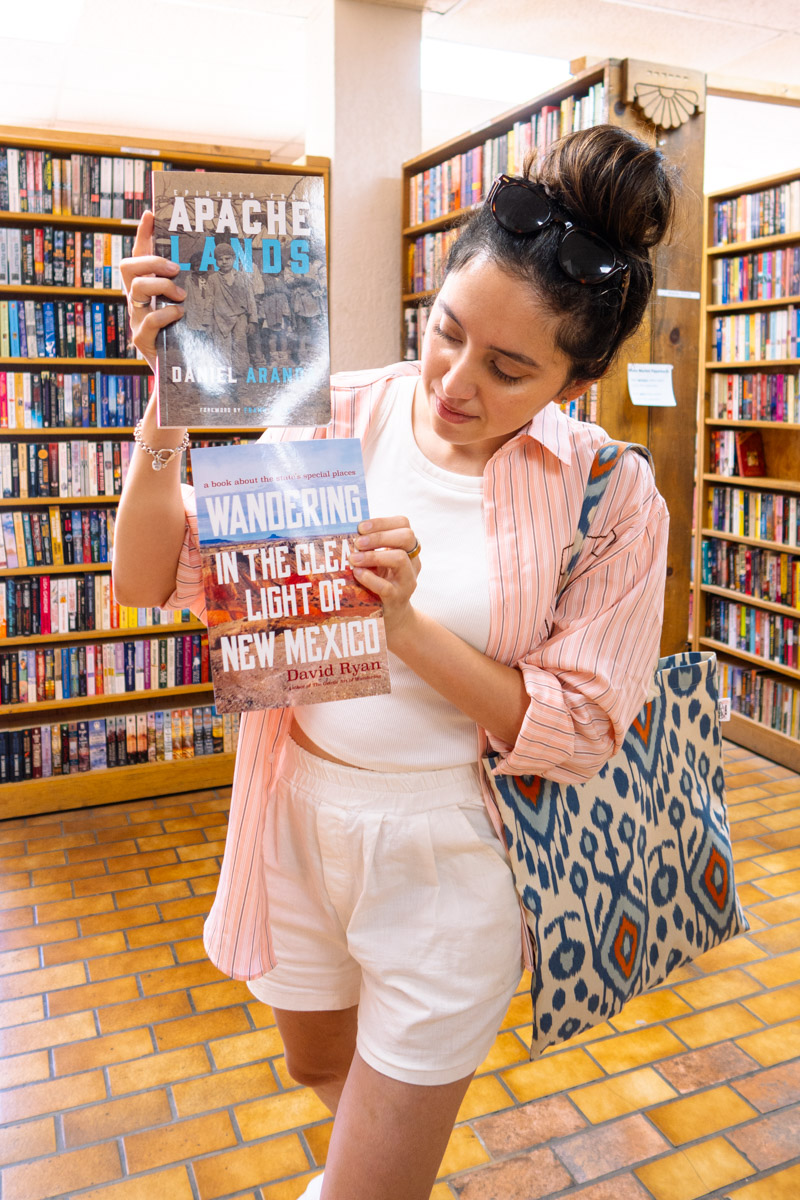
We stopped at Bowlin’s Mesilla Book Center, where I found some great books about New Mexico that I hadn’t come across elsewhere. Then we popped into Old Barrel Tea Company, a New Mexico-based tea shop right on the plaza.
After Old Town/Mesilla, we headed into downtown Las Cruces, around Main Street. We stopped at Grounded, a café and local hangout, and browsed COAS Books, this huge independent bookstore where you could easily lose an hour. Here is where I found my FAVORITE travel guide on New Mexico, better than any Lonely Planet or YouTube: Wandering the Clear Light of New Mexico.
But one of my favorite finds was Mew + Company. It’s this beautiful little artist-owned shop filled with a really well-curated collection of art, handmade goods, crafts, gifts, and boutique pieces. The owner is an artist herself, and you can browse her New Mexico-inspired art.
Then we got back on the road and headed north toward a town with possibly the strangest name in New Mexico:
Truth or Consequences, NM
Yes. That’s actually the name.
The town was originally called Hot Springs, for obvious reasons. But in 1950, the popular radio show Truth or Consequences challenged an American town to rename itself after the show, and Hot Springs, New Mexico, actually did it.
Today, Truth or Consequences (aka T or C), as you’ll hear people call it, is this sleepy little hot-springs and art town along the Rio Grande. A lot of the town felt almost dead while we were there. But there are galleries, little shops, cafés, historic bathhouses, and, most importantly, the natural geothermal mineral water that originally put this place on the map.
We found an amazing pet sitter here, dropped off our dog, and spent the afternoon at Riverbend Hot Springs.
Riverbend Hot Springs
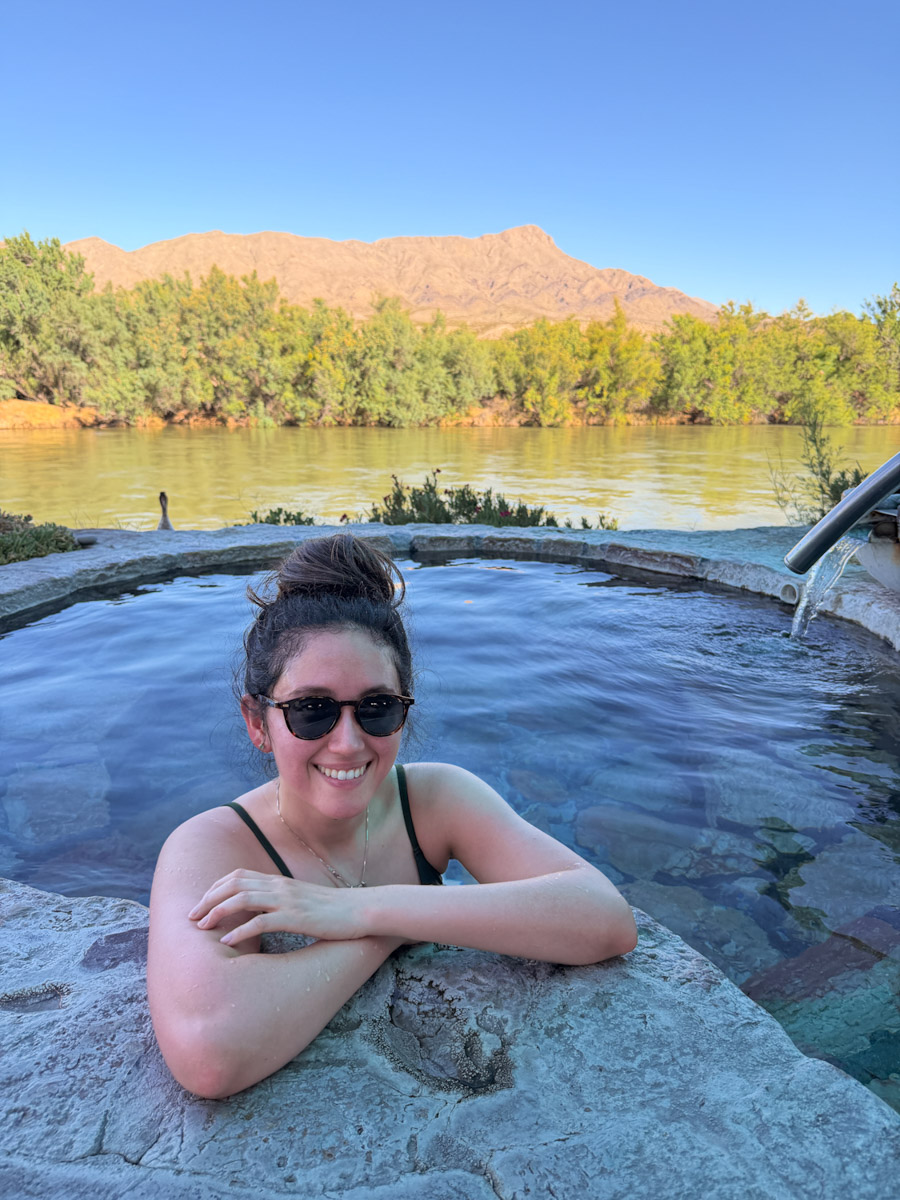
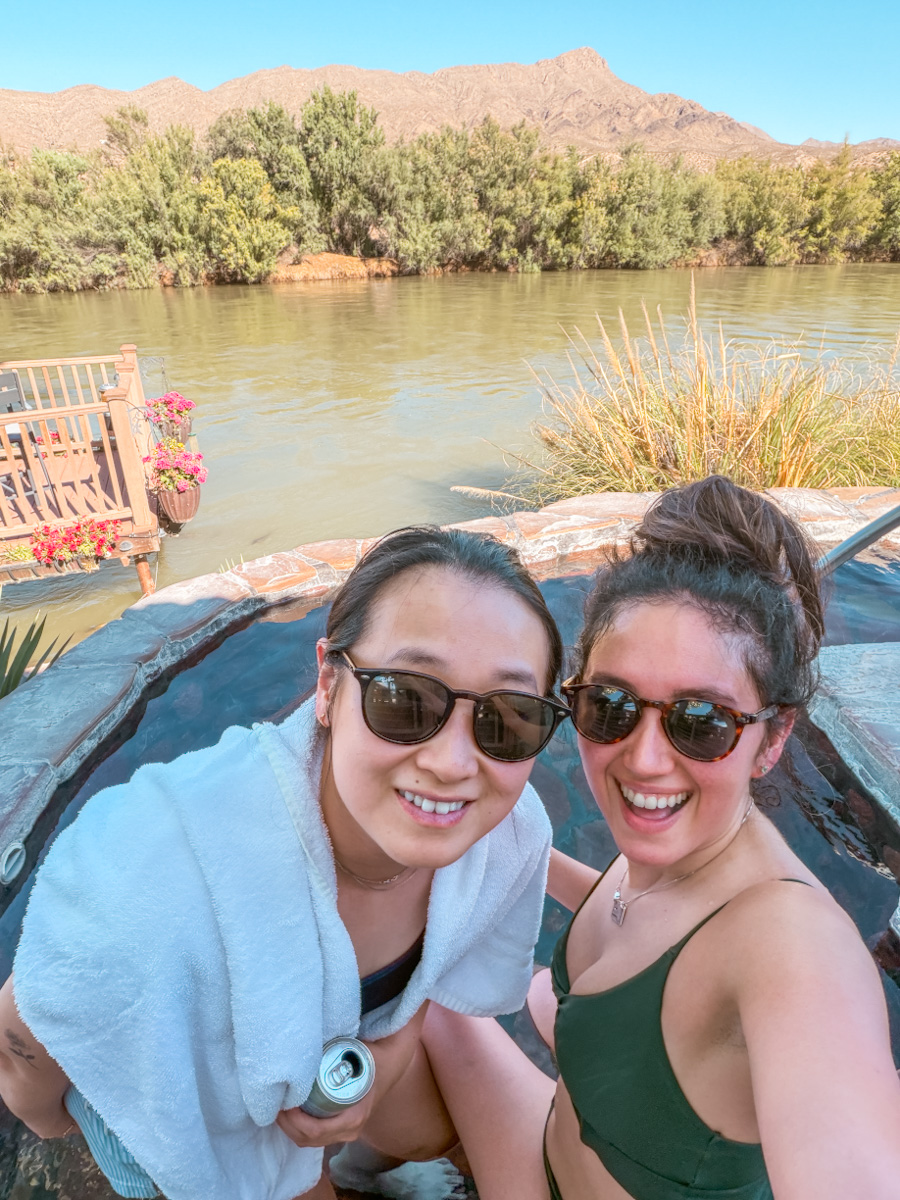
I was blown away by this place. Riverbend is both a hotel and a hot-springs retreat built directly along the Rio Grande, with natural mineral-water pools overlooking the river and the mountains beyond.
What a setting. You’re soaking in steaming mineral water in the middle of the desert, the Rio Grande is flowing directly in front of you, and beyond it are these huge, dry New Mexico mountains. Where else do you get this combination?
You can stay overnight, in which case hot-spring access is included, or you can come just for a soak. There are private pools you can reserve for yourself, or the common pools, which the staff actually recommended for our first visit.
The common area has several pools at different temperatures, so you can move around and find whatever feels best for you. There are also shaded areas, a sauna, cold showers, hammocks, misters, fire features, and places to just sit along the river between soaks.
And the people working here were incredible, so friendly, helpful, and kind.
After days of driving, hiking and moving constantly, spending a few hours doing absolutely nothing except soaking beside the Rio Grande was exactly what we needed.
On to Santa Fe
And from here, we schlepped it north to our penultimate base: Santa Fe.
We checked in for the night, rested up, and the next morning started exploring a very different side of New Mexico.
VII. DAY FIVE: SANTA FE
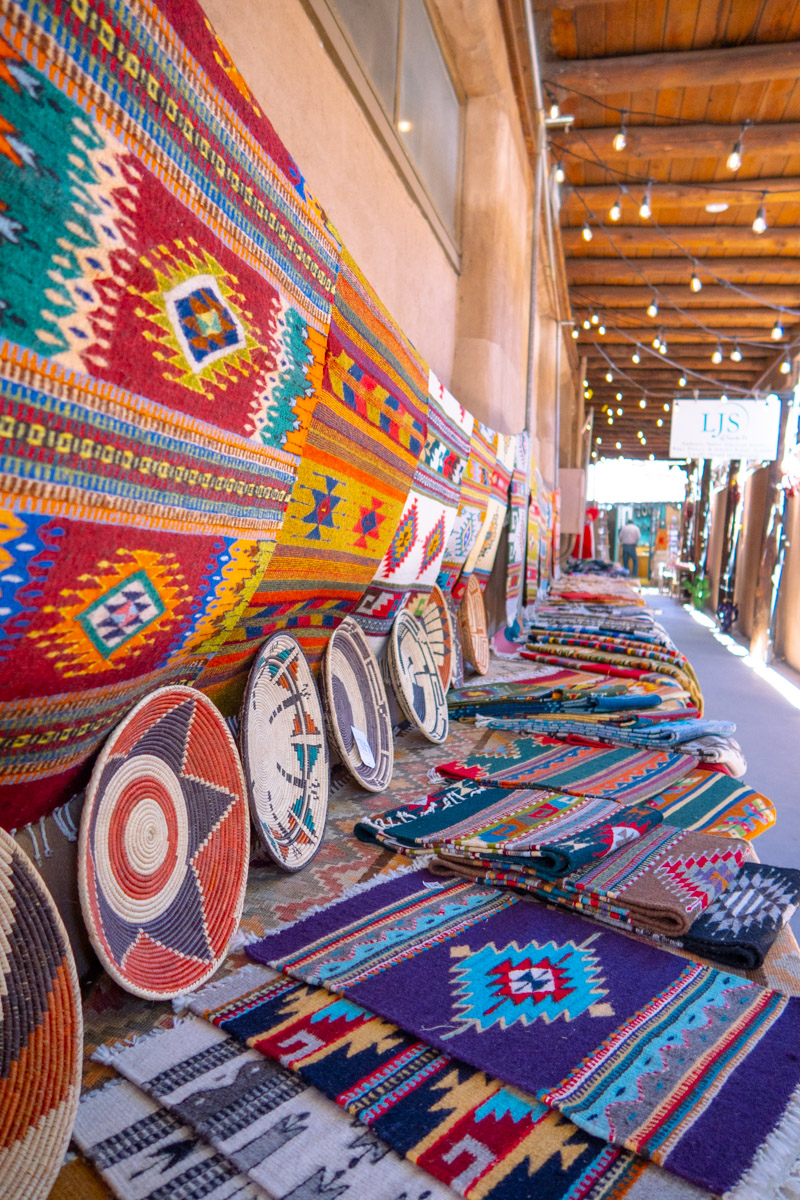
Santa Fe is the capital of New Mexico, and the oldest state capital in the United States, established by the Spanish in 1610.
And I’ll be honest.
Santa Fe was underwhelming for me.
Maybe that’s because it had been hyped up to me online for years. And perhaps 10 or 15+ years ago, it really did feel like this gorgeous, down-to-earth artists’ town. But the Santa Fe I experienced felt very different.
There were certainly beautiful pockets, but so much of the center felt extremely touristy and, frankly, offensively overpriced. I’m talking $1,300 for a pair of silver earrings in one store – and then walking next door and seeing variations of the same aesthetic over and over again. And then seeing that same type of earring in Albuquerque for $30.
A lot of it didn’t feel like the intimate community of local artists and craftspeople I had imagined. It felt like a tourism economy that had figured out exactly how much visitors were willing to spend on the idea of Santa Fe.
And that even extended to the food. We had lunch at Café Pasqual’s, where we each ordered one entrée and shared one sparkling water. After tax and tip, our bill was almost $100. And the food was… just OK. It wasn’t bad. But the piece of fish on my salad was tiny, my partner had an eggs-and-beans dish, and for $100, it’s reasonable to expect to leave lunch feeling satiated.
Georgia O’Keeffe Museum
Next, we went to the Georgia O’Keeffe Museum. And this one was complicated for me.
Georgia O’Keeffe has been one of my favorite artists since I was literally in the fifth grade. I’ve gushed about her work since I was a kid, so I was genuinely excited to finally visit a museum dedicated to her.
And then I learned more about her.
First, there’s the conversation that’s followed O’Keeffe’s work forever: those flowers.
I mean… look at this painting.
O’Keeffe vehemently rejected the interpretation that her flowers represented female genitalia. And obviously, an artist gets to tell us what they intended their work to mean.
But as a queer person looking at the work, learning about her life and relationships, and knowing the historical phenomenon of women who lived together as “companions” or “roommates”… My gaydar was basically swinging off the hinges.
To be clear: that’s my reading. O’Keeffe never publicly identified herself that way, and I’m not going to assign an identity to someone who isn’t here to speak for herself.
But that actually wasn’t what changed my feelings about her most. What further complicated the experience was learning more about her relationship with New Mexico and the Indigenous people whose ancestral lands she was living and working on. And to the museum’s credit, they don’t completely shy away from that complexity.
The museum contextualizes O’Keeffe within a broader history of artists who came to New Mexico, became deeply attached to this landscape, and sometimes viewed the land and Indigenous cultures through a detached lens. And that forced me to look at someone I’d admired since childhood with considerably more nuance.
I fully understand the time period. Nobody’s perfect. And I really don’t like speaking ill of people who aren’t here to defend themselves.
But between what I was learning about her worldview and what seemed like dismissive comments about indigenous people and this possessive relationship with a landscape… I left feeling a little bit like I had met my hero. And maybe that’s unfair.
Meow Wolf
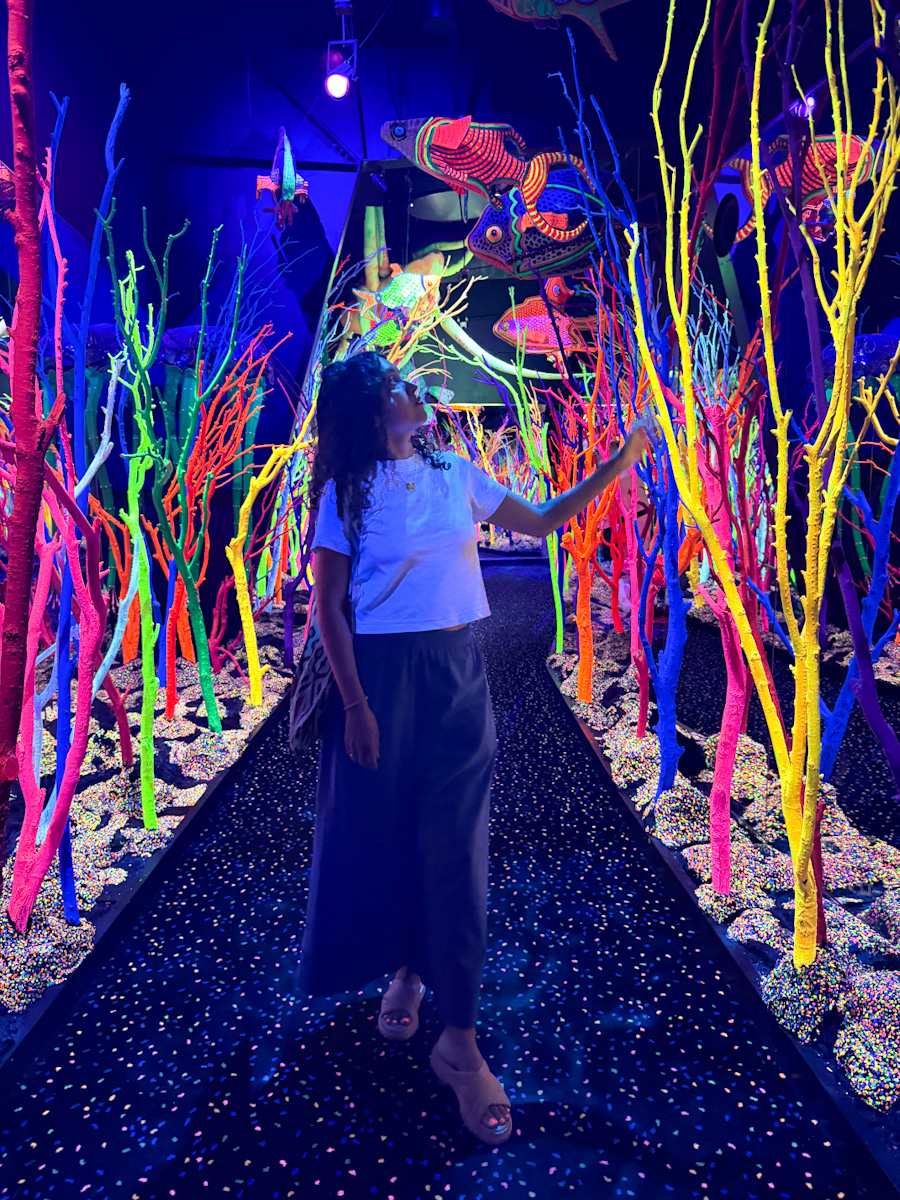
Then we went to Meow Wolf’s House of Eternal Return. And okay… This place is massive.
It’s an immersive art installation built inside a former bowling alley, with dozens of interconnected rooms, secret passageways, portals, and interactive installations, plus an underlying mystery you can follow if you want to go deep into the story.
You might open a refrigerator and discover it’s actually a passageway into another world. Walk through a normal-looking room, and suddenly you’re inside this enormous neon fantasy environment.
It’s creative. It’s weird. It’s incredibly elaborate. And I can absolutely understand why people love it.
But for me? It felt a little Las Vegas-y.
Like something I probably would have been obsessed with as a kid, but as an adult, for $54 per person… no me cae bien.
I’m glad I saw it. I understand the appeal. But personally, I don’t need to do it again. Unless you’re with kids, I’d maybe swap this for another museum instead.
Downtown Santa Fe
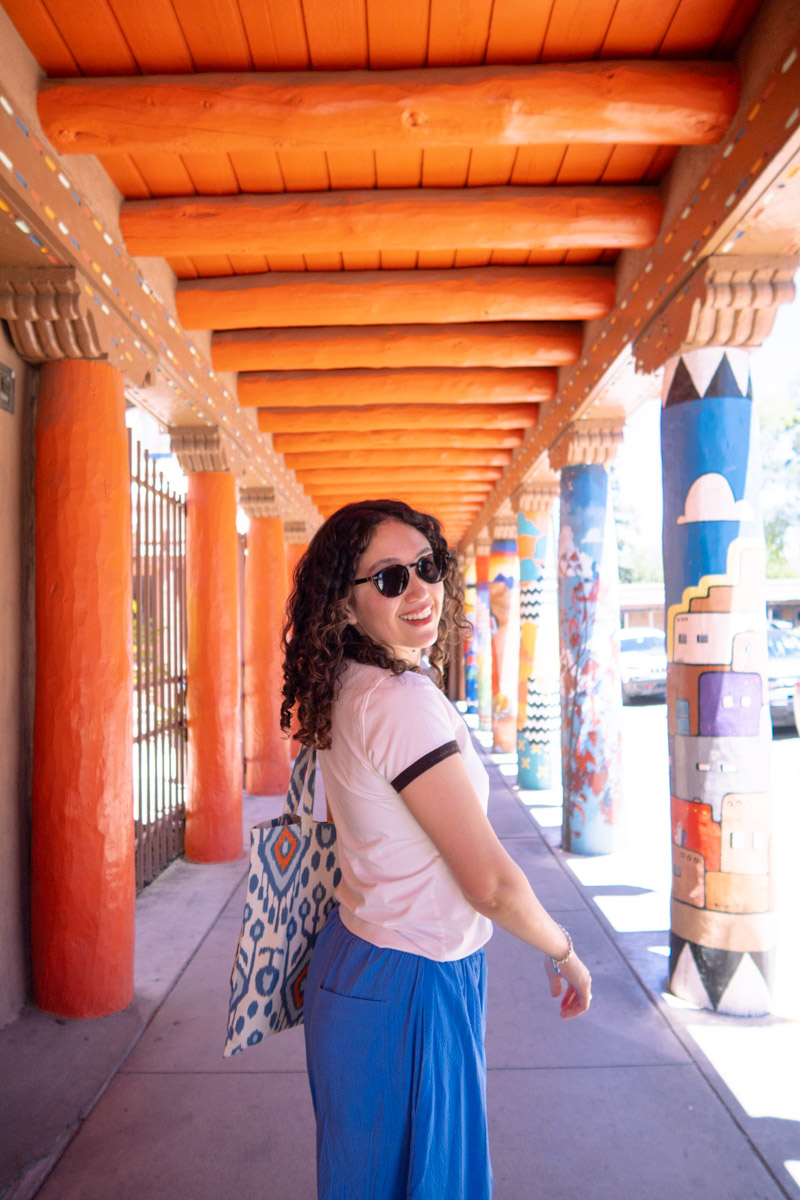
The historic center definitely has its beautiful pockets.
You have the Cathedral Basilica of St. Francis of Assisi, the historic Plaza, adobe architecture, and a genuinely impressive concentration of museums, including the New Mexico Museum of Art, the New Mexico History Museum, the Museum of Indian Arts and Culture, the Museum of International Folk Art, and others.
Earlier that day, we also visited the Santa Fe Farmers’ Market, which I thought was… also OK.
And I think that’s ultimately how I felt about Santa Fe.
This was actually the destination I was most looking forward to on our New Mexico road trip. I came expecting local artists, culture, craft, and this earthy creative energy. And I left feeling like perhaps Santa Fe had become a victim of its own success.
The artistic reputation that drew people here may also be part of what made it so expensive, commercialized, and tourism-driven.
There are still people who adore Santa Fe, and if you’re really into museums, high-end galleries, shopping, and fine dining, you may have a completely different experience than I did.
But personally? I don’t think you need more than one full day in Santa Fe itself. Maybe two if you have extra time, really want to dig into the museums, or have the budget for the galleries and restaurants.
For me, some of the richest experiences in New Mexico were outside Santa Fe, in the Pueblos, at archaeological sites, in the wilderness, in small towns, and in the surrounding landscapes.
And that’s exactly where we were headed next.
XIII. DAY SIX: Taos + Surrounding Area
Taos felt much more like what I thought Santa Fe would feel like. It’s still touristy, don’t get me wrong. But it has just a little bit more…sazón.
Downtown Taos
Downtown Taos is cute, compact, and very walkable, with boutiques, galleries, bookstores, cafés, and historic adobe architecture centered around Taos Plaza.
Give yourself enough time to just wander. One of my favorite finds was tea.o.graphy, this gorgeous little tea shop with a surprisingly spacious interior and outdoor seating.
We also really wanted to eat at The Love Apple, which is inside an old adobe chapel just outside downtown. We couldn’t get seated because we didn’t have reservations, but just looking at the place and the menu, I immediately regretted not planning ahead. So: make reservations.
I also heard nothing but good things about Barra Vino if you want a glass of wine in a cozy atmosphere.
But the most important place to visit here isn’t actually downtown. Just a few minutes beyond the center of Taos is Taos Pueblo.
Taos Pueblo
Taos Pueblo is one of New Mexico’s 19 sovereign Pueblo nations and one of the most special places you can visit in the state.
This isn’t a reconstructed archaeological site. People actually live here. It has been home to the Taos people for more than a thousand years, and its enormous multi-story adobe buildings are among the oldest continuously inhabited structures in the United States.
It’s so culturally significant that Taos Pueblo is both a UNESCO World Heritage Site and a National Historic Landmark. And you’re being invited into someone’s living community!
Normally, Taos Pueblo is open to visitors from 9:00 a.m. to 4:00 p.m., and admission is currently $25 for adults. Guided tours are also offered, and they’re absolutely what I would recommend if they’re available because you’re actually learning about the Pueblo from people within the community.
But your experience can vary depending on what’s happening within the Pueblo. When we visited, a ceremonial dance was taking place. Because it was a sacred day, tours weren’t being offered, and we weren’t charged admission. But we were fortunate enough to be welcomed into the Pueblo and allowed to quietly observe the ceremony.
I honestly couldn’t believe we were being trusted to enter this community and witness such a personal spiritual tradition.
Ojo: No cameras. No filming allowed for this. And frankly, that’s exactly how it should be.
Photography rules can change, and there are areas of the Pueblo that visitors cannot enter at all. Even on normal days, don’t photograph tribal members without permission, don’t enter homes unless they’re clearly marked as businesses, don’t enter the river; it’s the community’s drinking water, and remember that you’re visiting people’s homes.
Here is the Taos Pueblo calendar before you go.
Eat Native-Owned Nearby
Afterward, stop at Dawn Butterfly Café, right near Taos Pueblo.
It’s Native-owned and a great opportunity to support a local Indigenous business after visiting the Pueblo, rather than experiencing the culture and then immediately taking your tourism dollars somewhere completely disconnected from the community.
The Taos Area
Just a few miles south of town in Ranchos de Taos is the beautiful San Francisco de Asís Mission Church, one of the most iconic examples of Spanish Colonial adobe architecture in New Mexico.
And then there are the two classic ways to travel between Santa Fe and Taos.
The faster route follows the Rio Grande corridor through Española. It’s the more direct choice if you just want to get there.
But if you have time, take the High Road to Taos in at least one direction. That route winds through the Sangre de Cristo Mountains, passing historic villages, adobe churches, galleries, and Chimayó. And Chimayó is home to El Santuario de Chimayó, a Catholic pilgrimage site famous for its pocito – a small pit of earth that generations of pilgrims have associated with healing.
If You Have More Time…
Northern New Mexico has enough to fill several additional days.
Valles Caldera National Preserve
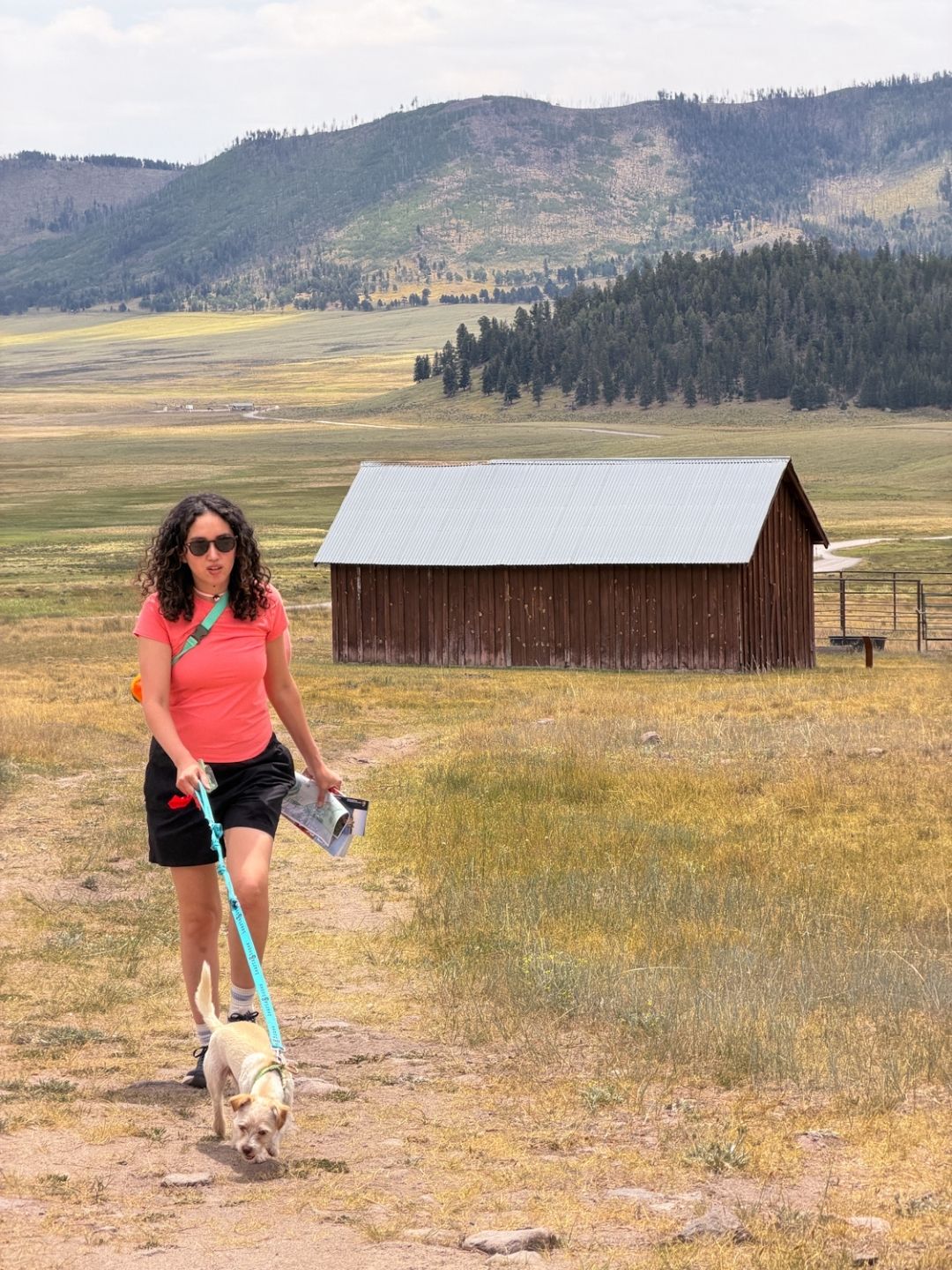
This landscape almost doesn’t look like the New Mexico we’d been driving through. Suddenly, you’re looking across these enormous lush mountain grasslands surrounded by ponderosa pine forests and rounded mountains. There are thousands of elk here, along with coyotes, bears, prairie dogs, eagles, and other wildlife.
And the most impressive part is that you’re standing inside a supervolcano. Valles Caldera is a roughly 13-mile-wide volcanic caldera created when a massive eruption occurred around 1.2 million years ago, and the ground collapsed into the emptied magma chamber below.
And this volcano isn’t extinct. It’s dormant. There is still geothermal activity underground, with hot springs, sulfuric-acid springs, fumaroles, and steaming mud pots in parts of the preserve. Scientists from Los Alamos National Laboratory monitor its seismic activity, although the system is currently considered remarkably quiet.
Humans have also been coming here for thousands of years. Indigenous peoples hunted, gathered plants for food and medicine, and collected obsidian (volcanic glass) to make tools, knives, spear points, and arrowheads.
Today, you can hike, bike, fish, horseback ride, watch wildlife, or drive into portions of the backcountry with a vehicle permit during the appropriate season. In winter, there’s cross-country skiing and snowshoeing.
One important thing if you’re traveling with a dog: pet access is extremely limited, so check the current rules before going.
Bandelier National Monument
Another option is Bandelier National Monument, about an hour from Santa Fe and roughly an hour and a half from Taos.
Bandelier protects one of the largest concentrations of Ancestral Pueblo archaeological sites in the Southwest. You can walk through Frijoles Canyon, see the remains of Tyuonyi Pueblo, and climb ladders into cavates, rooms carved directly into the volcanic rock.
The main Pueblo Loop Trail is only about 1.4 miles, so you absolutely do not have to do some gnarly all-day hike to experience Bandelier. The more adventurous Alcove House adds another mile and requires climbing four ladders and stone stairs.
After already experiencing the Gila Cliff Dwellings (on day 3), we personally didn’t feel compelled to dedicate another big chunk of our trip to it. But also, I’m scared of heights (the ladders).
Ghost Ranch
And then there’s Ghost Ranch, forever associated with Georgia O’Keeffe. O’Keeffe first visited the area in the 1930s and eventually maintained a home at Ghost Ranch before making nearby Abiquiú her primary New Mexico residence.
Today, Ghost Ranch is a massive educational and retreat center surrounded by the red-rock landscapes that recur in O’Keeffe’s paintings. You can come for hiking, community events, retreats, trail rides, landscape tours, geology and paleontology experiences, and tours focused specifically on Georgia O’Keeffe.
My Takeaway
This is where I think northern New Mexico really shines.
Don’t think of Santa Fe as the destination. Think of it as a convenient base with a museum to help you contextualize the surrounding area, which is where northern New Mexico really comes alive.
IX. DAY SEVEN: ALBUQUERQUE
Oh, Albuquerque. How much I loved this city!
Albuquerque is the largest city in New Mexico, sitting about 5,000 feet above sea level in the high desert. The Rio Grande runs through the city, the Sandia Mountains rise dramatically to the east, and ancient volcanic landscapes sit to the west.
It was founded as a Spanish colonial settlement in 1706; Route 66 cuts straight through the city, and today it has some of the state’s best museums and cultural centers, the best restaurants, great shopping, Route 66 history, Indigenous and Hispanic heritage, and incredible access to the outdoors.
And after traveling around New Mexico, I honestly think this is one of the best places to start, not end your trip.
And yes, this is where I would splurge on eating out. For me, the best food we had in New Mexico was in Albuquerque. Here, you’ll find international food, farm-to-table restaurants, cafés, breweries, food halls, and more. As well as traditional New Mexican cuisine, which blends centuries of Indigenous and Hispanic culinary traditions, and, of course, the state’s obsession with red and green chile everywhere.
And after Santa Fe, I’ll say this: Save your shopping money for Albuquerque. There is beautiful Native jewelry, pottery, art, books, crafts, and locally made goods here across a much broader range of prices. Old Town in particular has more than 100 shops, galleries, and restaurants.
Old Town Albuquerque
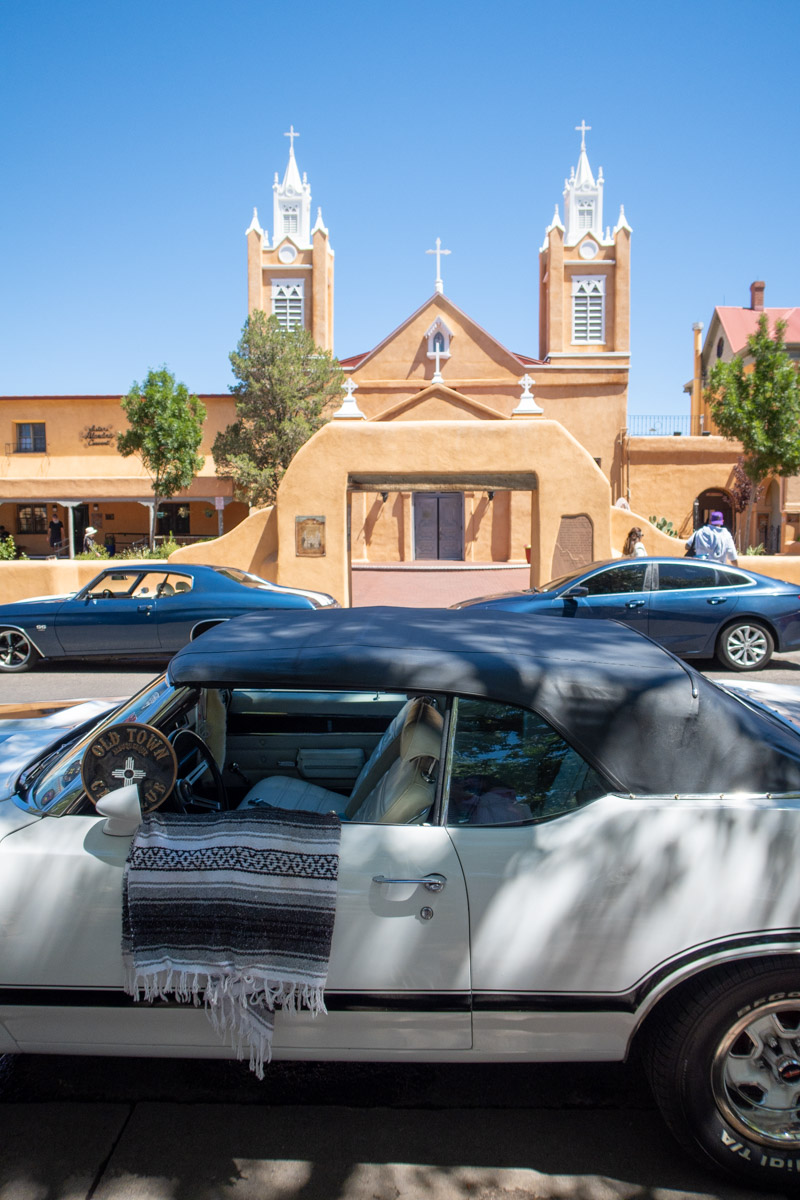
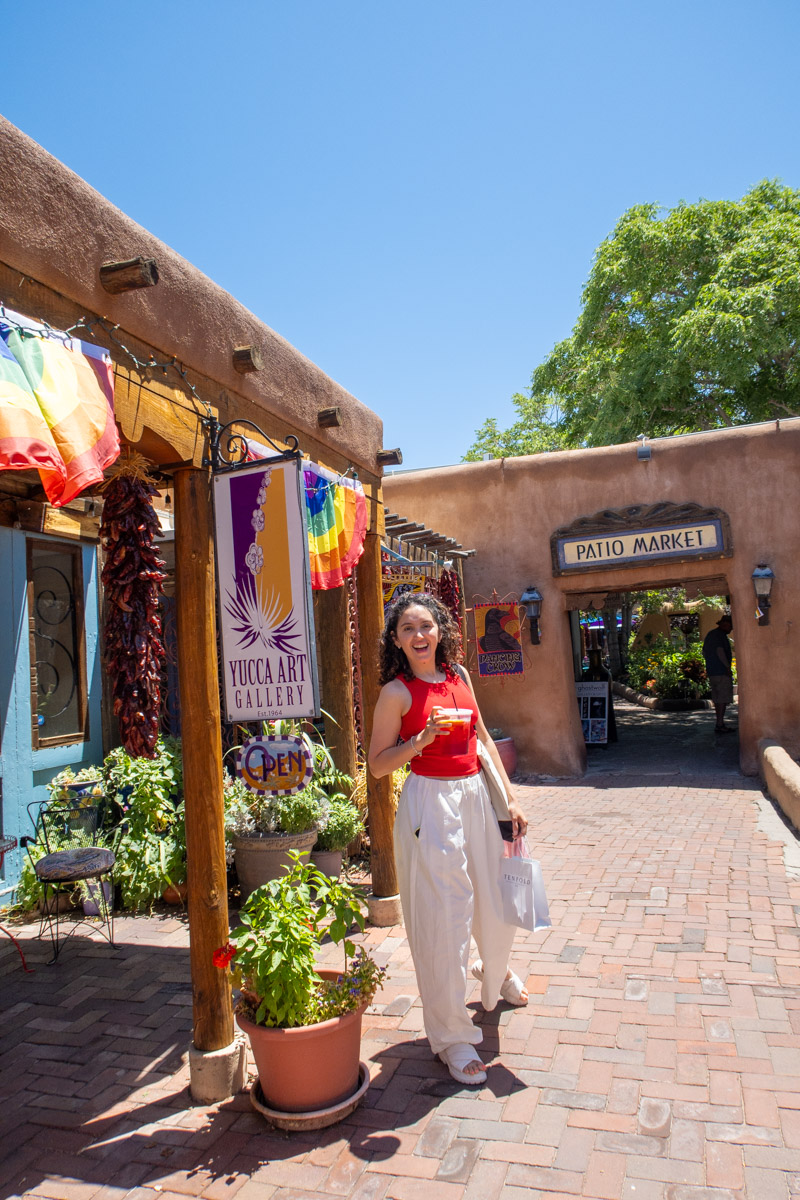
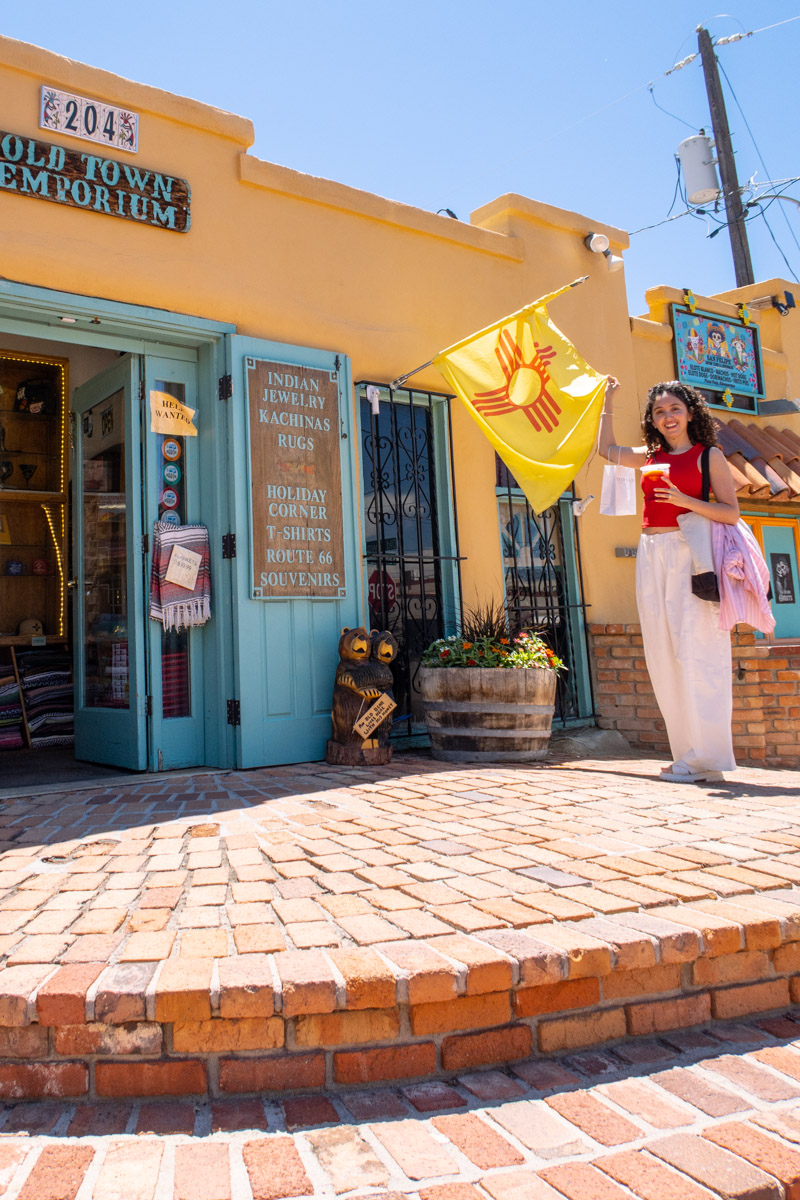
Start in Old Town, the historic heart of Albuquerque. This is where the Spanish colonial city was established in 1706, and more than 300 years later, the original plaza remains the neighborhood’s center. It’s surrounded by adobe buildings, courtyards, shops, restaurants, galleries, and museums.
And this is where I really enjoyed shopping. You can find Native jewelry, pottery, textiles, books, Southwestern art, and locally made goods. Just pay attention to who actually made what you’re buying, particularly if you’re looking for authentic Native-made art.
You’ll also sometimes see another kind of New Mexican art rolling through the streets: lowriders. Lowrider culture here isn’t simply about cars. These are expressions of cultural pride and literally drivable works of art. Owners can spend years perfecting the paint, chrome, upholstery, hydraulics, and restoration of these classic cars. And around Old Town, we got to see some of them cruising and gathering around the Plaza.
The Museums
Albuquerque also has an incredible concentration of museums. Around Old Town alone, there’s the Albuquerque Museum for local history and art and the New Mexico Museum of Natural History & Science for dinosaurs, geology, and astronomy. Elsewhere in the city, you have the National Hispanic Cultural Center, the Nuclear Museum, the Balloon Museum, and more.
But there’s one place I consider an absolute must:
Indian Pueblo Cultural Center
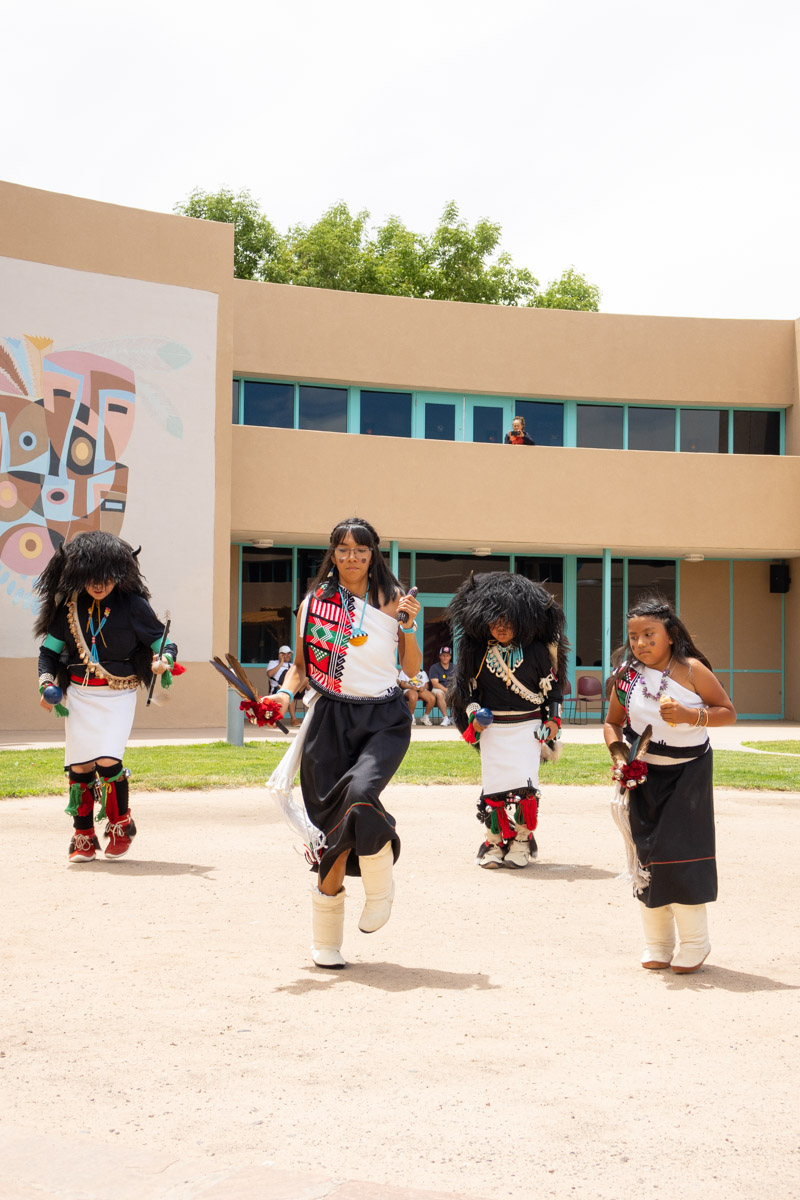
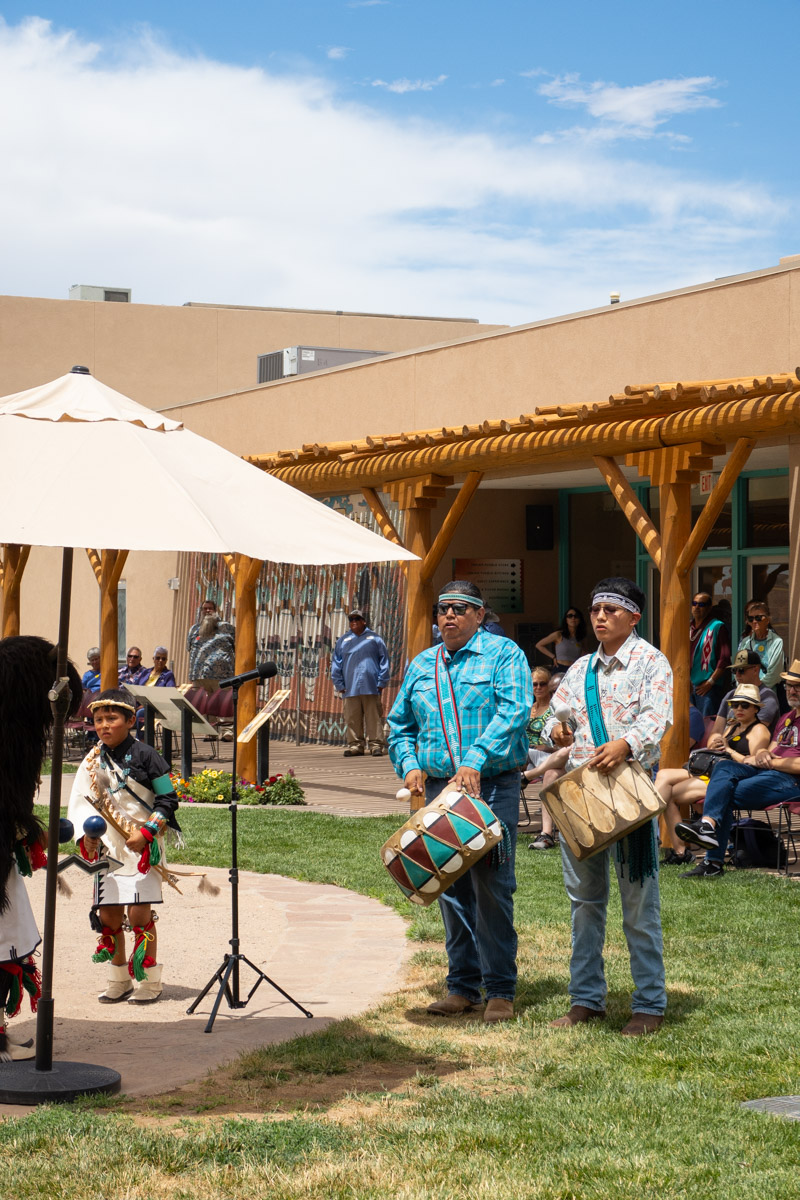
If you’re going to travel around New Mexico and visit Pueblo communities, I would actually come here first! The Indian Pueblo Cultural Center, or IPCC, opened in 1976 and is owned collectively by New Mexico’s 19 Pueblo nations.
And that distinction matters. This isn’t simply another museum about Indigenous people. It’s a cultural institution where Pueblo people are at the center of telling their own stories.
You can learn about the 19 Pueblos, their different languages, histories, art, pottery, traditions, and contemporary life. Depending on when you visit, there are also Pueblo dances and cultural programs.
There’s an excellent store where you can purchase traditional and contemporary jewelry, pottery, rugs, and art, including directly from Native artists who sometimes sell in the courtyard.
And you can eat here. The Indian Pueblo Kitchen centers Indigenous foodways and ingredients, so you can actually experience some of these traditions through food as well.
Sawmill Market
Right nearby is Sawmill Market, another place I absolutely recommend. It’s this huge, beautifully designed food hall in the Sawmill District with a bunch of local food vendors under one roof.
We loved The Paleta Bar, and Outlaw Chicken was a huge favorite. I’m still dreaming about these spots, they were incredible culinary gems.
And if you want to stay in this part of town, Hotel Chaco is basically right next door. The whole Sawmill District has restaurants, shops, galleries, and other businesses clustered together, so it’s an incredibly convenient base.
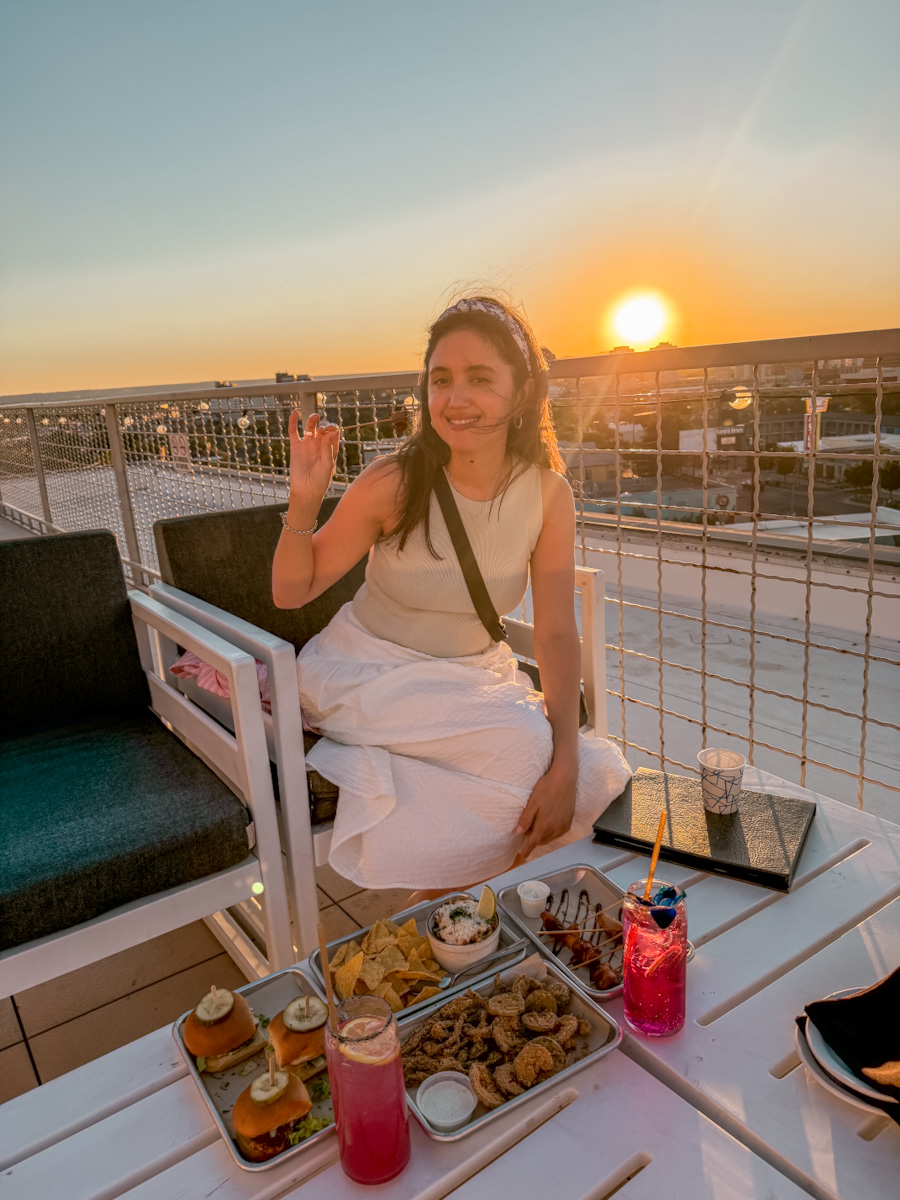
Another good hotel option is Hotel Parq Central. And even if you don’t stay there, head up to the Apothecary Lounge around sunset. A drink, some small bites, views over Albuquerque… Just dreamy.
X. DAY EIGHT: ALBUQUERQUE
Hot Air Balloon Capital of the World

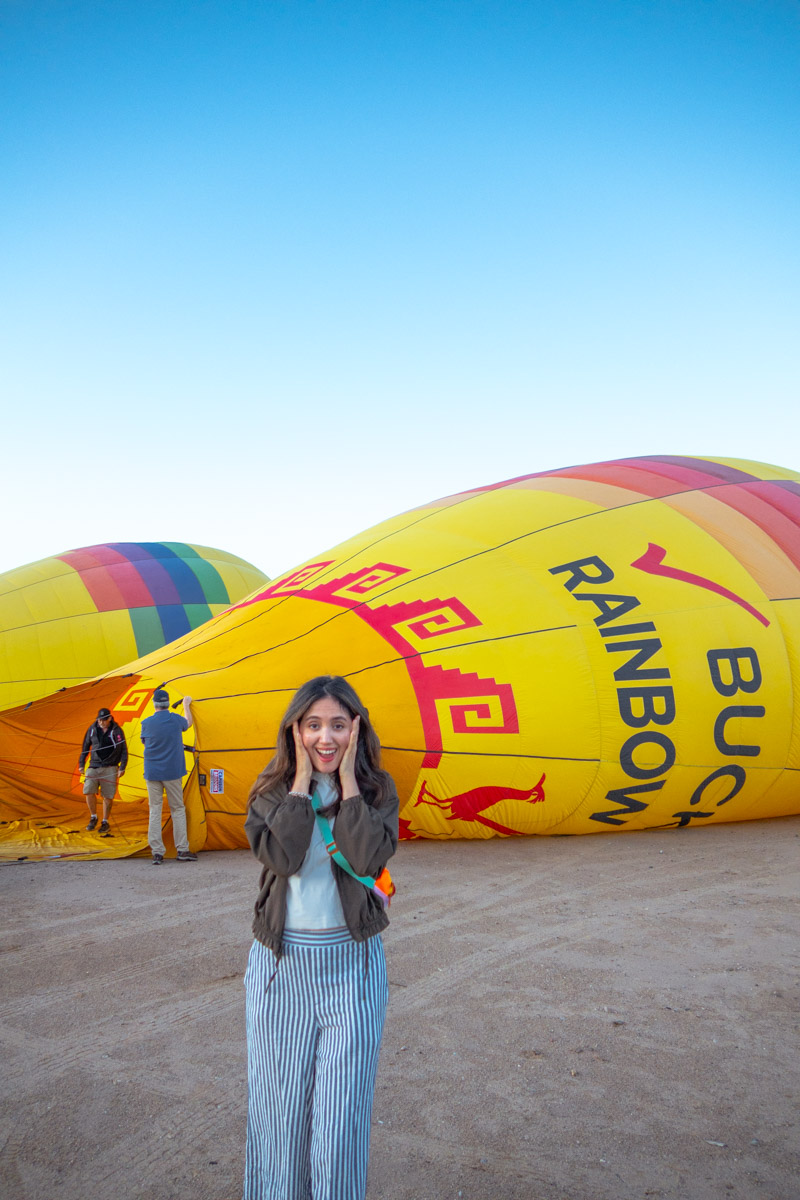
And you can’t talk about Albuquerque without talking about this: hot-air balloons. Albuquerque is known as the hot air balloon capital of the world and is internationally famous, especially during the Albuquerque International Balloon Fiesta, when hundreds of balloons fill the sky every October.
But you don’t need to come during Balloon Fiesta to experience it. We went up with Rainbow Ryders.
You can see the Rio Grande cutting through the dry landscape, the Sandia Mountains rising along one side of the city, and the high desert on the other.
And after an adrenaline-filled day floating through the sky…we spent the rest of our day learning about nuclear weapons. Because, New Mexico.
National Museum of Nuclear Science & History
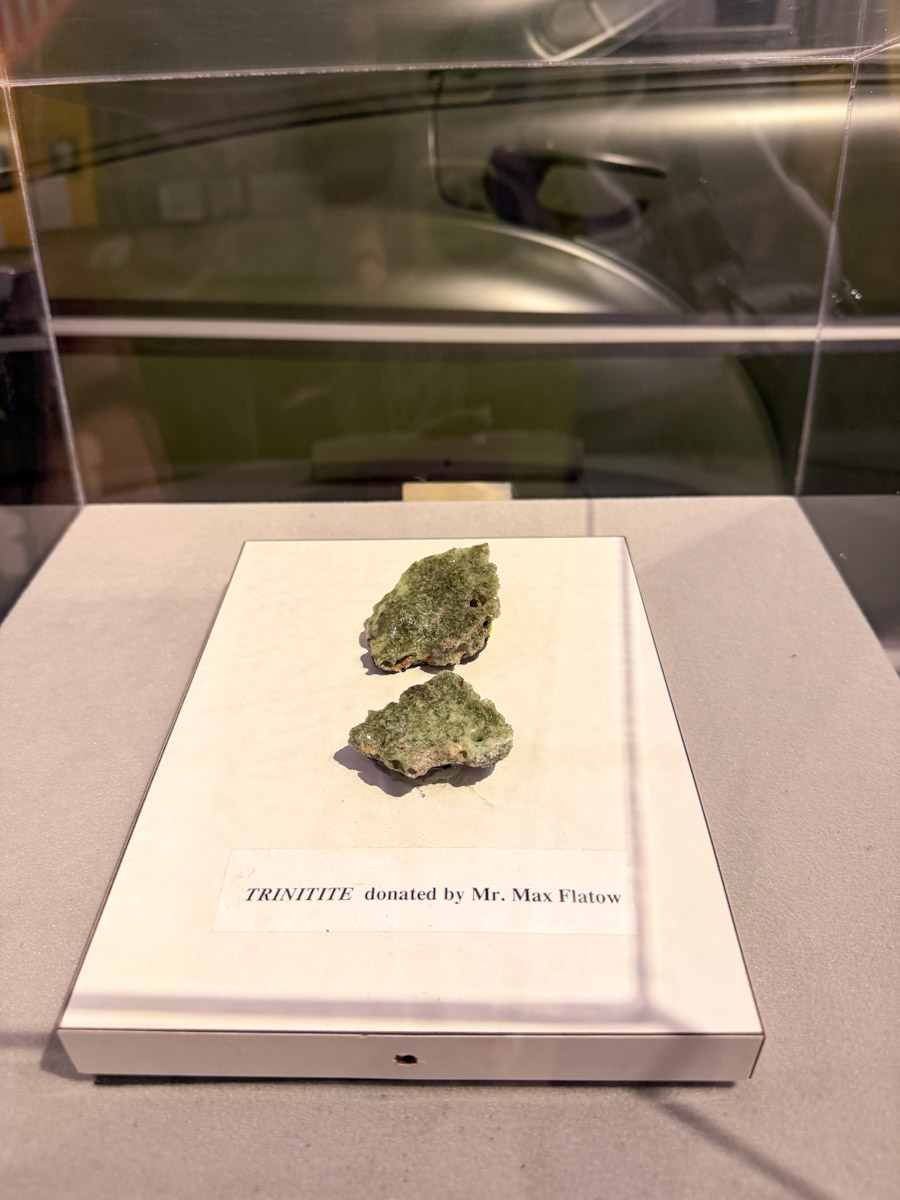
The National Museum of Nuclear Science & History tells the much larger story of the Atomic Age, from early atomic science and the Manhattan Project through World War II, the Cold War, nuclear energy, nuclear medicine, and the continuing implications of this technology today.
And New Mexico is central to that story. During World War II, Los Alamos became the secret laboratory where scientists working on the Manhattan Project developed the world’s first atomic weapons. Then, on July 16, 1945, the first nuclear weapon in human history was detonated at Trinity Site here in New Mexico.
You can visit Los Alamos and Manhattan Project sites elsewhere in the state, and Trinity Site has extremely limited public access. But if you’re not doing all of that, the museum in Albuquerque is a great place to understand the larger story. And it’s not just display cases. There are very cool, passionate, and nerdy volunteers around the museum excited to chat with you. This includes demonstrations and models. Outside, there’s this enormous collection of real aircraft, missiles, rockets, and other artifacts from the nuclear and Cold War eras.
It’s fascinating. It’s disturbing. And it’s very timely.
This is one of the most consequential pieces of history, not just for the state or the USA, but for the entire world.
XI. DAY NINE: ACOMA PUEBLO + SANDIA PEAK
For our final full day, we headed west of Albuquerque to Acoma Pueblo.
Acoma Pueblo Sky City Cultural Center
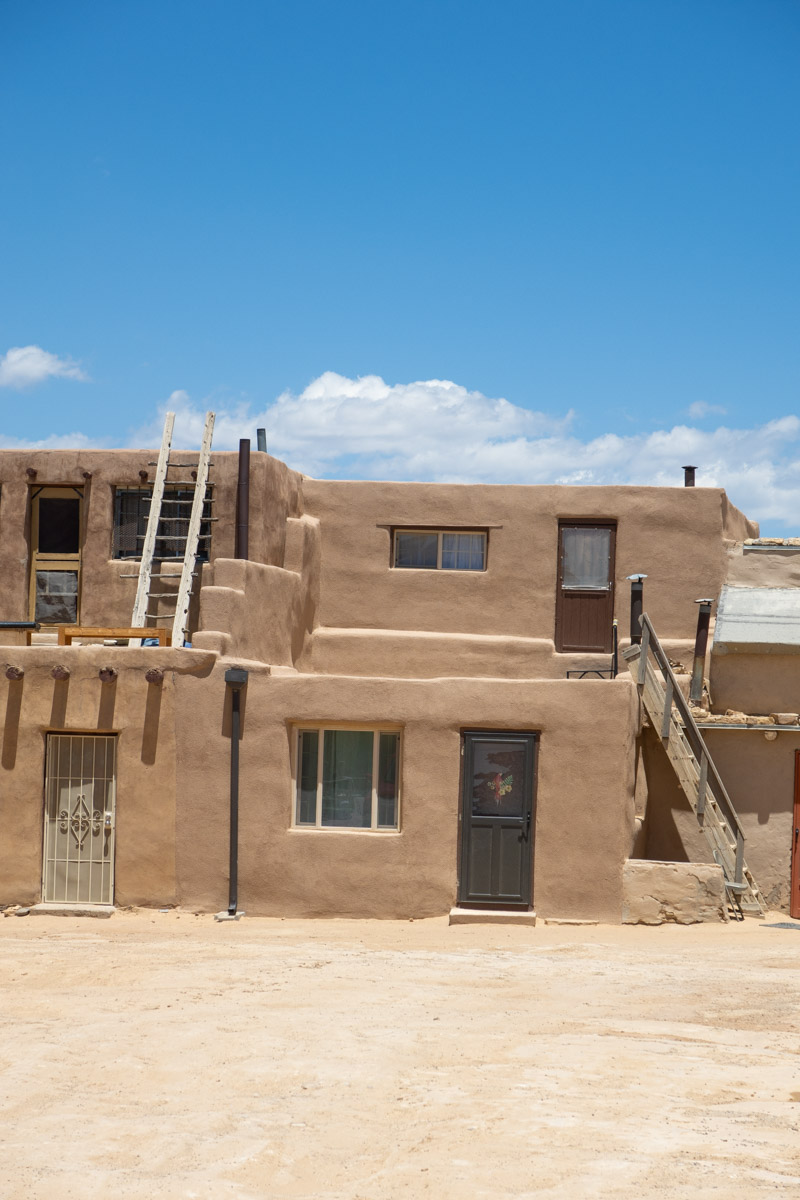
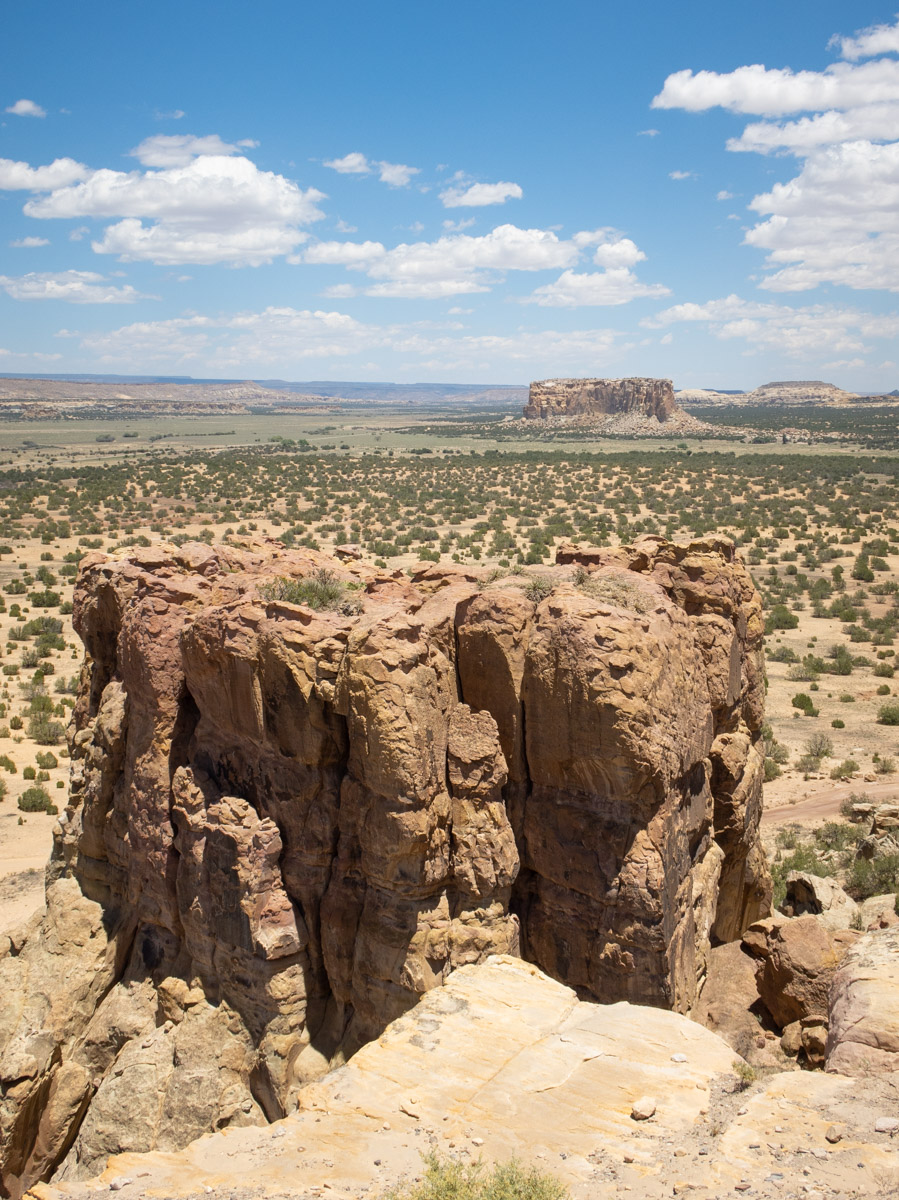
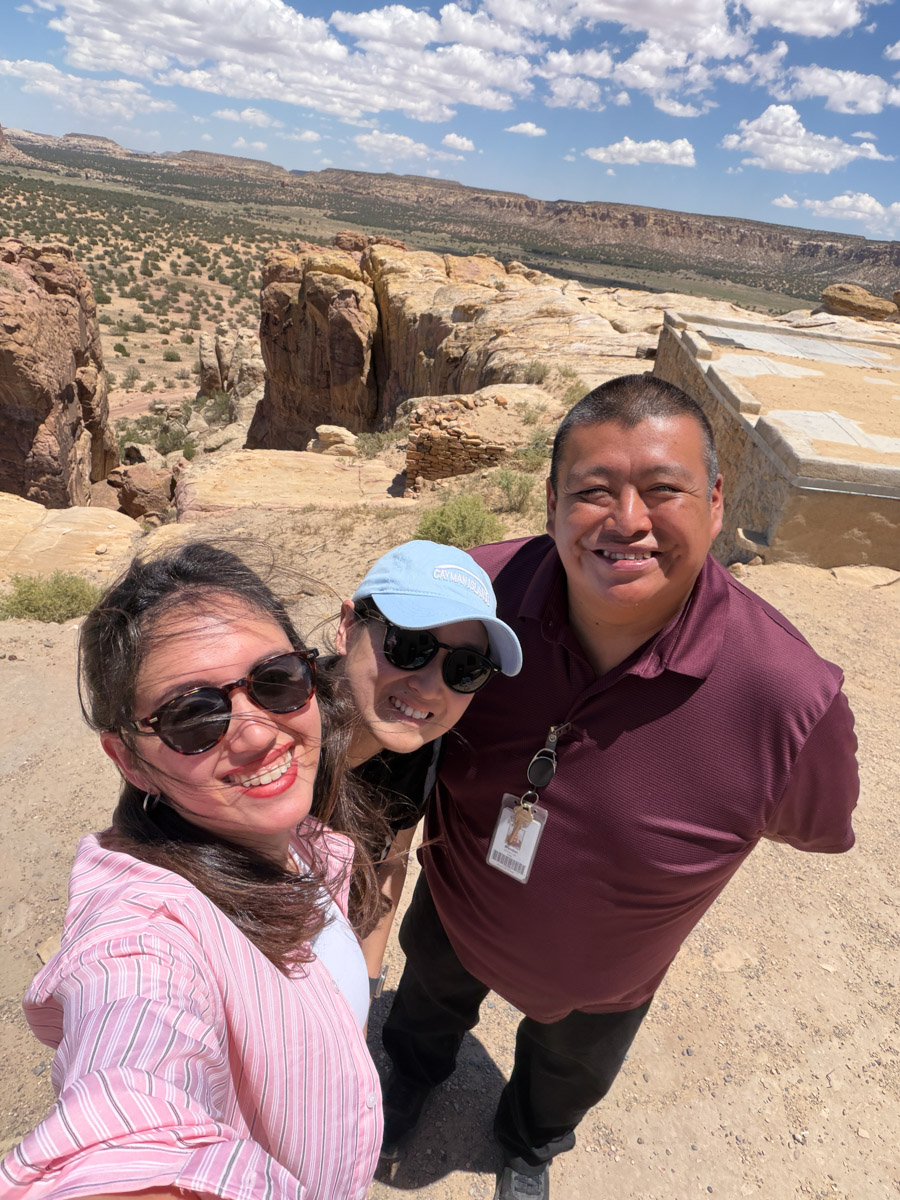
Acoma Pueblo is one of New Mexico’s 19 Pueblo nations and one of the oldest continuously inhabited communities in what is now the United States.
And this is a place that will stay with me forever. There is a power to this land that was deeply touching. It’s difficult to put into words.
Acoma is only about an hour outside Albuquerque, but as you approach, the landscape begins to feel monumental. Huge sandstone mesas rise hundreds of feet out of the desert, mighty and imposing against this landscape of deep reds and burgundies, bright orange and yellow stone, sand, sun, and seemingly endless sky.
And then you see Sky City.
The historic Acoma village sits atop a roughly 367-foot sandstone mesa, rising almost vertically above the desert floor.
It’s an extraordinary place to build a community, but also an incredibly strategic one. For centuries, there was no road to the top. People traveled up and down the mesa by foot using steep trails and hand-carved steps. The modern road wasn’t constructed until the 1950s.
You begin your visit at the Sky City Cultural Center and Haak’u Museum, where we met our guide, Brandon, AKA Turtle. From there, we were taken by bus up the mesa and into the historic village.
And this is important: Acoma is not an archaeological ruin. This is a living Pueblo. People still maintain family homes here. Ceremonies and traditions continue here. And the Acoma Keres language is still spoken today.
You can’t simply show up and wander around Sky City on your own. You’re entering a living, sovereign Indigenous community. Visitors stay with their guide, and there are areas you cannot enter and things you cannot photograph. No videos allowed either.
Brandon ended up becoming so much more than a tour guide for us. He shared the history of Acoma, as well as oral stories, traditions, perspectives, and accounts from his own life.
At one point, we briefly met his mom, passed by his friends and artists from the community. We visited the church. We passed sacred and prayer spaces. And gradually, this stopped feeling like a tour and became one of those rare travel experiences where you feel genuinely connected to a place and the people sharing it with you.
The History Is Difficult
And some of the history you’re learning here is brutal. In 1599, Spanish colonial forces attacked Acoma. After several days of fighting, Spanish forces couldn’t penetrate until they used cannons. They finally invaded, killing hundreds of Acoma people and destroying much of the village. The survivors were subjected to horrific punishments and forced labor.
And then the Spanish built a Catholic mission here right over indigenous sacred space. So when you’re standing in this incredibly beautiful landscape, you’re also standing somewhere that witnessed colonization, violence, religious suppression, resistance, survival, and cultural continuity.
Acoma history has been transmitted orally across generations. There are stories, knowledge, traditions, and perspectives held within the community that you aren’t necessarily going to find by Googling them. And frankly, that’s another reason to take the tour.
Why Acoma Affected Me So Much
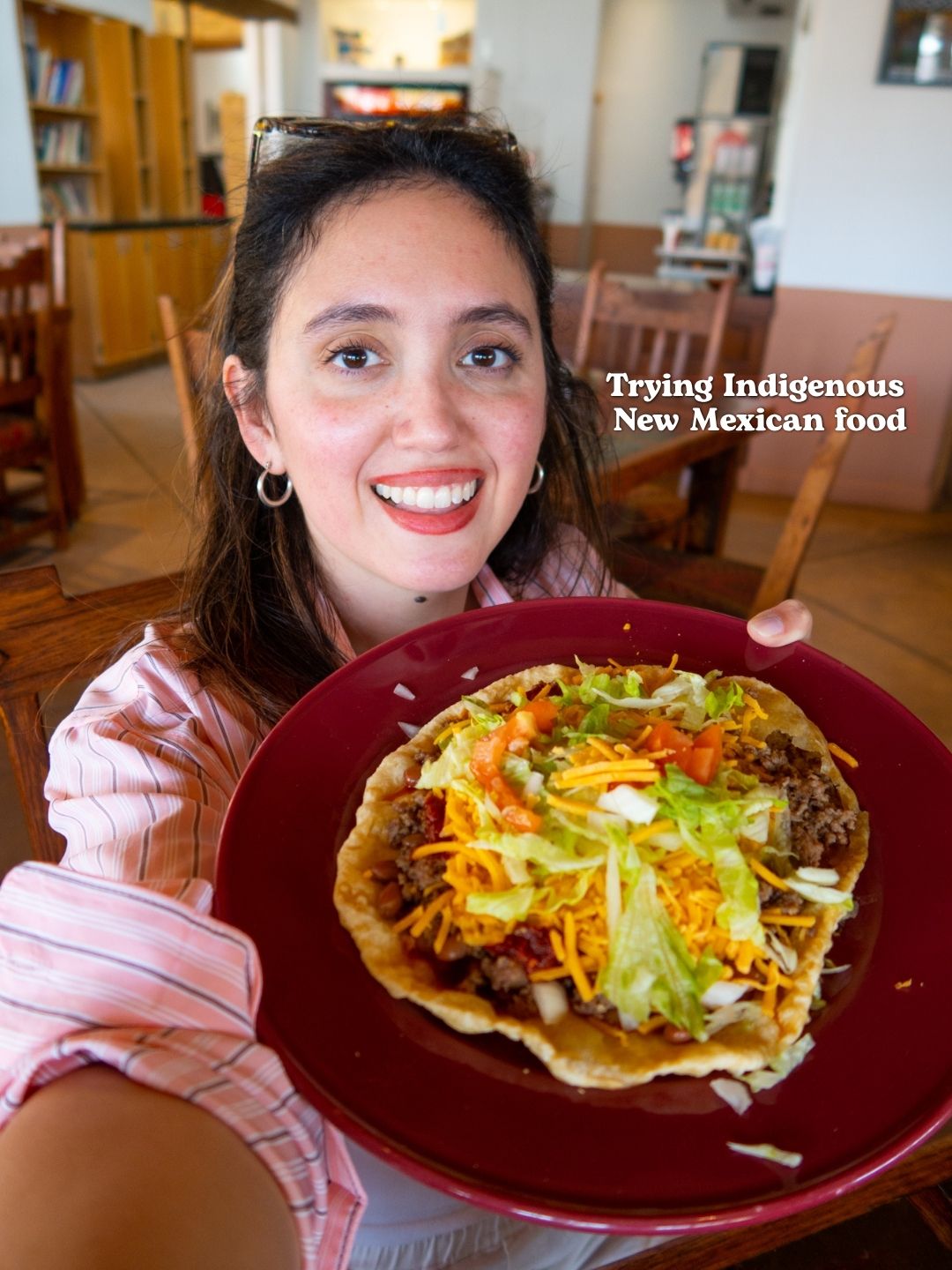
I don’t know if I can completely explain what got me about this place. The landscape is harsh, but somehow filling. The earth is red and enormous. The wind, sun, stone, and scale of everything make you very aware of where you are.
The history will make you want to shake your fist. But it’s important history to learn, and not just ancient history. We had conversations about things that are recent, relevant, and very much alive today.
There were questions about Indigenous identity and history that I had carried around in my own head for years, and suddenly I was able to have some of those conversations with another human being.
And obviously, Brandon is one person. He doesn’t speak for every Acoma person or every Indigenous person. But those conversations stayed with us.
After the tour, we sat down at the restaurant inside the cultural center and had Indigenous and New Mexican food, wandered through the gift shop, and honestly just sat with everything we’d experienced.
I left Acoma feeling strangely whole and connected. I know that sounds abstract. But that’s the best way I can describe it.
Sandia Peak Tramway
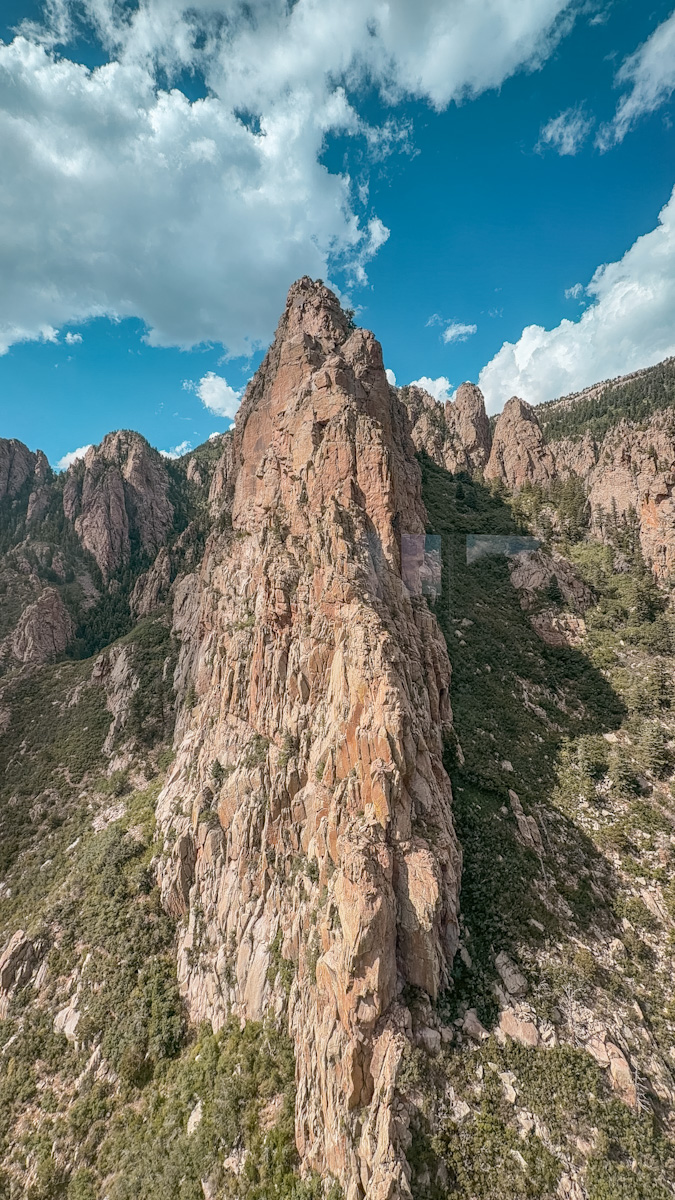
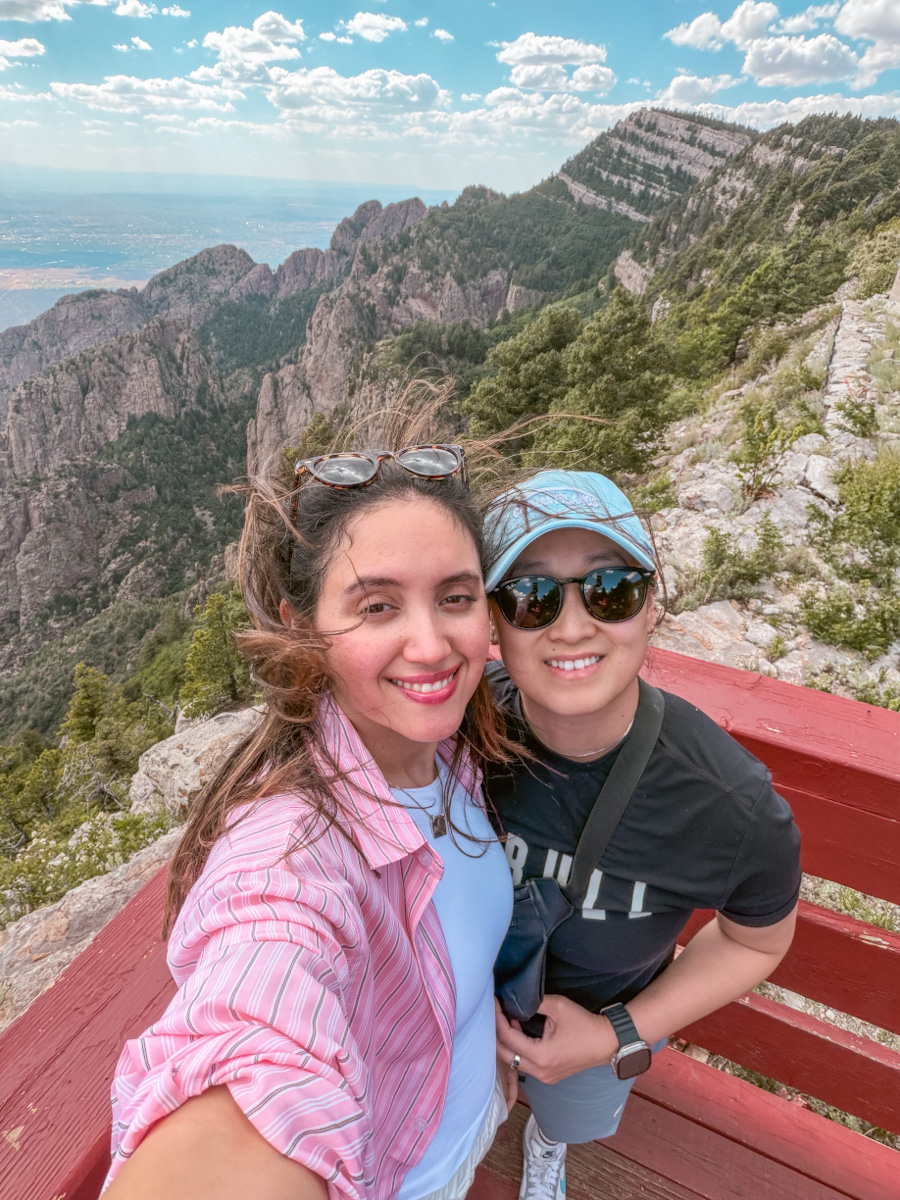
And we ended our Albuquerque experience with one of my favorite tram rides I’ve ever taken: Sandia Peak Tramway.
The tram travels about 2.7 miles from the edge of Albuquerque into the Sandia Mountains, eventually reaching the crest at more than 10,000 feet above sea level. It’s also billed as the longest aerial tramway in North America.
It was like we were going up, into, and through the mountains themselves. And inside the tram are very cool, friendly, and knowledgeable guides who you can chat with.
You pass enormous rock faces, crossing deep canyons, and watching the ecosystem change beneath you as you climb from the high desert toward the top of the Sandias.
And then you reach the summit… Which offers tons of things to do up here. From skiing to hiking to restaurants. We didn’t do much. The best part of the experience for me was the gorgeous tram ride views.
Absolutely do not sleep in Albuquerque. If I were planning this trip again, I would start here and dedicate at least two to three days.
The food was some of the best we had in the state. The museums give you context for everything else you’re about to experience. I preferred shopping here to Santa Fe. And within one city, you’re getting Pueblo and Hispanic culture, Route 66, science, mountains, desert, the Rio Grande, and a genuinely great food scene.