

Mexico
How to Celebrate Día de Muertos in Guadalajara, Mexico
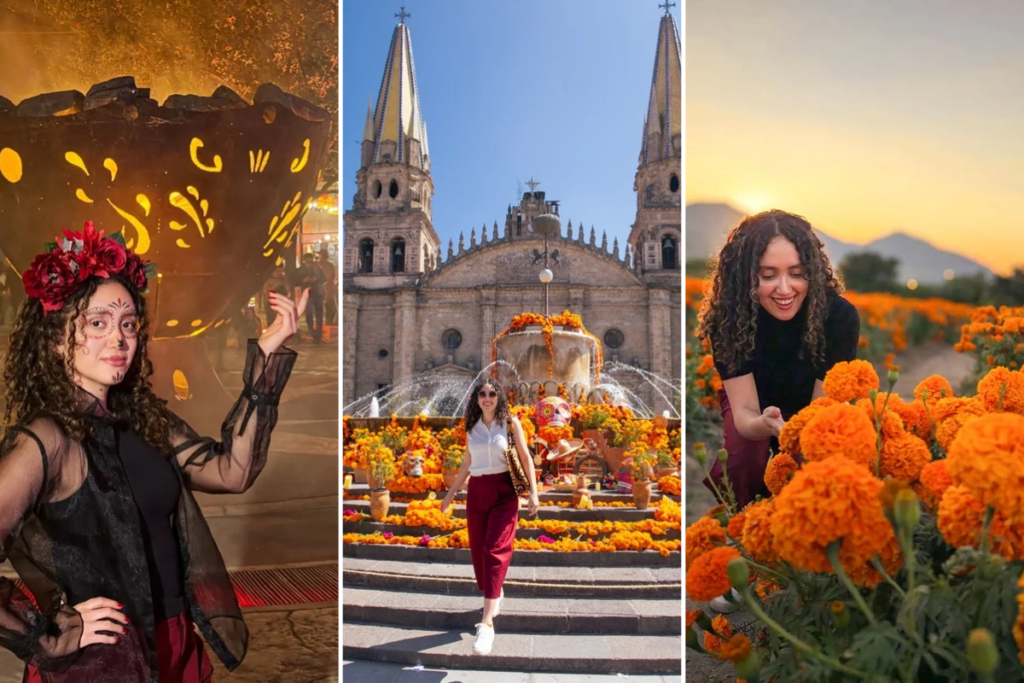
You’ve heard about Día de Muertos in Oaxaca and Mexico City, but what about Guadalajara?
Across much of the country, from late October to early November, some Mexican families traditionally set up altars to honor and spiritually connect with their departed loved ones and ancestors.
Death isn’t necessarily a sad occasion during this time. Día de Muertos is also considered a celebration of life, memory, and the enduring connection between the living and the dead. And while its roots are deeply spiritual, the holiday has also evolved into a colorful public celebration, with festivals, parades, and increasingly elaborate attractions.
In Guadalajara, vibrant celebrations take over the streets with altars, marigold flower fields, festivals, parades, themed dinners, and even the largest immersive Día de Muertos theme park. Some of these festivities are rooted in longstanding community traditions, while others are modern, tourism-oriented experiences. Both offer different ways to experience the holiday, though it’s worth understanding the distinction.
Beyond the city, surrounding pueblos (small towns) transform their historic centers with flowers, altars, and catrinas.
Here’s when to go, where to go, what you can’t miss, and the history and cultural traditions behind this Mexican holiday.
Table of Contents
Where Does Día de los Muertos Originate?
The roots go back thousands of years, to the pre-Hispanic peoples of Mesoamerica. Many Indigenous civilizations, including the Aztecs (also called the Mexica) and the Maya, honored their dead. They did not necessarily view it as a final, terrifying end, nor as a binary choice between heaven and hell. Instead, for the Aztecs and other Nahua peoples, death is a natural transformation, a transition, and a continuation of life embedded in a cyclical universe. Death was woven into everyday life and spirituality. Skulls and skeletal imagery were prominent in Mesoamerican art and symbolism. One example is Mictlantecuhtli, the Mexica god of death and ruler of the underworld, often depicted as a skeletal figure.
In the Mexica ritual calendar, ceremonies honoring the dead took place around August, in the late summer. These observances were intertwined with agricultural cycles, including maize (corn), a sacred crop central to Mesoamerican life and spirituality. Then, in the 1500s, with the Spanish invasion, Indigenous traditions were erased, suppressed, or strategically blended into Catholic observances. Commemorations of the dead eventually became associated with All Saints’ Day (November 1) and All Souls’ Day (November 2). Historians still debate how much of today’s holiday is pre-Hispanic and how much developed through Spanish Catholicism and later Mexican traditions. Today, Día de los Muertos is a mix built over centuries of cultural fusion and Indigenous resilience.
In 2008, UNESCO added Dia de los Muertos to its list of Intangible Cultural Heritage. The recognition highlights the holiday’s cultural significance and the continued importance of Indigenous traditions in Mexico.
When Exactly is Día de Muertos?
Celebrations begin in mid to late October and continue into early November. The biggest days are November 1 and 2. Some regions and communities go further and recognize different dates for different souls:
- October 27: beloved pets (a date popularized in more recent observances)
- October 28: people who died tragically, like in accidents
- October 29: in some places, people lost to drowning
- October 30: souls with no one left to remember them
- October 31: in some families, babies who died before birth or baptism
Long before those days, families shop, bake, and build altars. That’s why Guadalajara’s ofrenda market may open in early October, Calaverandia (the Day of the Dead theme park) usually opens around October 20, and Tlaquepaque’s festival kicks off in mid to late October.
Where to Go & What to Do in Guadalajara for Dia de Muertos
Calaverandia ★
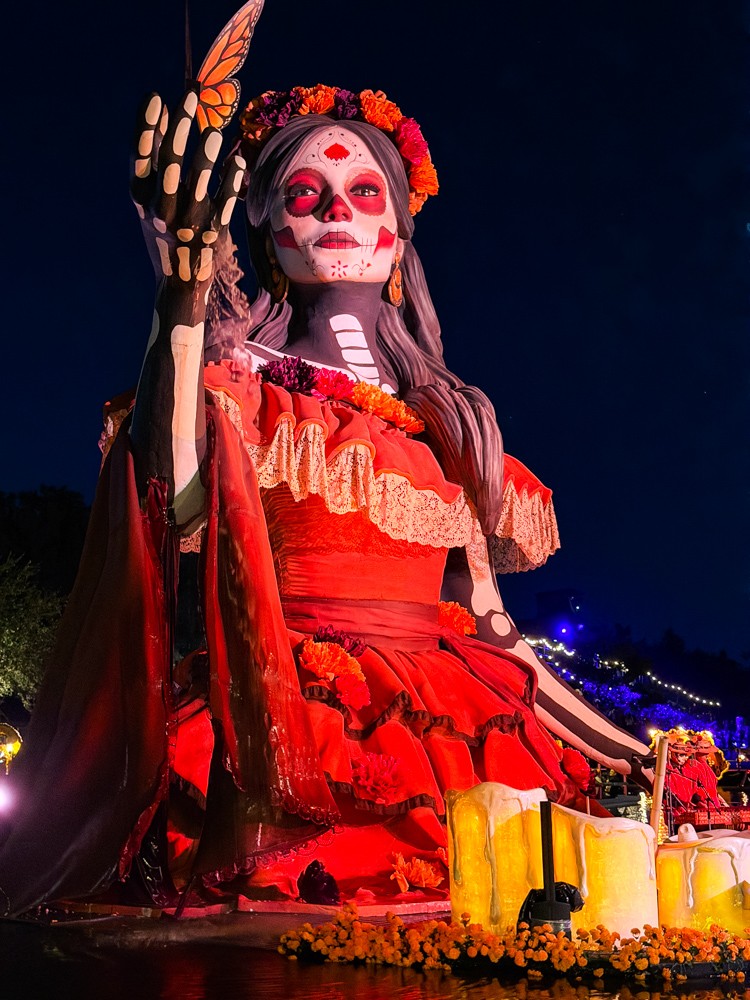
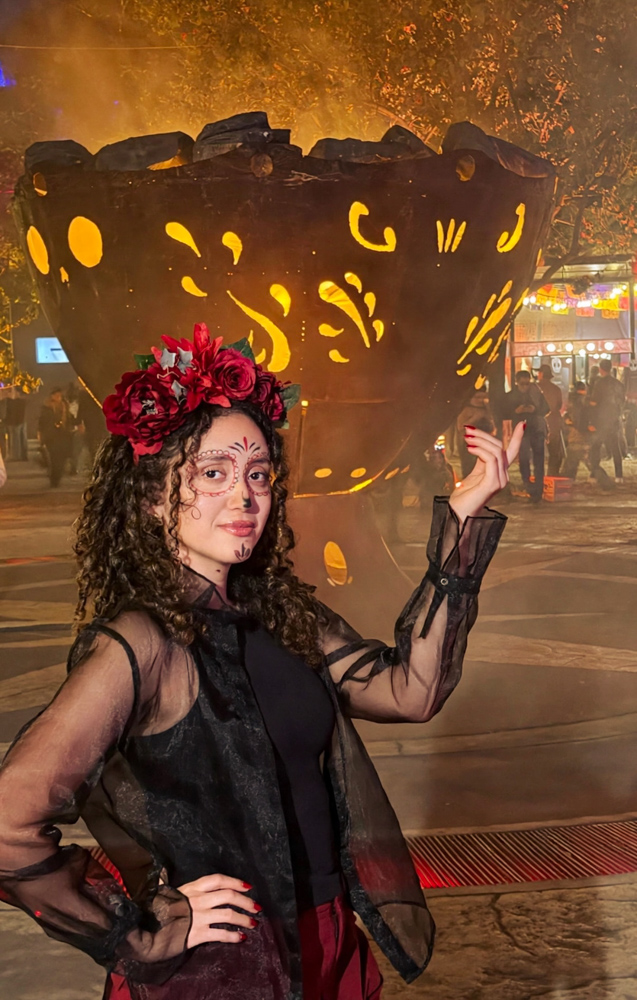
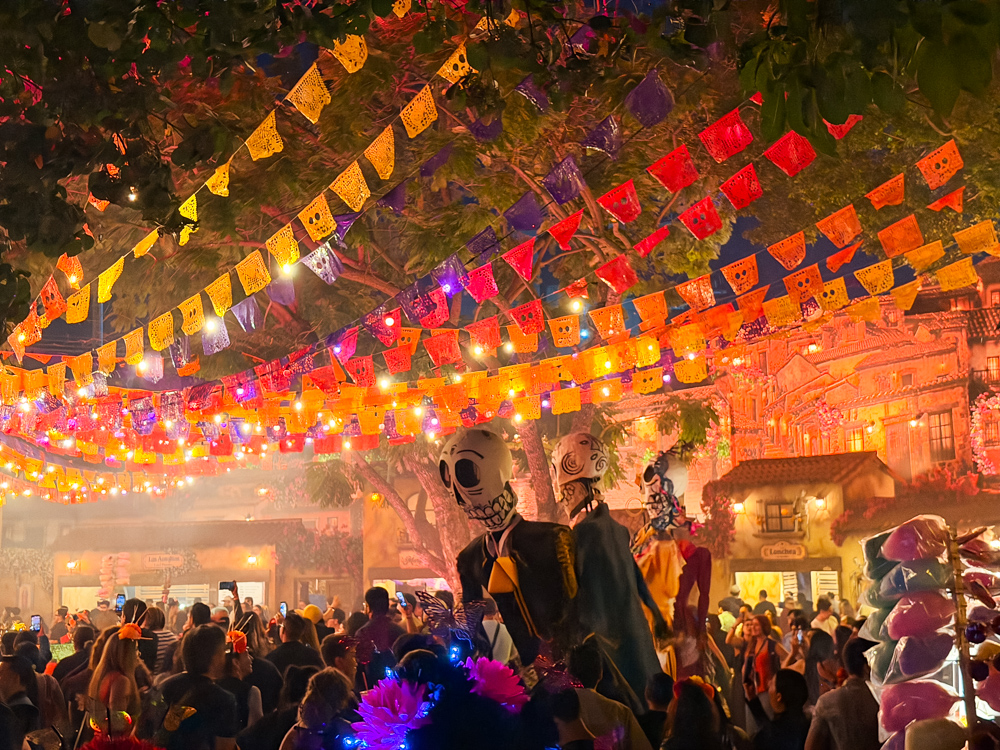
Calaverandia is the world’s first Día de Muertos theme park, transforming five hectares of Parque Ávila Camacho, across from Plaza Patria, into an immersive nighttime attraction for a few weeks each fall.
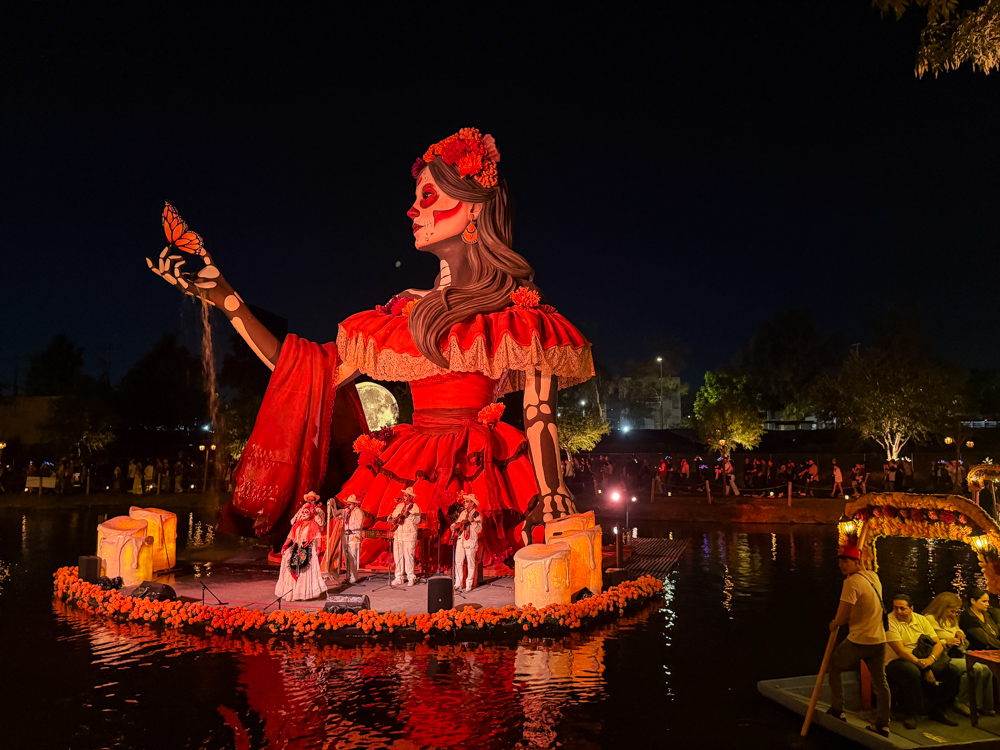
Expect a giant 15-meter-tall catrina, boat rides, live history performances, intimate concerts, art installations, craft vendors, and Mexican food. Highlights include Alma, a multimedia spectacle featuring lighting effects and performers, and Taü, a show combining dance, acrobatics, and music. Visitors can also explore a themed underworld and an interactive cemetery. It’s endless. Prepare to dedicate several, several hours to exploring the entire space. It’s gorgeous.
In 2026, Calaverandia opened on October 20, with regular adult admission starting at MXN $840 before service fees. The Comfort Pass cost MXN $1,600 and included perks such as expedited access, preferred show seating, and additional attractions. Children three and under entered free.
The park opens at 7 PM and closes at midnight Sunday through Thursday and 1 AM on Fridays and Saturdays. Wear comfortable shoes, and bring a light jacket.
Book your tickets in advance, especially for weekends.
Dinner Party at Casa de los Platos ★
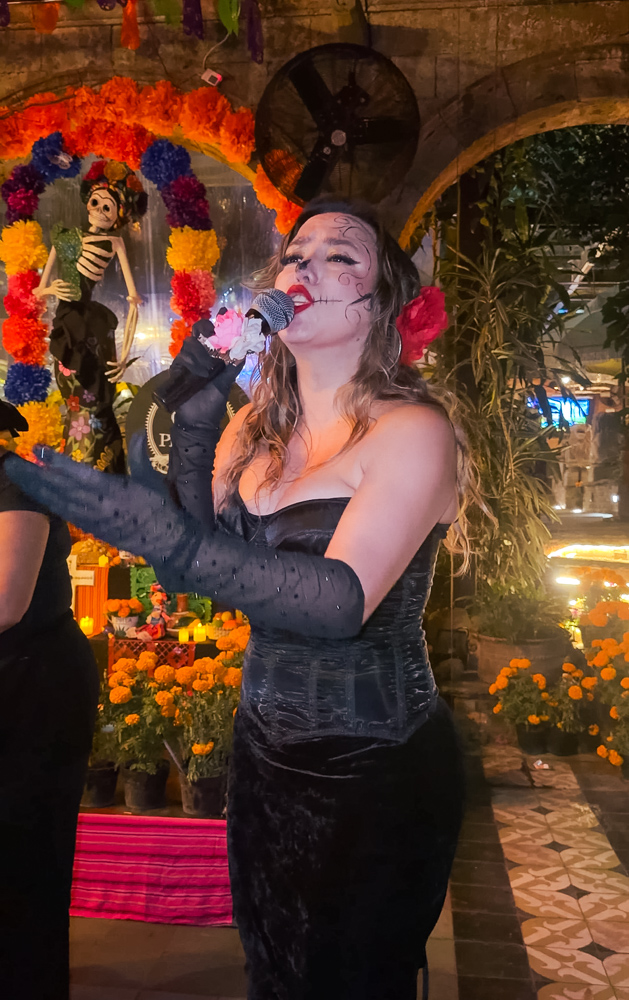
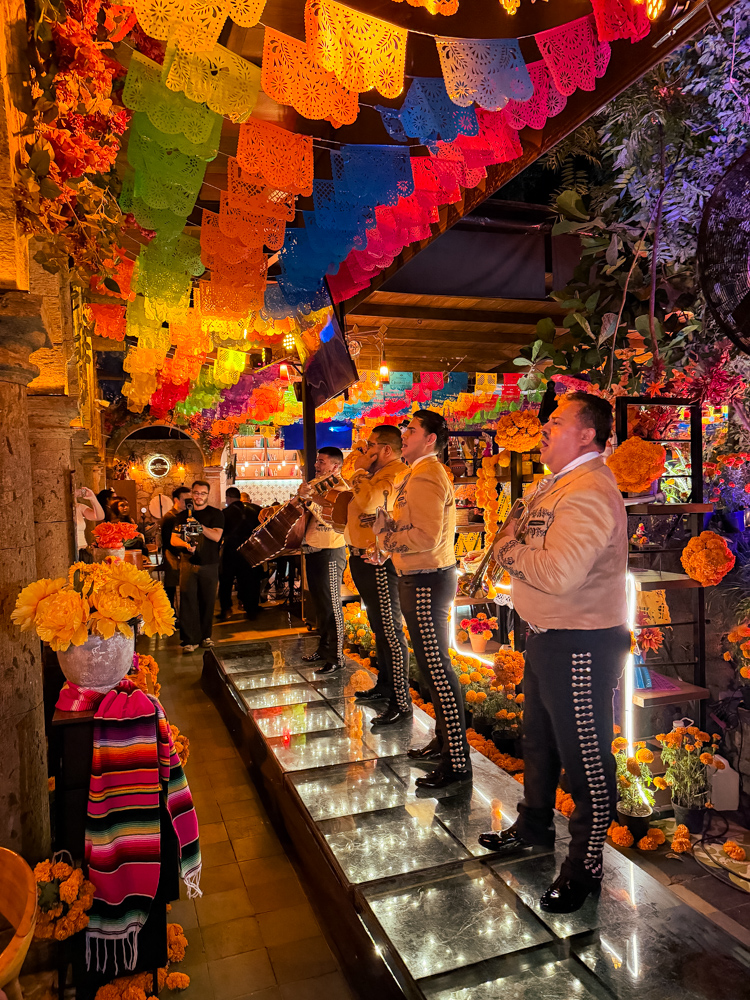
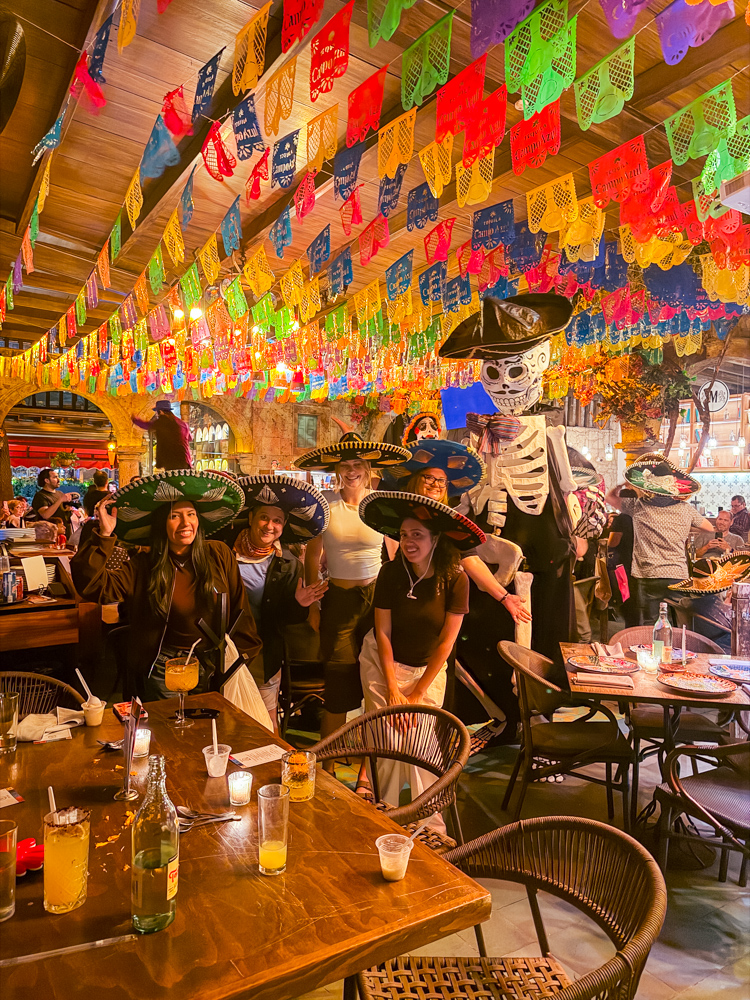
Located in Providencia, an upscale, trendy neighborhood of Guadalajara, Casa de los Platos is a lively Mexican restaurant known for its traditional cuisine, historic hacienda setting, and interactive entertainment that turns dinner into a Día de Muertos fiesta.
From the moment we entered, something new happened every few minutes. First came the live singers and mariachi, followed by giant dancing puppets, Catrinas, spinning wheels, more performers, and at one point we all got up to dance around the restaurant wearing gorgeous sombreros. Meanwhile, cocktails, fresh guacamole, and salsa were prepared right at our table. I even got a meaningful message from a bird.
One surprise after another made the entire dinner feel more like a Mexican festival than a typical restaurant experience.
While Casa de los Platos offers entertainment year-round, the Día de Muertos festivities made my visit especially memorable.
Know before you go: Casa de los Platos is located in Providencia at Av. São Paulo 2367. Reservations are recommended, particularly for weekends and holidays. Ask about special Día de Muertos programming and entertainment schedules when booking, as performances may vary.
Try Pan de Muertos
Pan de muerto is a traditional Mexican sweet bread that’s especially popular around Día de Muertos. Typically round, soft, and lightly sweet, it’s often flavored with orange blossom or citrus, topped with sugar, and decorated with strips of dough representing bones. Some bakeries stick to the traditional recipe, while others offer modern variations stuffed with cream, chocolate, or other fillings.
One place that caught my attention was Cuca y Lupe in Zapopan, where I saw one of the longest lines for pan de muerto during my visit. The bakery offers traditional versions alongside creative variations, making it a popular stop during the season.
Other places worth checking out include Panadería Goiti, a Guadalajara institution known for its traditional baked goods, and local markets/bakeries.
Día de Muertos Parades in Guadalajara
Guadalajara hosts at least two major Día de Muertos parades. Expect elaborate catrina costumes, colorful floats, music, dancers, and plenty of festive energy. I even saw famous luchadores riding past on a parade bus.
I recommend watching the parade from Guadalajara’s Historic Center, where you can also enjoy the illuminated historic buildings, festive decorations, and nearby markets. The city’s official Desfile Día de Muertos takes place around October 31. In 2026, the parade featured approximately 1,500 participants and attracted an estimated 40,000 spectators. The route began at Avenida Chapultepec and Avenida México, continued along Hidalgo, and ended at Plaza de la Liberación in the Historic Center.
The second parade is organized by the University of Guadalajara’s art and design school (CUAAD). Celebrating its 20th edition in 2026, this community-focused parade features catrinas, giant puppets, decorated floats, and dancers. This one took place on November 1, beginning at Parque Expenal de Oblatos and ending at Parque Revolución.
Travel tip: Dates, times, and routes change each year, so check the official announcements before visiting. Arrive early to secure a good viewing spot, especially near the Historic Center.
Explore Guadalajara’s Historic Center During Día de Muertos ★
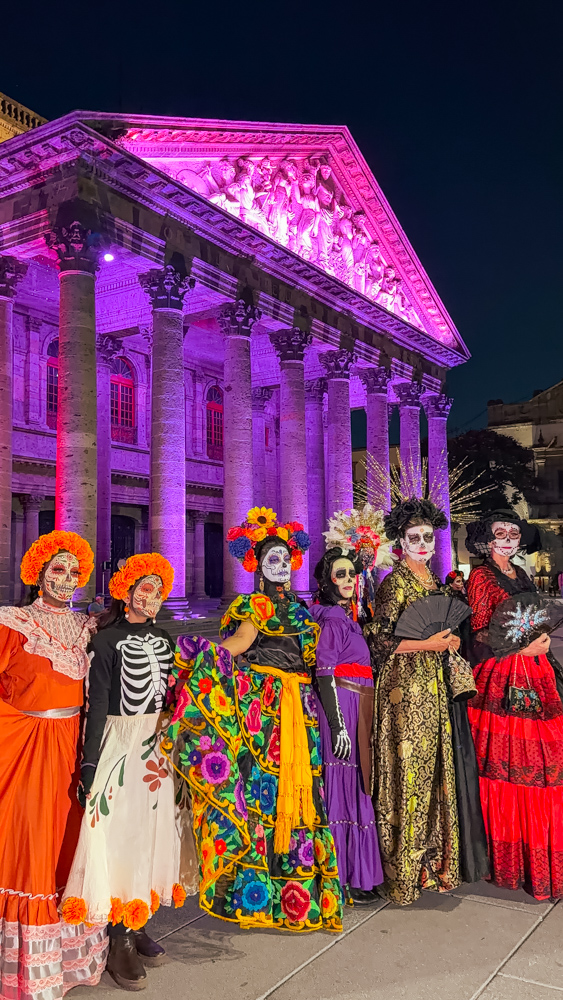
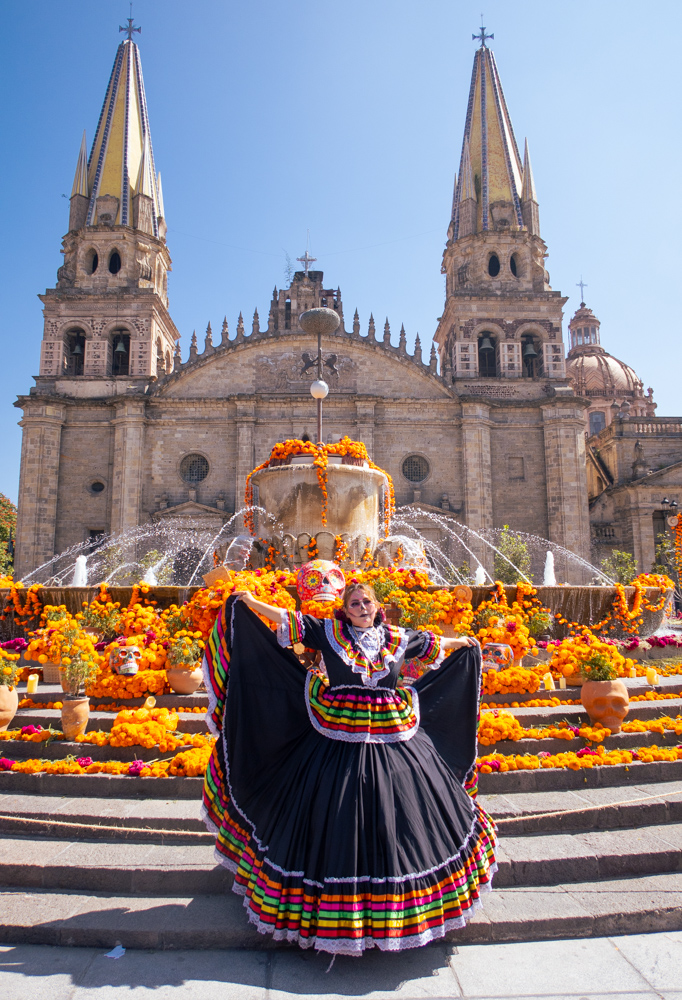
One of the best places to experience Día de Muertos in Guadalajara is its Historic Center (Centro Histórico), where grand colonial architecture becomes the backdrop for colorful altars, towering catrinas, marigold displays, live performances, and nighttime light shows.
Start at Guadalajara Cathedral, formerly known as the Cathedral Basilica of the Assumption of Our Lady. This 1500s landmark, with its distinctive twin yellow towers, sits at the heart of the city, surrounded by historic plazas and some of Guadalajara’s most important cultural attractions.
Directly in front of the cathedral is Plaza Guadalajara, which features seasonal decorations and monumental altars. Behind the cathedral, Plaza de la Liberación is another gathering place for performances and festivities, while Plaza Tapatía stretches east toward the magnificent Museo Cabañas, a UNESCO World Heritage Site famous for its murals by Mexican artist José Clemente Orozco.
Another must-see is Paseo Fray Antonio Alcalde, a pedestrian-friendly boulevard decorated for the holiday. In 2026, the city installed Camino al Cielo (Path to Heaven), an illuminated canopy of marigolds, butterflies, and lights, along with a giant altar. The cathedral also became a canvas for spectacular nighttime video-mapping projections featuring skulls, alebrijes, and other Día de Muertos imagery.
Don’t miss the Feria del Cartón, a traditional craft fair held around Parque Morelos. Here, local artisans sell handmade catrinas, colorful papier-mâché figures, sugar skulls, and other seasonal decorations. It’s a great place to shop for locally made souvenirs while learning about Mexican folk art.
If you want to see a traditional ofrenda up close, several museums and cultural institutions create public altars honoring departed artists, historical figures, and loved ones. In 2026, participating venues included the Museo de la Ciudad, Museo del Periodismo y las Artes Gráficas, and Casa Museo López Portillo. These displays are an opportunity to understand the symbolism behind offerings such as candles, photographs, food, water, and marigolds, which are traditionally believed to help guide visiting spirits.
Rancho San Juan Diego’s Marigold Fields Festival ★
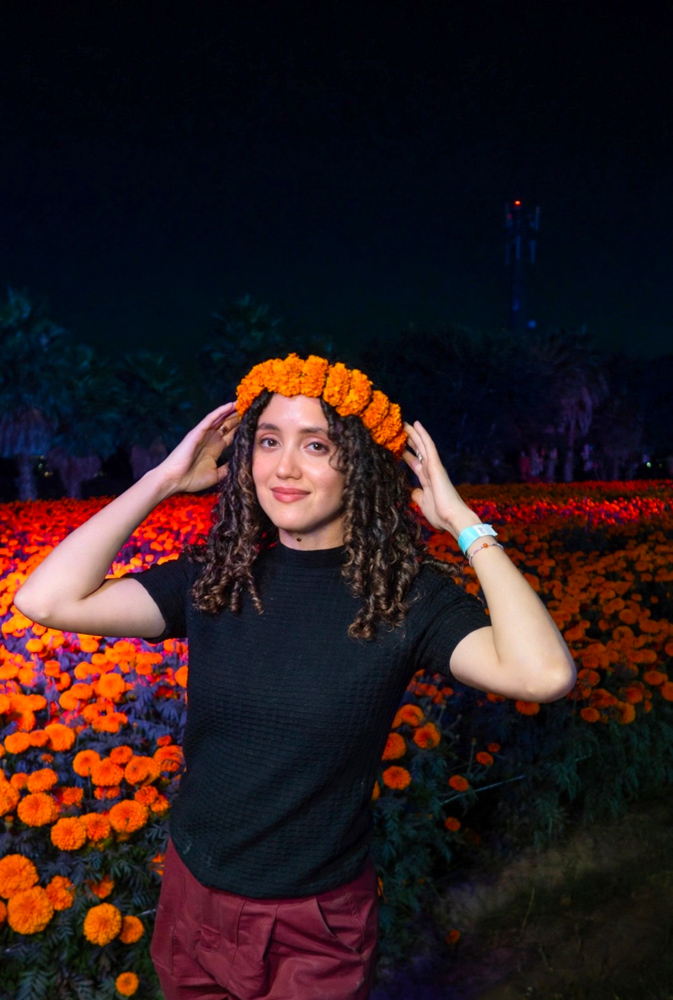
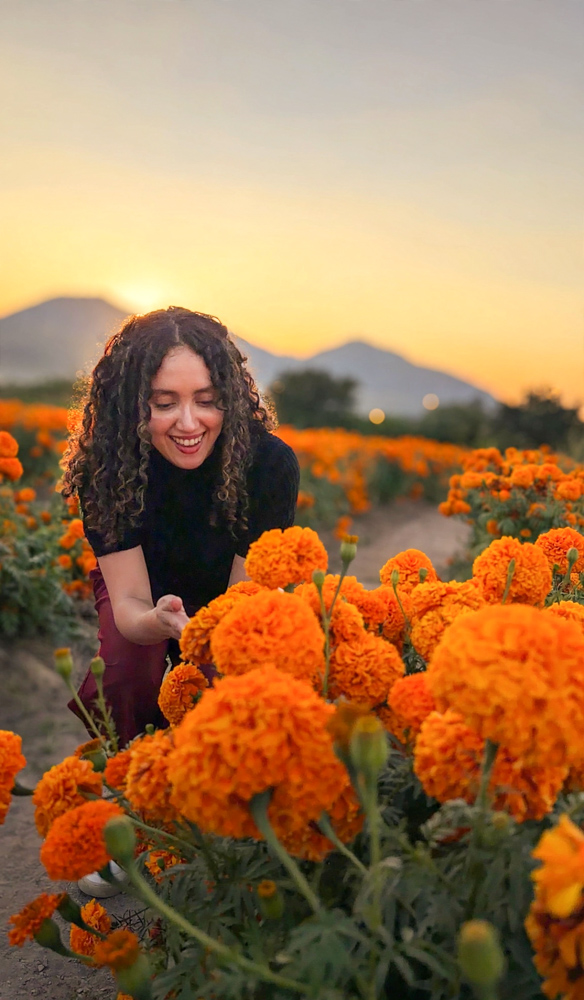
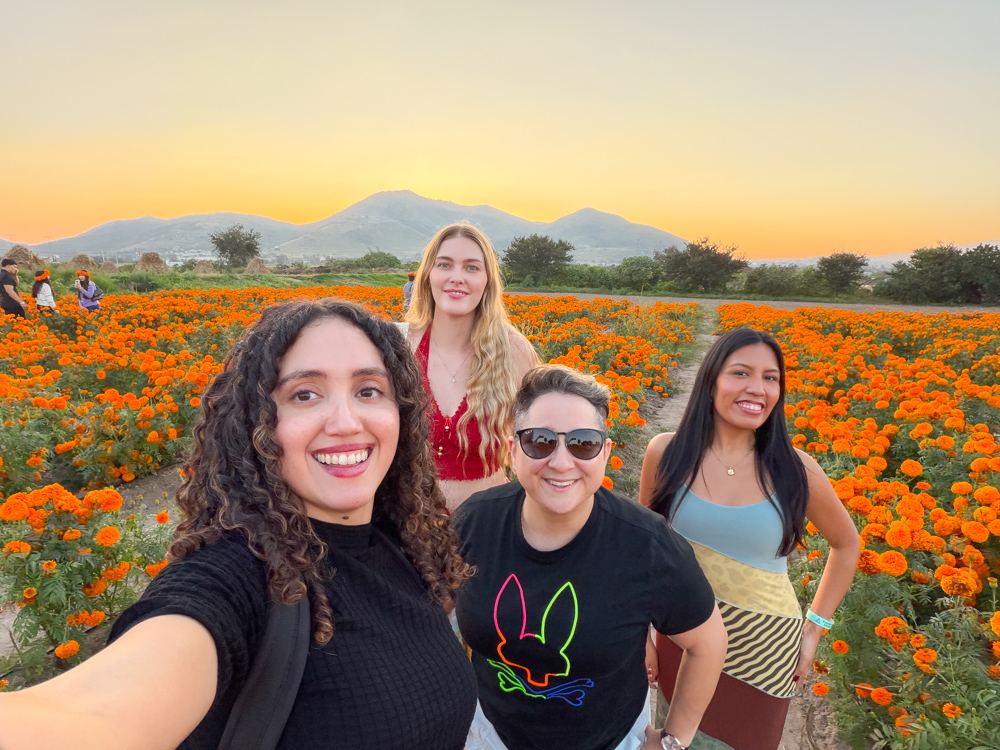
This family-run flower farm in San Sebastián el Grande is about 45 minutes outside Guadalajara. You’ll see fields of bright orange marigolds (cempasúchil), surrounded by mountains at Rancho San Juan Diego.
Cempasúchil has deep cultural significance during Día de Muertos. Its vibrant orange color and distinctive fragrance are traditionally believed to help guide the spirits of departed loved ones back to their families’ altars. That’s why you’ll see marigold petals scattered along pathways and decorating ofrendas throughout Mexico.
But Rancho San Juan Diego offers more than flower fields and photo opportunities. During its annual Festival del Cempasúchil, visitors can enjoy cultural performances, local food vendors, interactive activities, and workshops. When I visited, there was even a flower crown station. One of the more meaningful activities is the Buzón al Cielo (Mailbox to Heaven), where visitors can leave messages for departed loved ones.
For an even more immersive experience, look into Entre Luz y Oscuridad (Between Light and Darkness), a special evening celebration featuring folkloric dance, music, fire performances, and illuminated displays.
Ojo: The season is short and depends on the flowers’ bloom. In 2026, the festival ran from October 10 through early November, with general admission ranging from MXN $200 to $300 for adults, depending on the date and experience. You might be able reserve in advance. Check the official website or Instagram for updated dates.
Shop for Día de Muertos Crafts at Feria del Cartón
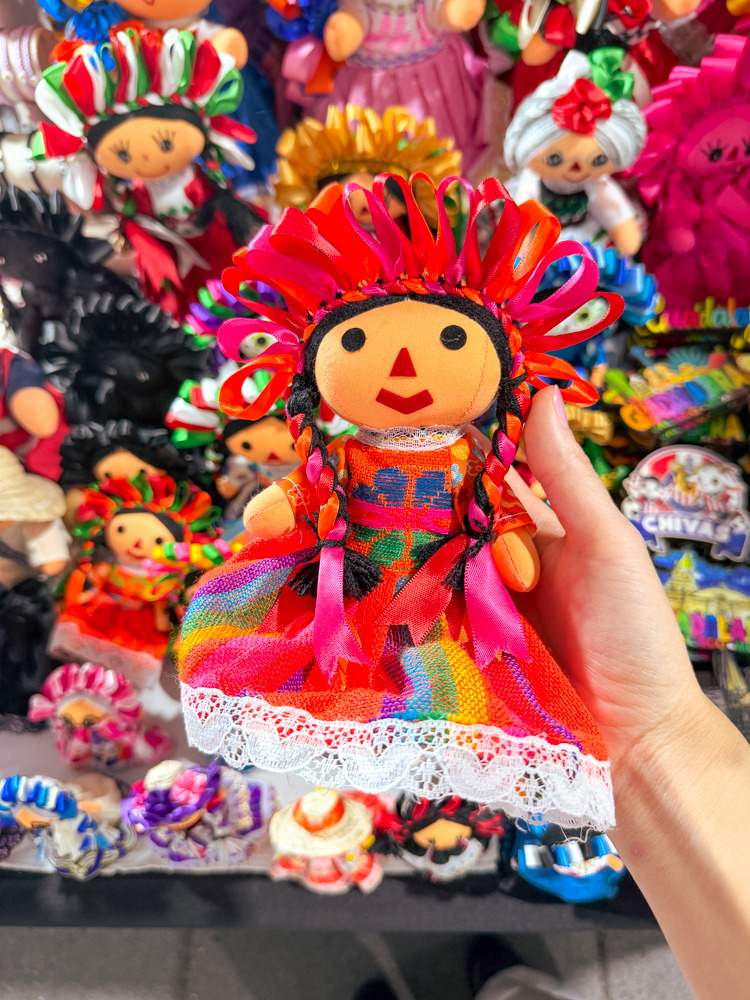
The Feria del Cartón y del Juguete is a seasonal artisan market that has been part of Guadalajara’s cultural traditions for more than 75 years.
Held annually at Parque Morelos, the fair brings together hundreds of vendors selling handmade Mexican folk art, traditional toys, and decorations for Día de Muertos altars. Expect colorful catrinas, sugar skulls, papel picado (decorative cut-paper banners), marigolds, incense, and traditional cartonería, a Mexican folk art technique using papier-mâché to create hand-painted dolls, masks, and skeletal figures. It’s a wonderful opportunity to appreciate Mexican craftsmanship and support local artisans.
You’ll also find pan de muerto, traditional sweets, regional snacks, and even carnival rides for children. In 2026, the market ran from October 4 to November 4.
Travel tip: Bring cash for small purchases and visit earlier in the day if you prefer shopping before crowds arrive.
San Pedro Tlaquepaque – Pueblo Magico ★
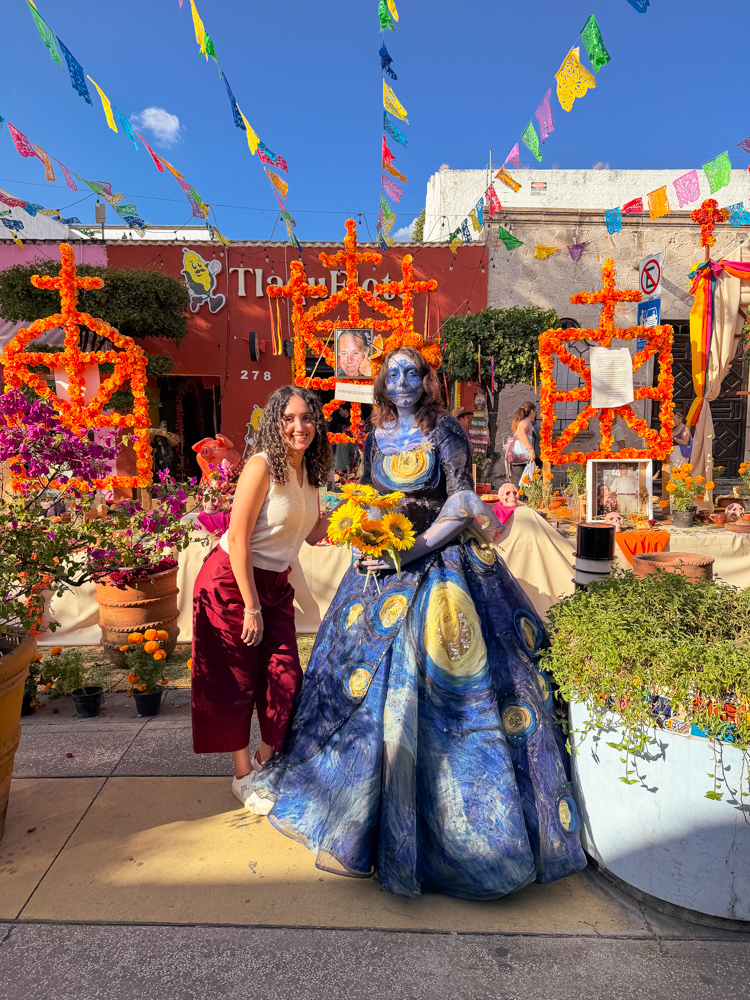
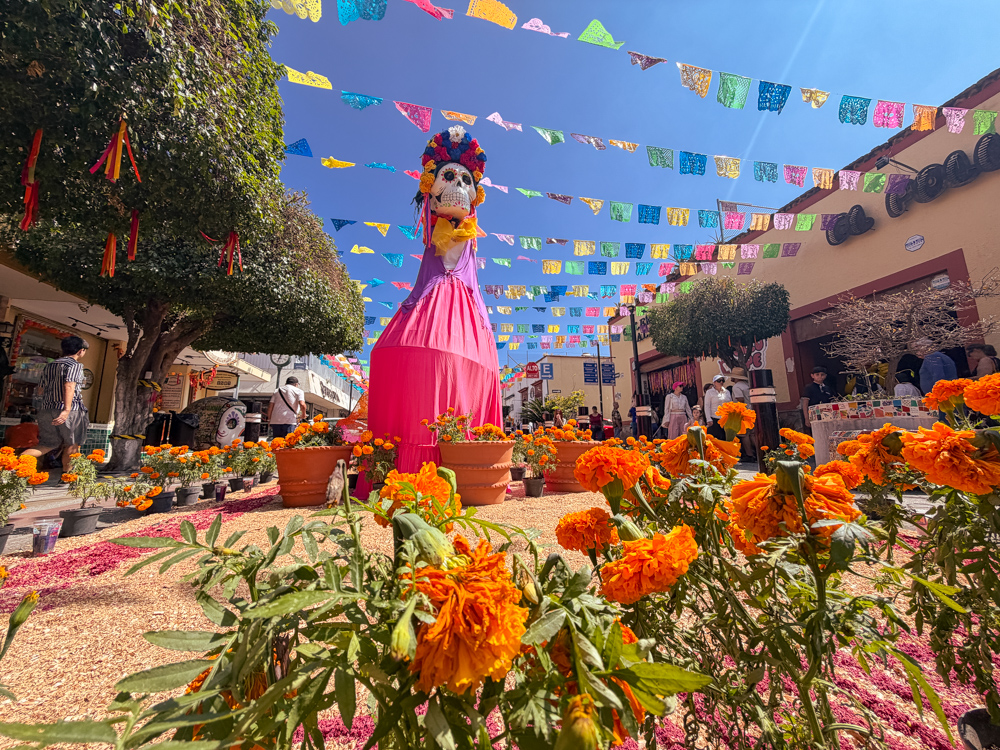
About 30 minutes from downtown Guadalajara, San Pedro Tlaquepaque is a charming artisan town and designated Pueblo Mágico that’s now part of the Guadalajara metropolitan area. It’s famous for traditional pottery, mariachi music, colorful architecture, and Calle Independencia, a pedestrian street lined with galleries, boutiques, and restaurants.
During Día de Muertos, Tlaquepaque’s historic center comes alive with elaborate ofrendas, towering catrinas, candlelit displays, artisan markets, live music, and cultural performances.
The town’s annual Festival de Muertos, known as Tradición Viva in 2026, runs for approximately nine days. That year, celebrations took place from October 25 through November 2, beginning with a grand parade of catrinas, dancers, and colorful floats.
One of the highlights is Centro Cultural El Refugio, a former hospital turned cultural center, where visitors can admire traditional altars and attend special exhibitions. Nearby, Calle Juárez features a monumental altar, while Jardín Hidalgo hosts folkloric dance, music, theater, and family-friendly activities.
Between events, explore Tlaquepaque’s artisan galleries and shops, admire its traditional ceramics, take a hands-on clay workshop at Legado Panduro: Raíces en Barro, a women-owned studio run by three sisters descended from Pantaleón Panduro, a celebrated 19th-century Mexican sculptor, and stop at El Parián, a historic courtyard surrounded by restaurants and bars where you can enjoy regional dishes and live mariachi music.
Check the official Jalisco Tourism festival calendar for the latest dates and events.
Take a Night Tour of Museo Panteón de Belén ★
For many Mexican families, visiting the cemetery is an important part of Día de Muertos. On November 1 and 2, families gather to clean and decorate graves with marigolds, candles, and offerings to honor their departed loved ones. Some bring food, music, and spend hours remembering those who have passed. If visiting an active cemetery during the holiday, be respectful of families paying their respects. Avoid photographing people without permission or disrupting their private moments.
Museo Panteón de Belén is a historic cemetery dating back to 1848, now preserved as a museum rather than an active burial ground. Its ornate 19th-century tombs, mausoleums, and funerary architecture make it one of Guadalajara’s most fascinating historical attractions.
The museum is especially famous for its nighttime tours, which introduce visitors to local legends, including the stories of Nachito, a child whose grave became associated with supernatural tales, and the legendary Vampire of Guadalajara.
During Día de Muertos, Panteón de Belén hosts guided tours, cultural activities, and a monumental ofrenda. In 2026, visitors could explore the altar for free in the late afternoon or join nighttime tours for approximately MXN $111 per adult.
Travel tip: Book nighttime tours in advance when possible, as holiday dates can be popular. Check the museum’s current photography rules before visiting.
How to Celebrate Día de Muertos Respectfully
Día de Muertos is a celebration, but it isn’t Mexican Halloween. Beyond the colorful decorations, music, and festivities, it’s a holiday rooted in honoring loved ones who have passed and keeping their memories alive. As a visitor, it’s important to understand the difference between public celebrations and personal traditions.
Parades, festivals, and public celebrations are meant to be enjoyed. Join the festivities, get your face painted as a Catrina, admire the elaborate costumes, and support local vendors and artisans. You don’t need to dress up to participate, but if you do, approach the traditions with appreciation and connection rather than treating them as a Halloween costume.
Altars and cemeteries deserve a little more consideration. Public ofrendas are often designed for visitors to admire and photograph, but never touch or remove their offerings. At active cemeteries, remember that families may be spending personal time honoring their loved ones. Keep your voice down, avoid stepping on graves, and give people their space.
Be thoughtful about photography. Avoid taking photos of children. Ask permission before photographing anyone. Avoid using flash during ceremonies. And respect any posted photography restrictions.
Above all, participate with curiosity and respect. Día de Muertos is an opportunity to experience Mexican culture while appreciating the people and traditions that keep it alive.
Read More of My Mexico Guides
- 32 Fun & Interesting Facts About Mexico City – Local Historian’s Guide
- 28 Best Museums in México City to Visit + Important Cultural Spaces
- 27 Truly Special Things to Do in Oaxaca, Mexico + Day Trips