

Central Asia, Uzbekistan, Uzbekistan
The Perfect One Week Uzbekistan Itinerary for First Time Travelers

Uzbekistan sits at the heart of Central Asia, where the ancient Silk Road once connected East and West. A country shaped by centuries of trade, conquest, and cultural exchange.
For thousands of years, the region has been a meeting point of civilizations. It was once part of the vast Persian Empire, later flourished under the Timurid dynasty, and thrived as a center of trade and scholarship in Central Asia. Turkic dynasties also left their mark here, linking Uzbekistan’s roots to cultures that stretch from the Uyghurs of Xinjiang to modern-day Turkey. That is why the national language, Uzbek, belongs to the Turkic family.
In more recent history, Uzbekistan spent much of the 1900s century under Soviet rule, gaining independence in 1992. Since then, the country has grown into a republic of the Uzbek people. In 2016, the new leadership ushered in an era of greater openness and reform, including opening its borders to tourism and direct international flights from New York City.
Today, Uzbekistan welcomes the world with its blend of Persian, Turkic, Islamic, Arabic, Mongol, and Russian-Soviet influences. Walking through its ancient cities can feel like traveling through time. It is the perfect place to begin exploring the layers of Central Asia’s history and culture.
Here is how I recommend experiencing Uzbekistan for the first time.
Table of Contents
One-Week Uzbekistan Itinerary from Tashkent to Khiva
Day 1 & 2: Tashkent
Tashkent, Uzbekistan’s capital, is what I feel like Dubai tries to be. It’s modern, cosmopolitan, offers luxury at accessible prices but carries a ton of rich history and local culture. With some of the best boutique shopping in the country, opportunities for cultural connection, and the greatest restaurants in the country – be sure to dedicate at least a day or two to the capital!
You can get around by 1) Tashkent Metro, the first underground metro in Central Asia, where each station feels like a little art exhibit with marble walls, chandeliers, mosaics, and all these little details that mix Soviet grandeur with Uzbek design. Or 2) just order a Yandex (works like Uber) to get around for about $1-3 per ride.
Go Artisan Craft Boutique Shopping!
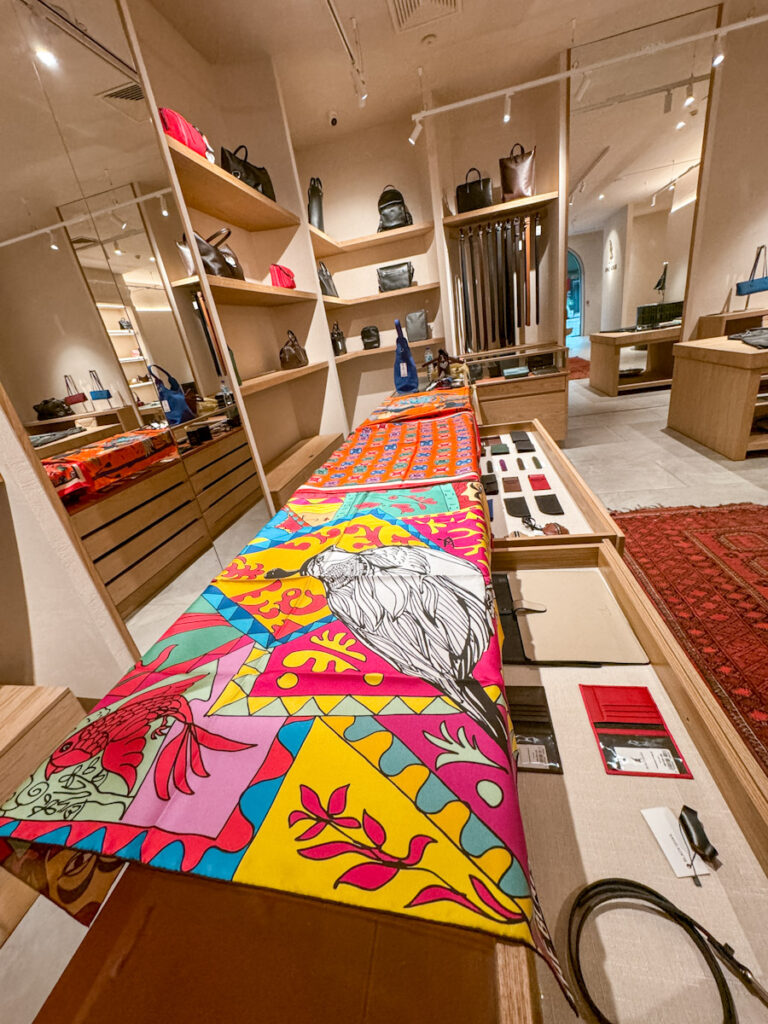
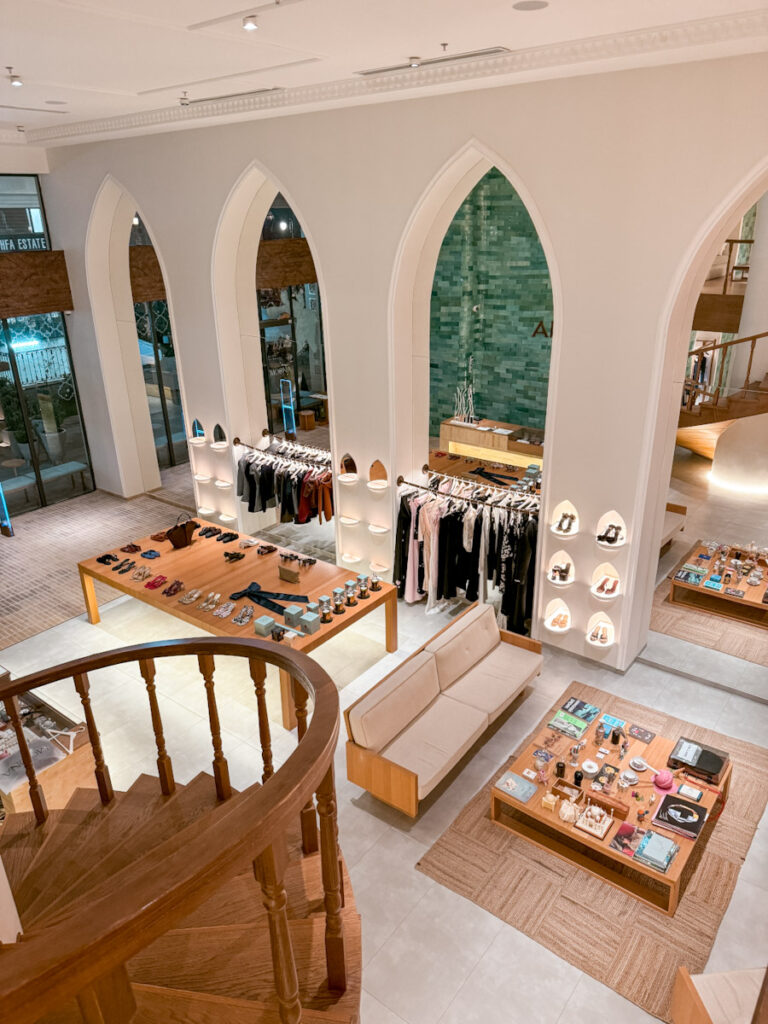
- Black Quail: Shop high-quality, handmade, gorgeous leather and silk pieces.
- Human House: A garden café-meets-cultural center filled with handmade clothes, art, and souvenirs. Prices are higher than the markets, but the selection is unique and thoughtfully curated.
- Simple Store: Not exactly a boutique, right next door to Black Quail, and beautifully curated concept with trendy, wearable pieces. I picked up a pair of gorgeous pants here that I ended up wearing multiple times on the trip.
- Other artisan boutiques that I wanted to check out but ran out of time include Stone City by Ela Ri, Suzani by Kasim, and Chaurel, all known for their modern designer takes on traditional Uzbek clothing.
Tashkent City Park for Luxury
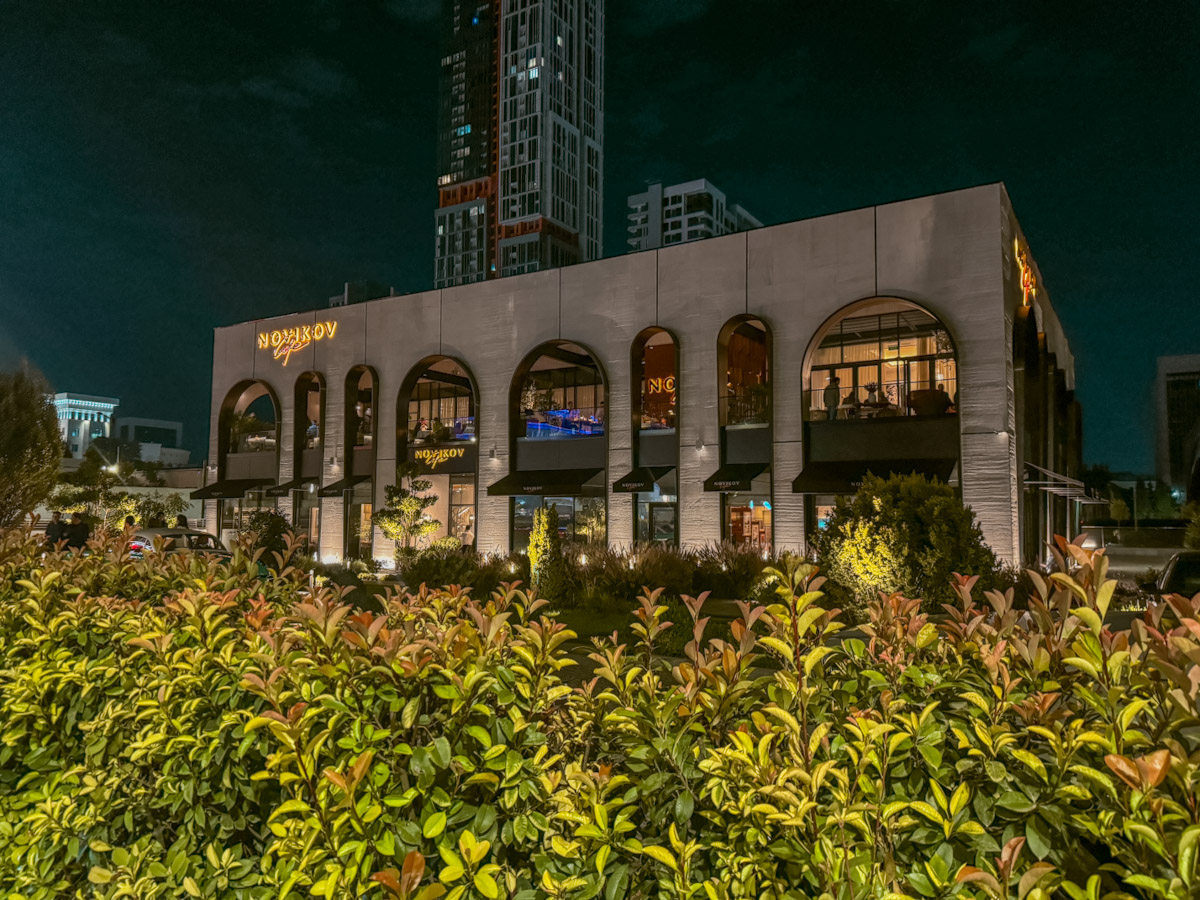
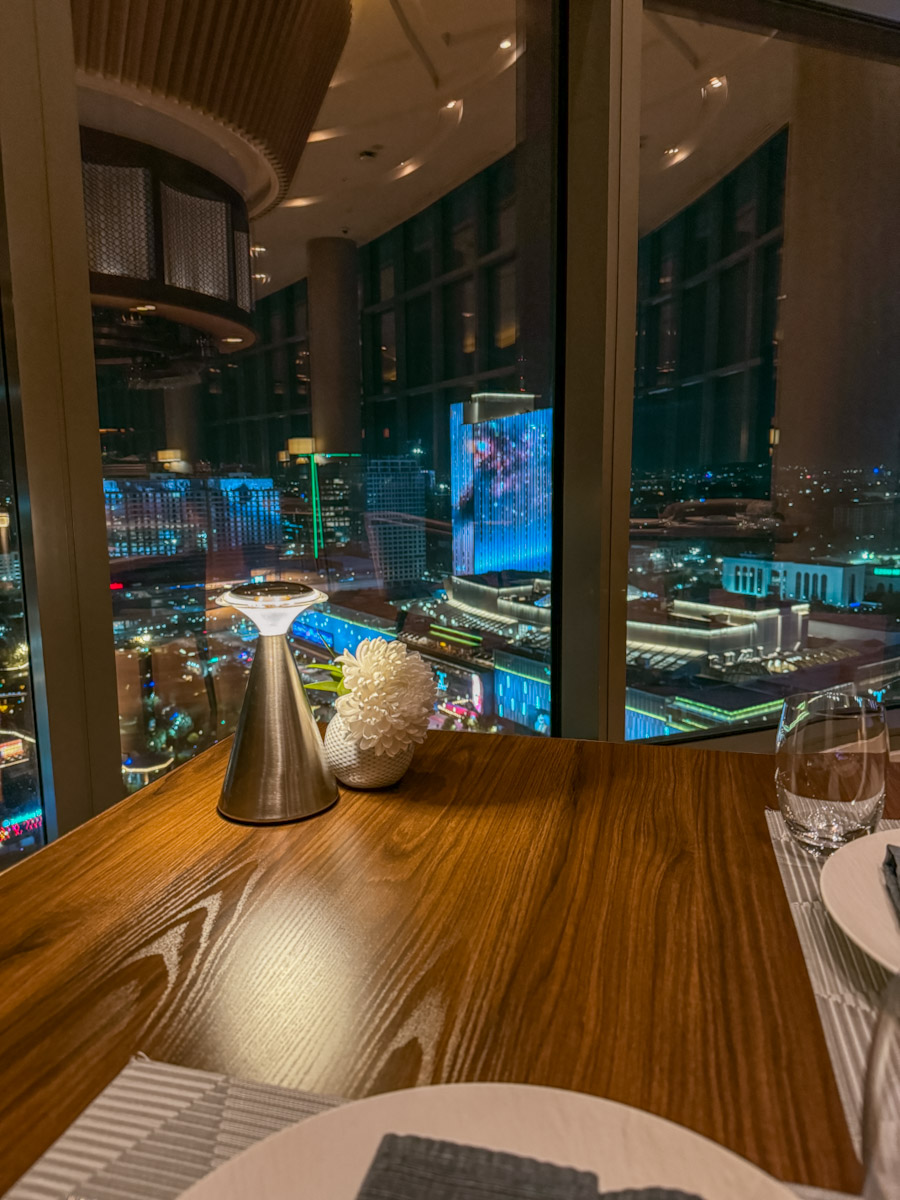
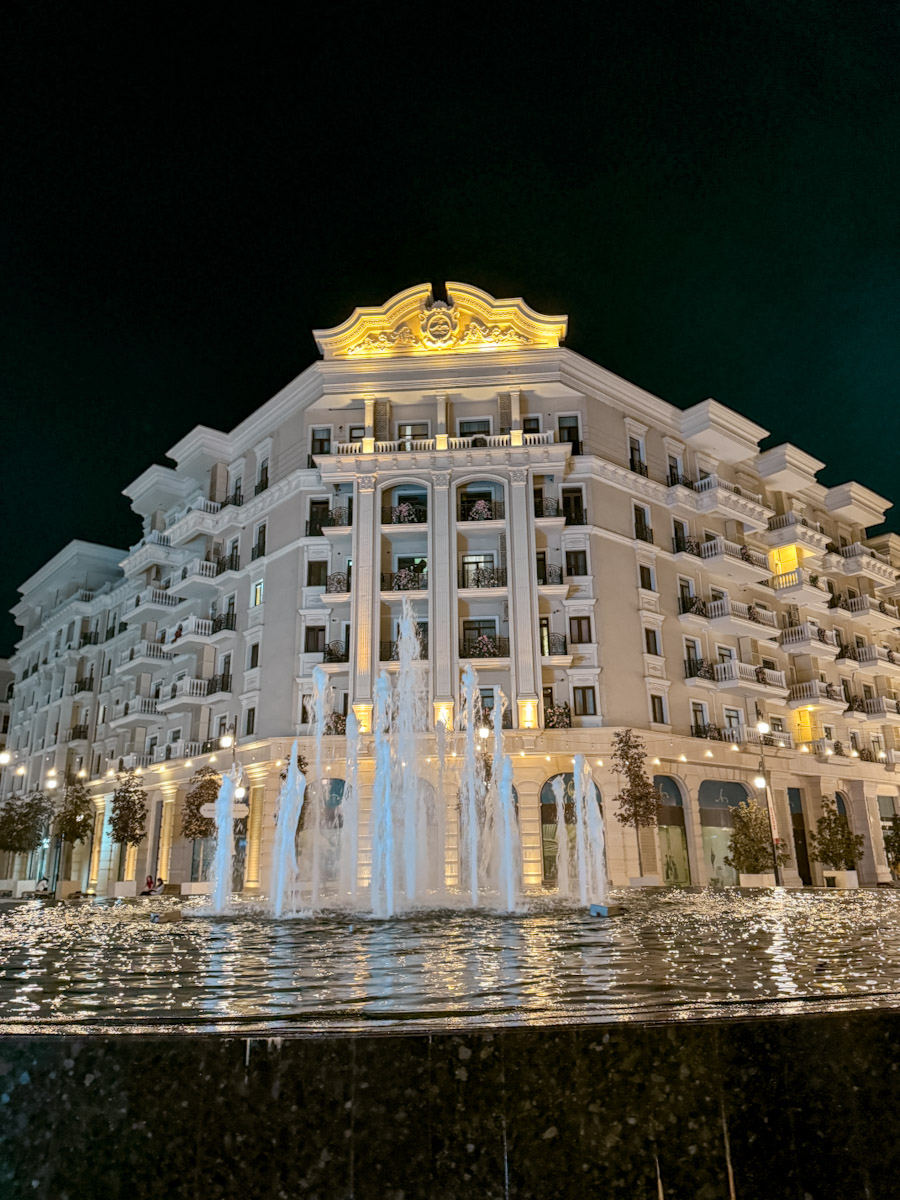
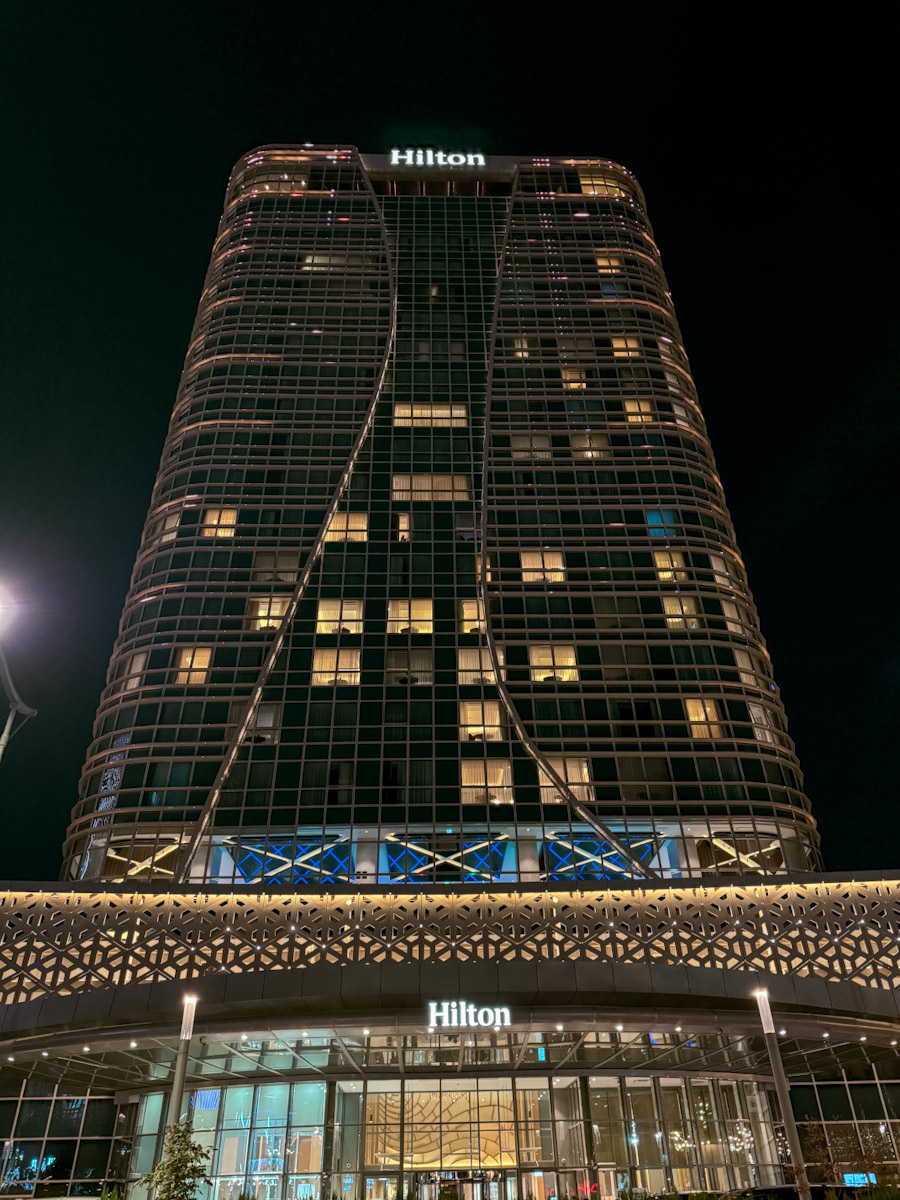
Opened in 2019, Tashkent City Park is the city’s modern, very walkable, green space with tons of modern shops, cute outdoor restaurants, and even a really fun mall that closes at midnight! Malls in Asia are not to be confused with the ones back in the USA. They usually include both popular brands AND some of the coolest shops with local crafts as well as some of the city’s best restaurants like Boboy.
It’s home to the 5-star Hilton Hotel, where you’ll find the gorgeous Serenity Spa, multiple restaurants, and lounges.
Tashkent’s Historic Spots
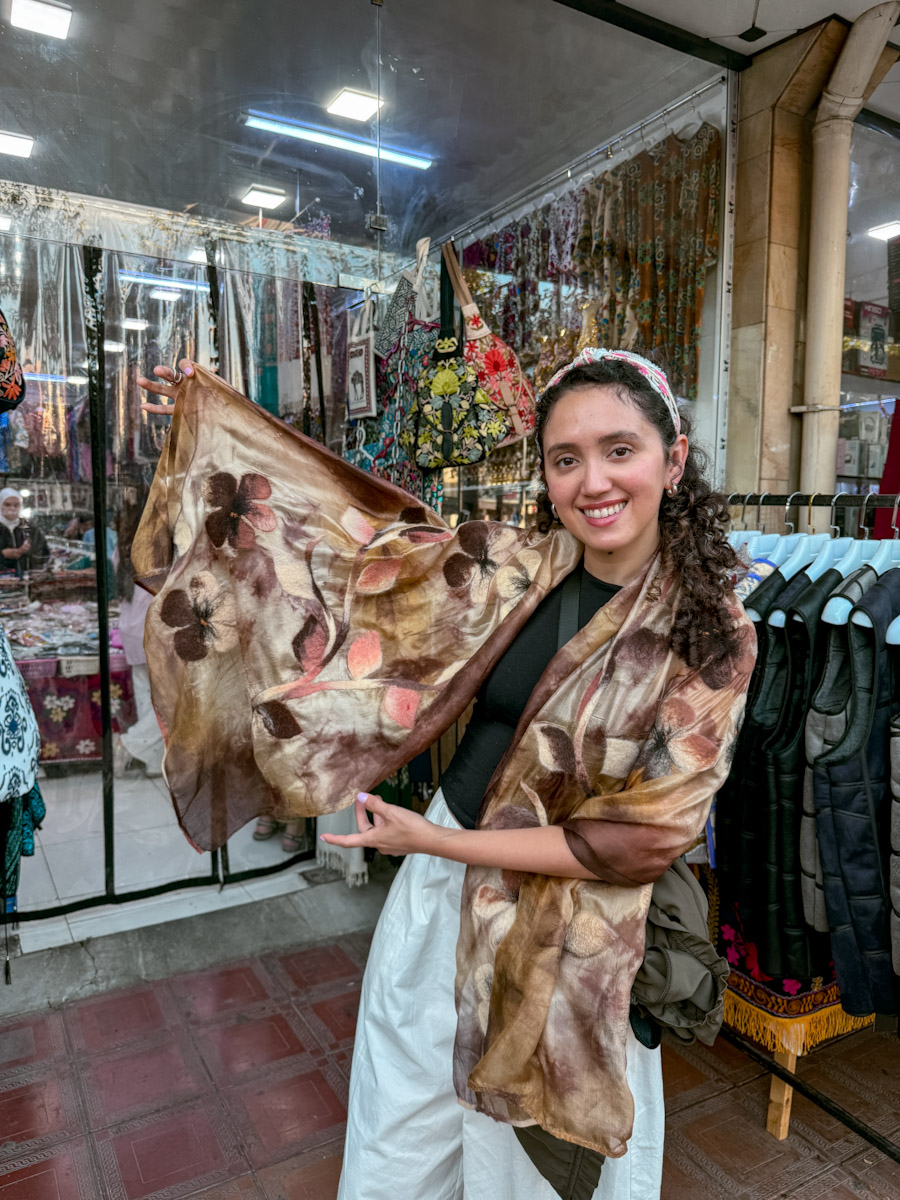
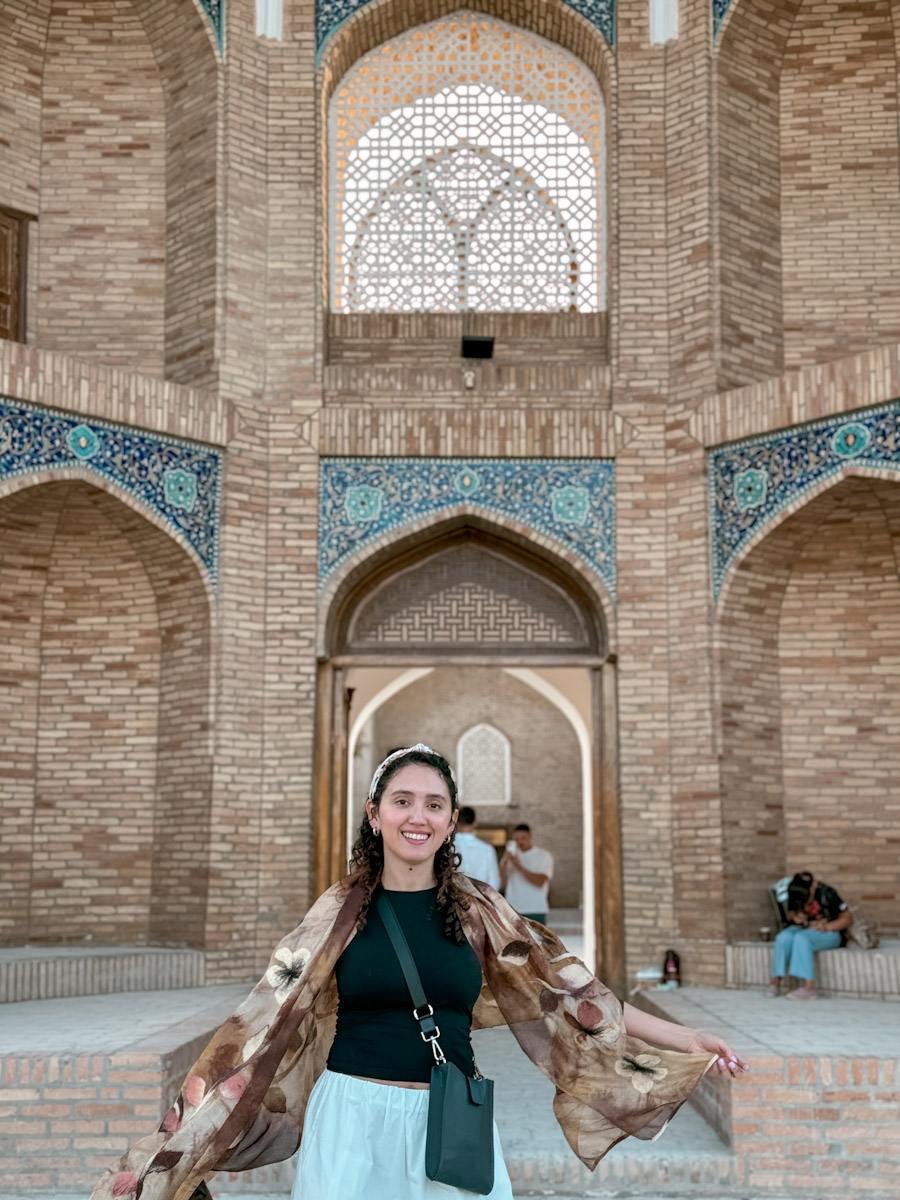
While Tashkent is better known for its modern vibe, some corners still offer rich history. It’s also important to note that much of Tashkent was destroyed by an earthquake in 1966.
First, the Chorsu Bazaar is said to be more than 2,000 years old, making it one of the oldest markets in the world. It’s right in Old Tashkent, and the big turquoise dome you see now was just built in the 1980s, a Soviet take on traditional Islamic architecture (after the earthquake). Come here for something quintessentially Uzbek: delicious freshly dried fruits (Uzbekistan is a major exporter), nuts, and tea. They also sell silk scarves and artisan goods.
The Kukeldash Madrasah, a 16th-century yellow-brick religious school, gives a glimpse into Tashkent’s medieval roots and the city’s role as a regional learning center. Nearby, the Hazrati Imam Complex is the heart of the city’s spiritual life. It’s home to centuries-old mosques, mausoleums, and one of Islam’s oldest Qurans.
Day 3 & 4: Samarkand

Samarkand is probably the prettiest city in Uzbekistan and is just 2 hours by train from Tashkent! Be sure to take the Afrosiyob Express, Uzbekistan’s modern high-speed train. Tickets start at $22.
Samarkand was once the capital of Timur’s vast empire; it’s now home to breathtaking Islamic architecture, vibrant markets, and centuries of artistry and scholarship that shaped the region’s cultural identity.
Registan Square ★
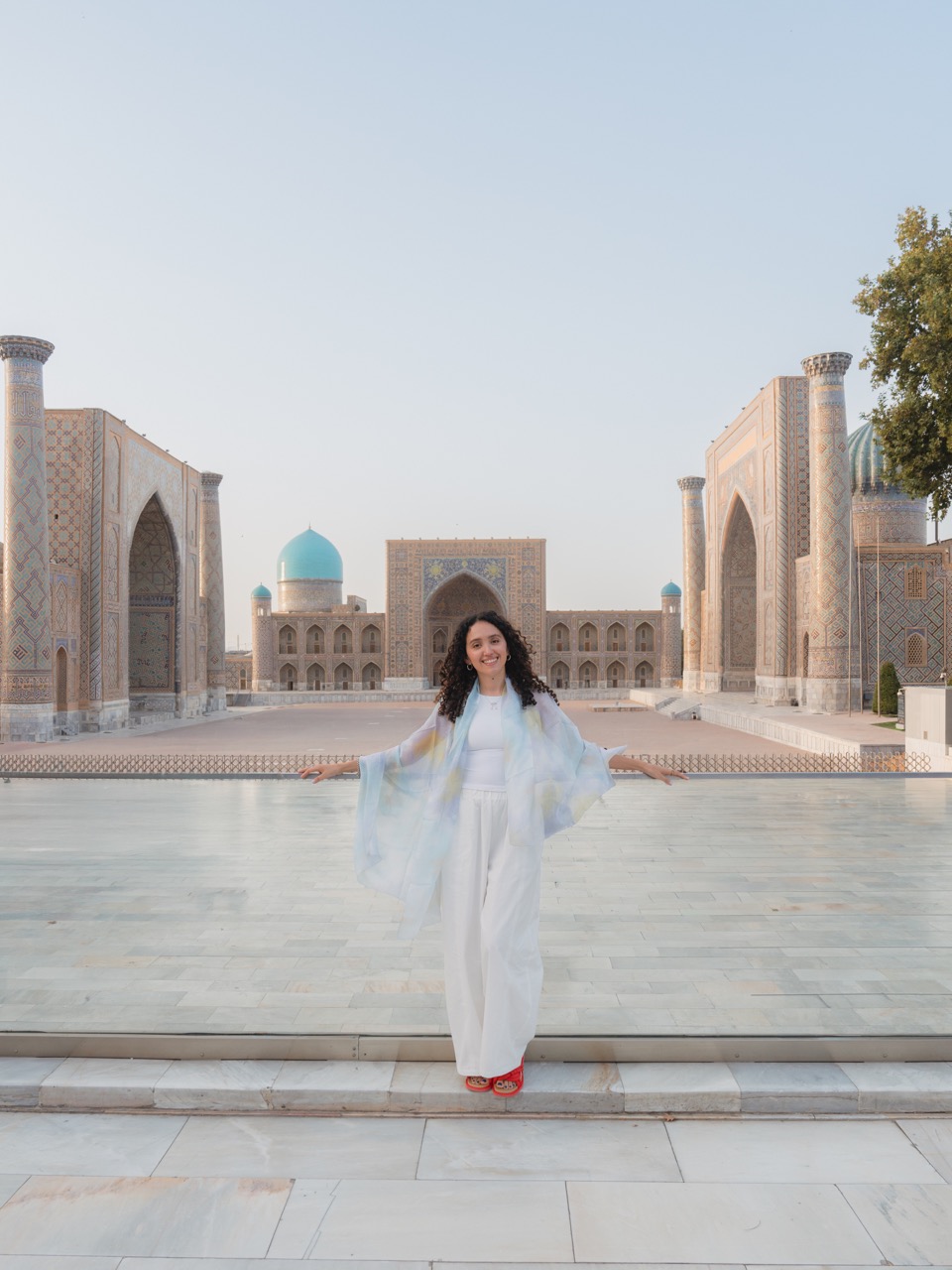
Registan Square is the crown jewel of Samarkand and one of the most striking sights in all of Uzbekistan. It was first laid out under Timur (Tamerlane), the 14th-century conqueror (he was like the Genghis Khan of his time), and later expanded by his grandson Ulugh Beg in the 15th century.
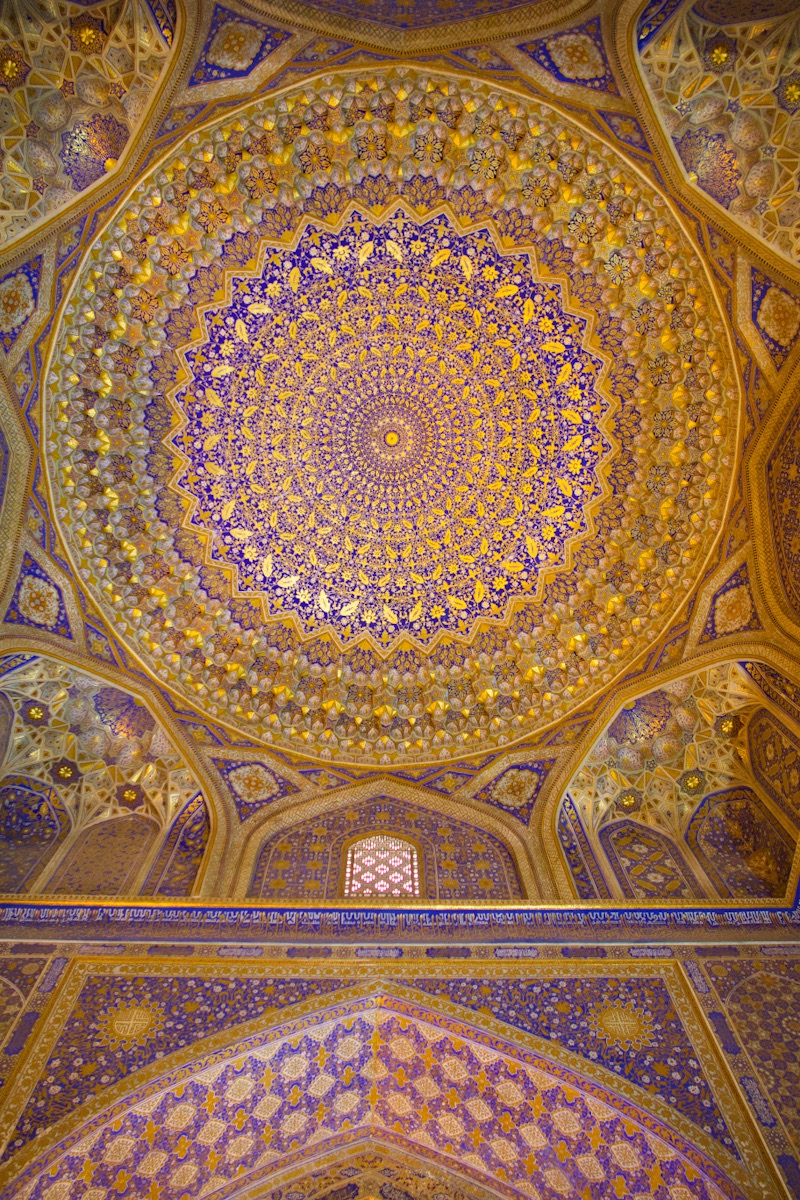
Once the city’s main square for royal proclamations, it became a hub of education and culture, surrounded by three grand madrasahs covered in intricate turquoise tilework. Step inside one and it feels like walking into a treasure box, full of intricate patterns and quiet detail. Today, you can even grab a Turkish coffee from the hidden gem cafes tucked within the complex while soaking in one of the most breathtaking sights in Central Asia!
“Shah-i-Zinda” ★
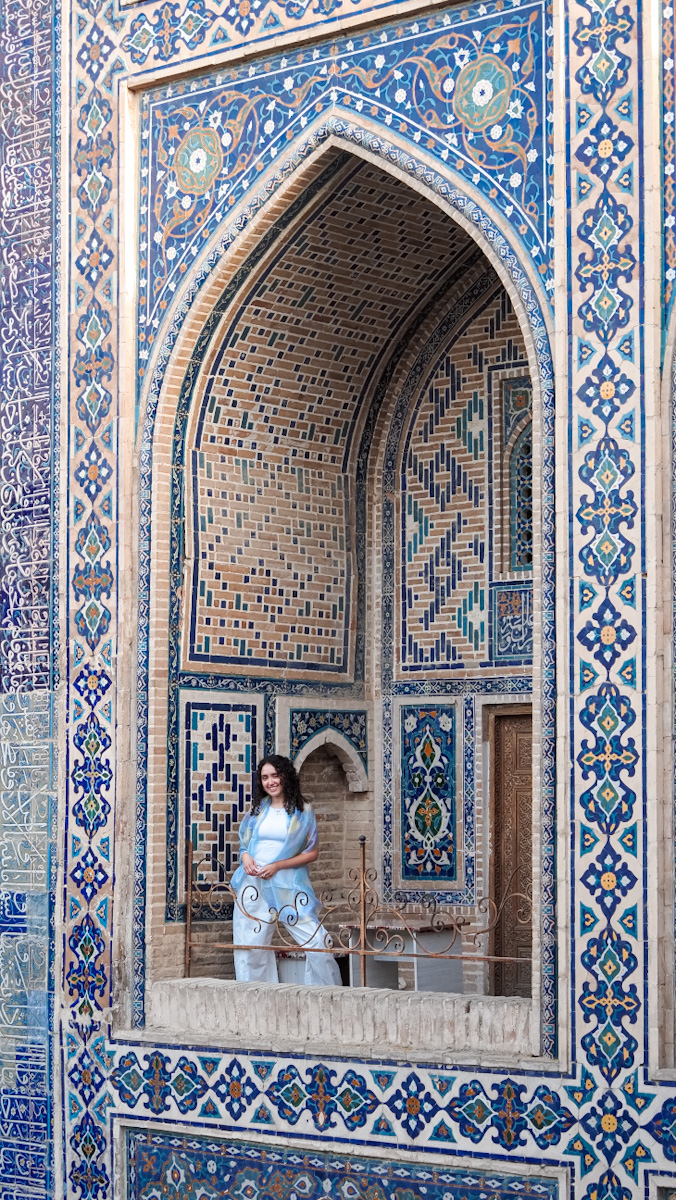
Shah-i-Zinda, which means “The Living King,” is one of the most breathtaking places in Samarkand. This necropolis, built between the 11th and 15th centuries, is a collection of mausoleums honoring nobles and relatives of Timur. The walkway is lined with intricate blue tilework that shimmers in the light, making it one of the most photogenic spots in the city. Get there early to slowly walk through and admire every arch and mosaic, each of which feels like stepping into a piece of living history.
Siyob Bazaar
Siyob Bazaar (aka Siab Bazaar), is Samarkand’s main market and one of the liveliest spots there. Located beside the Bibi-Khanym Mosque, it’s been a key trading hub since Silk Road times and has served as the city’s commercial heart for centuries. People come here for fresh produce, dried fruits, nuts, and the region’s famous flatbread. You can also shop for colorful ceramics, sip freshly pressed pomegranate juice (a MUST), and try the local halva (a sweet treat).
Other Historic Spots in Samarkand
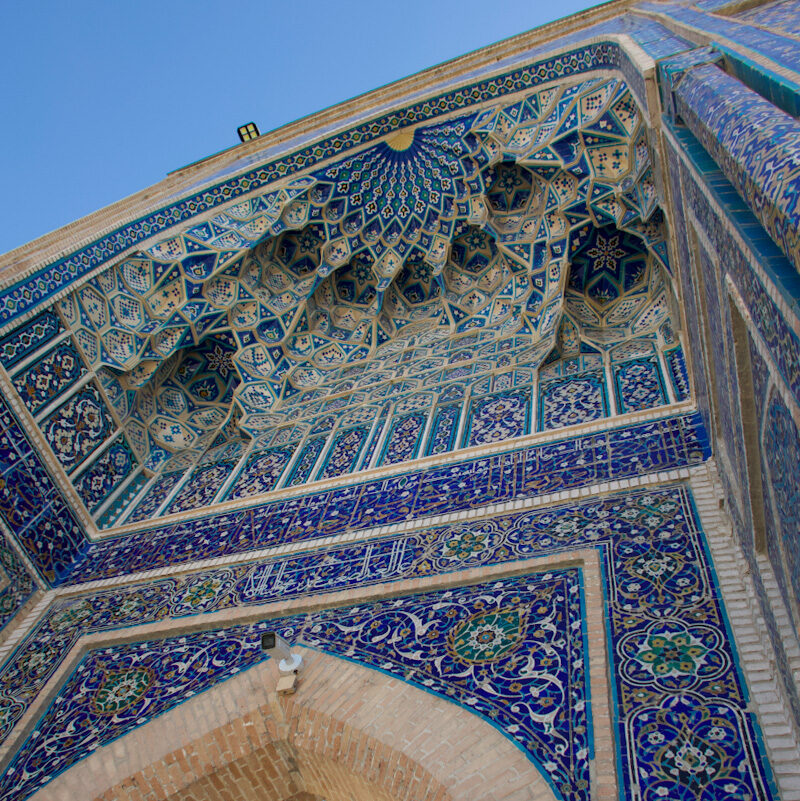
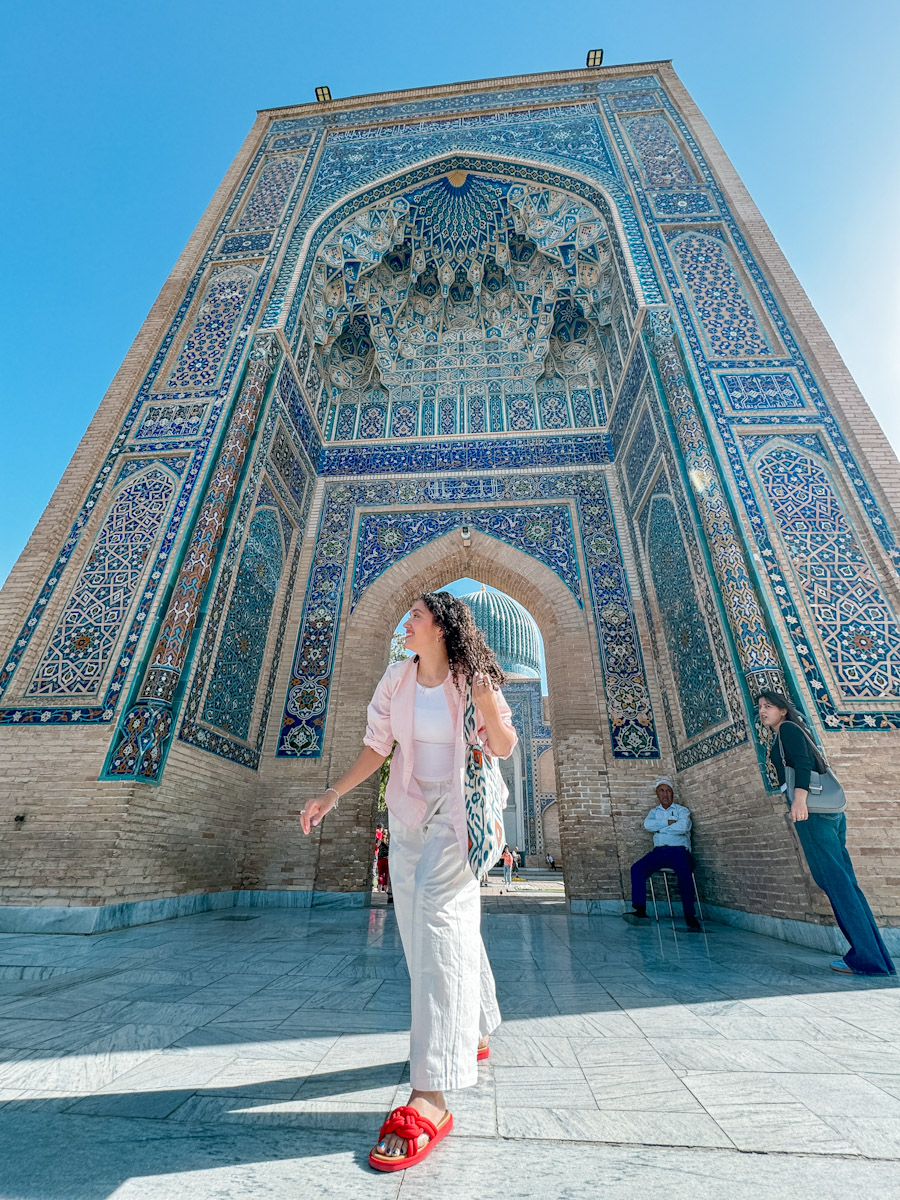
There are tons of other important historic landmarks, each revealing another layer of Samarkand’s Timurid legacy.
Bibi-Khanym Mosque, built in the 15th century after Timur’s campaigns, was meant to showcase the empire’s power and devotion. It was once one of the largest and most magnificent mosques in the Islamic world.
Gur-e-Amir, or “Tomb of the King,” serves as his mausoleum and holds immense significance as the resting place of the ruler whose empire helped shape Central Asia’s cultural and architectural identity.
Day 5 & 6: Bukhara
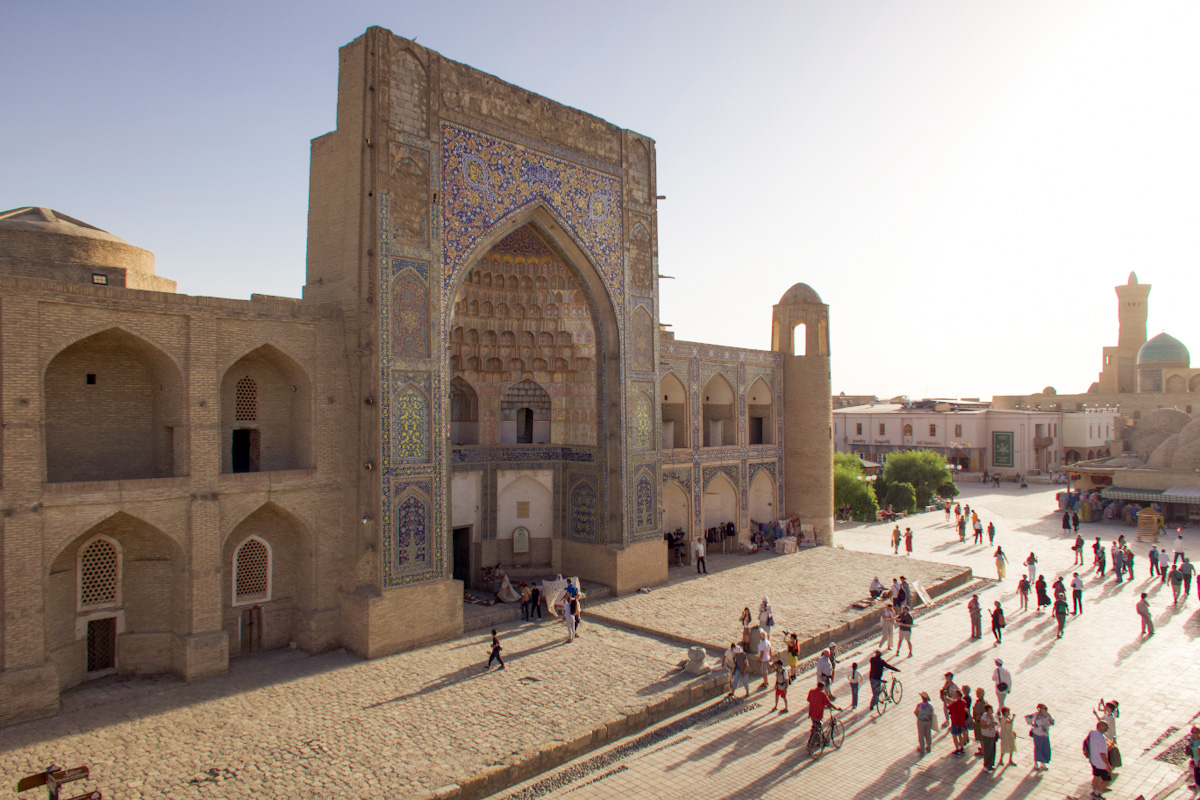
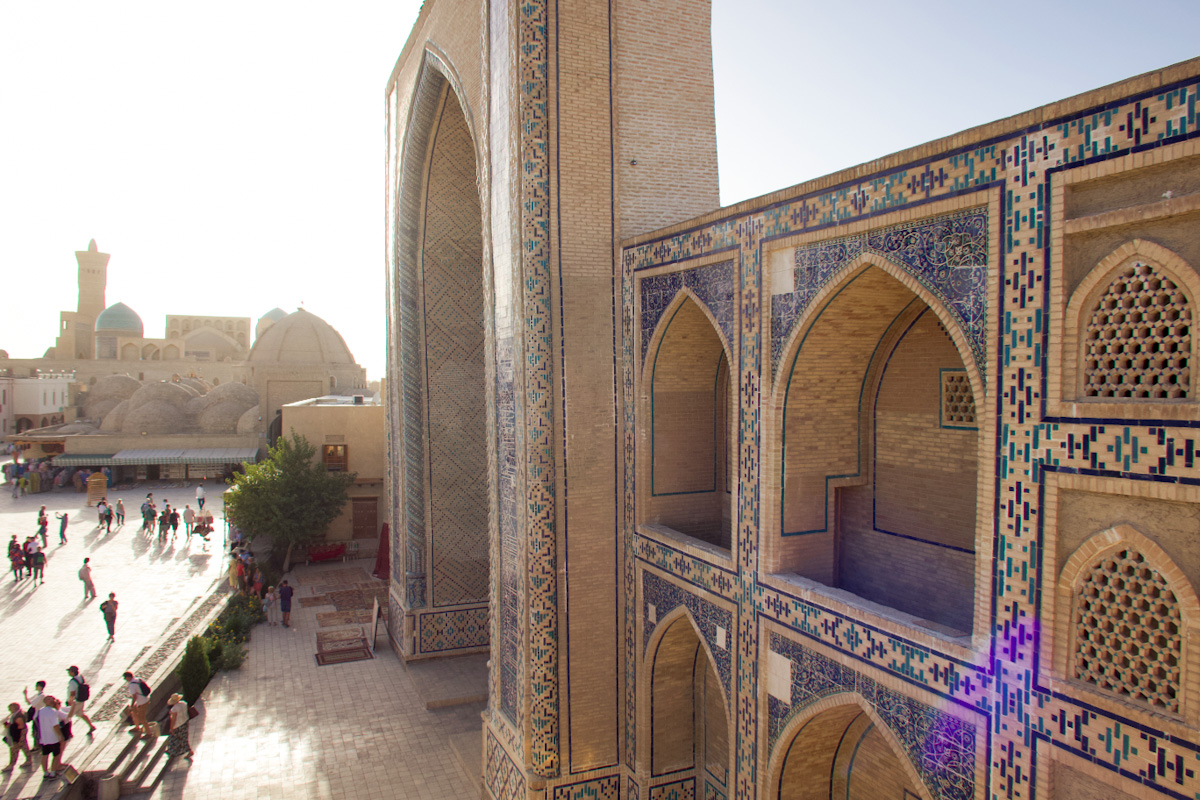
Bukhara is considered the holiest city in Uzbekistan and one of the best-preserved examples of a medieval Islamic city in Central Asia. Take the high-speed train from Samarkand for a little less than 2 hours, and you’ll get here. Tickets start at $16.
Once a major center of religion, scholarship, and trade along the Silk Road, Bukhara is now a living museum of mosques, madrasas, and winding streets where history feels alive in every corner. It was my favorite city from the entire trip, and I was lucky to visit it during Bukhara’s first International Art Biennale. Around 70 artists from around the world collaborated with local artisans, turning historic sites into open-air galleries that blended centuries-old architecture with modern creativity!
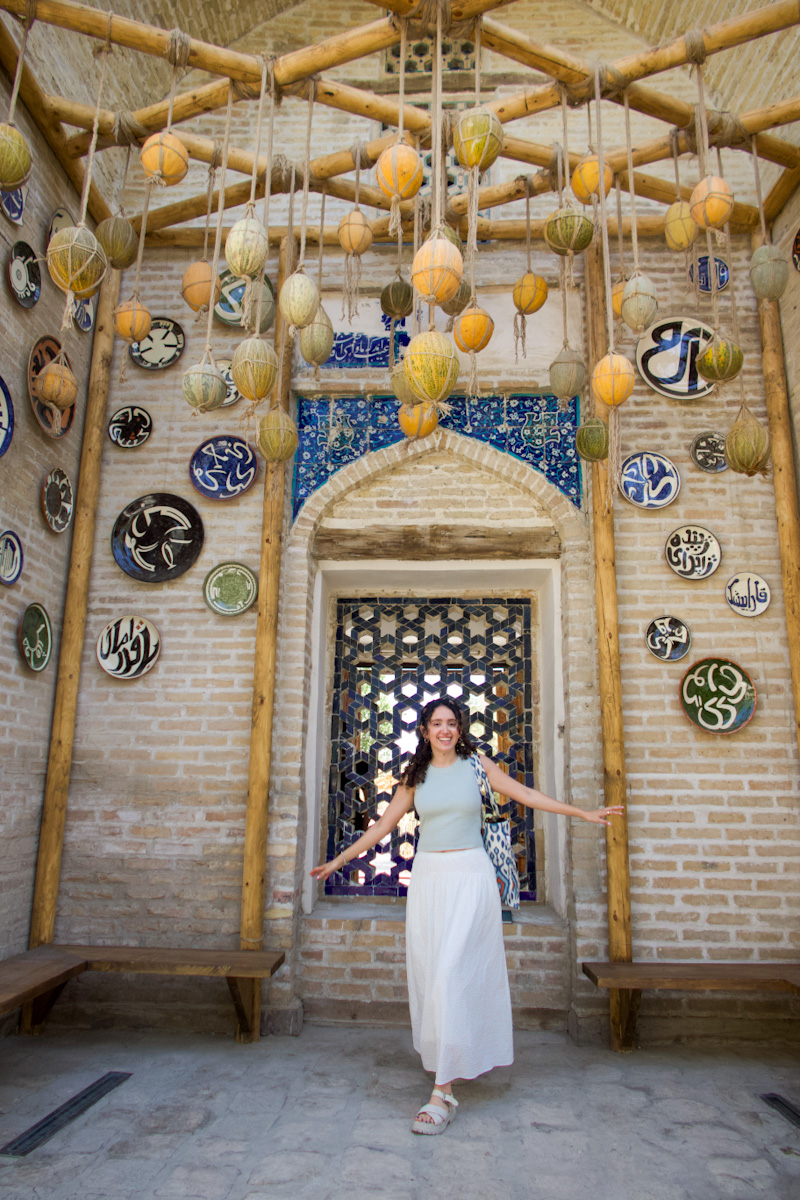
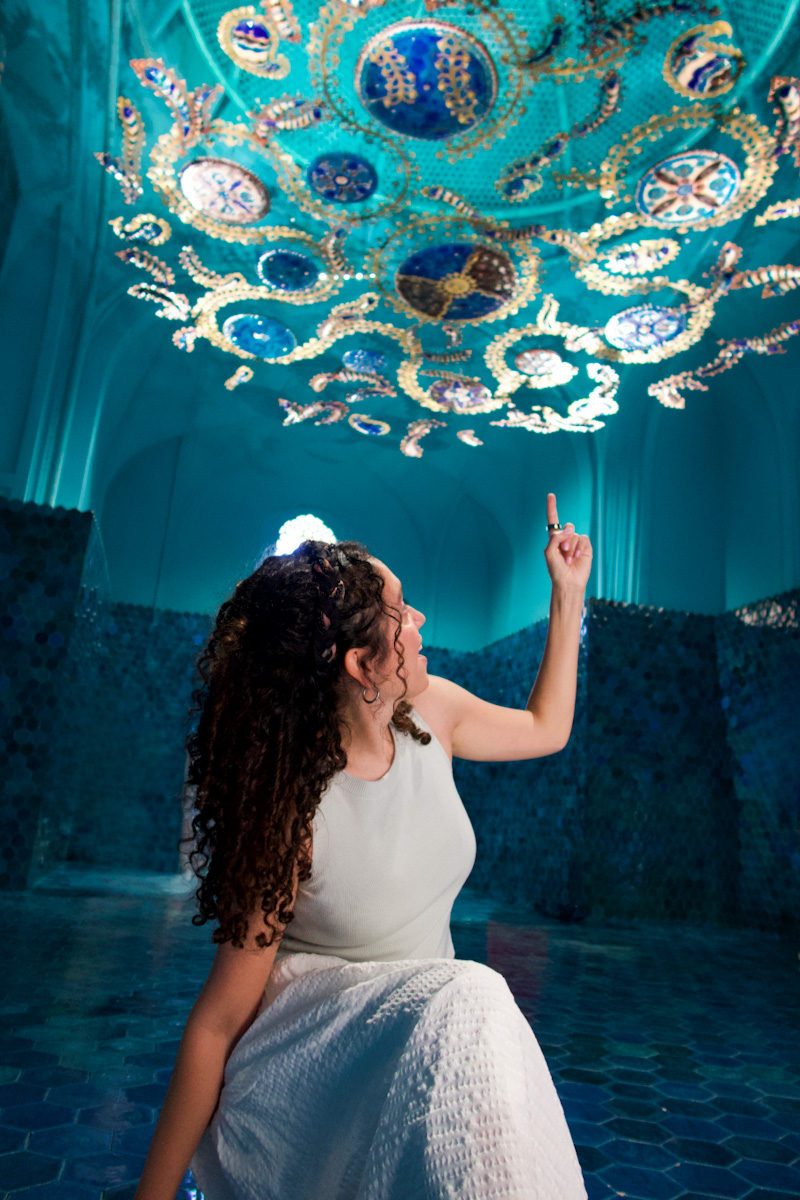
Ark of Bukhara ★
The Ark of Bukhara isn’t the most visually striking fortress at first glance, but its history is powerful. In fact, it’s the city’s oldest structure. This massive earthen citadel was once the seat of Persian emirs who ruled Bukhara for centuries, until it fell to Russian forces in 1920 during the Bolshevik invasion, which marked the beginning of Uzbekistan’s incorporation into the Soviet Union. Inside, you’ll find small museums, including Bukhara State Art-Architectural Museum-Preserve, which helps you contextualize the region’s natural history and archeology.
Kalyan Minaret ★
Like other minarets, the Kalyan Minaret was built for the call to prayer but later served as a watchtower in times of war, and, more grimly, as a place for public executions. People were reportedly thrown from the top on market days, when crowds gathered below, a stark reminder of how justice was once displayed in plain sight.
Mir-i-Arab Madrasa
Across from the Kalyan Minaret stands the Mir-i-Arab Madrasa, one of Bukhara’s most important religious schools and a masterpiece of Islamic architecture. Built in the 16th century, it’s one of the few historic institutions in Central Asia that continues its original purpose. Its intricate blue tilework and grand symmetry reflect Bukhara’s long-standing role as a center of faith and scholarship.
Cooking Class at Naqshband Craftsman Center ★

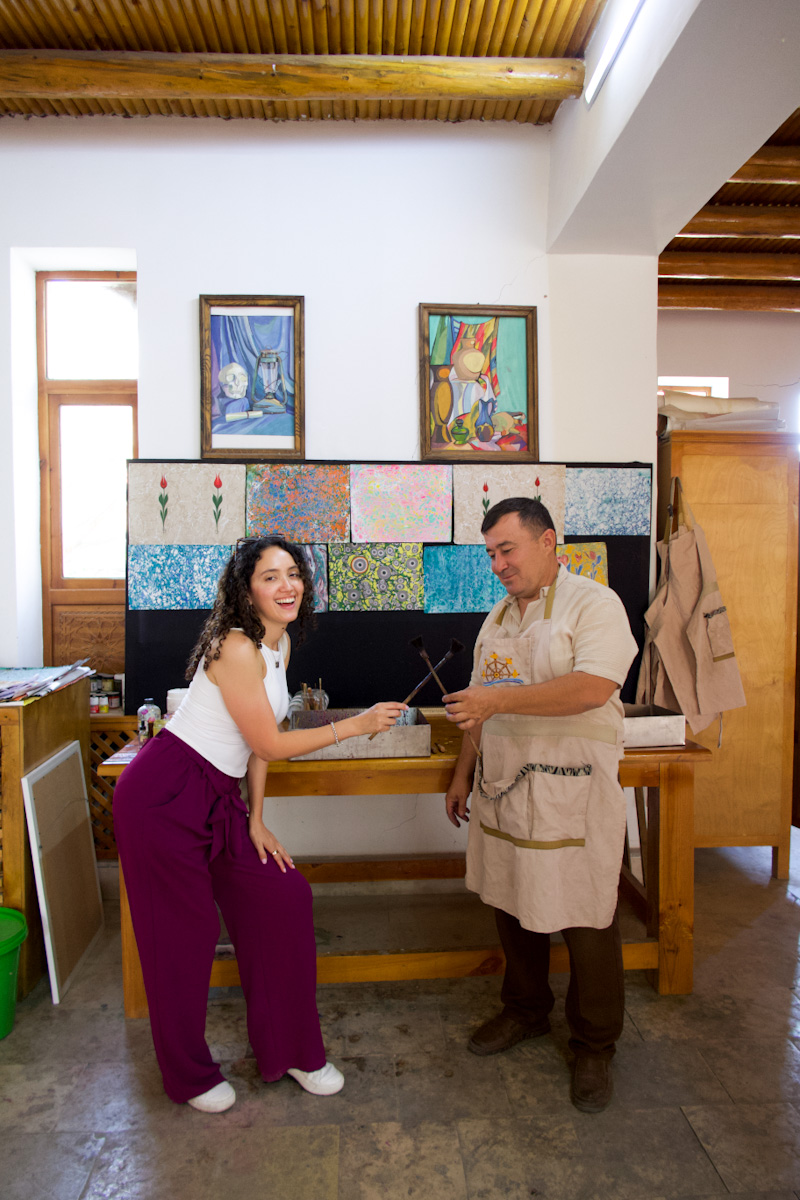
The Naqshband Craftsman Center is a creative space that’s part workshop, part hotel, restaurant, and art gallery. I joined a cooking class here and learned to make Uzbek staples like plov and samsa empanadas alongside local chefs. We made bread by hand with little stampers and put them in a clay oven called tandoor. They also offer hands-on activities like woodcarving, embroidery, and painting workshops, making it one of the most engaging cultural experiences in Bukhara.
Other Historic Sites in Bukhara
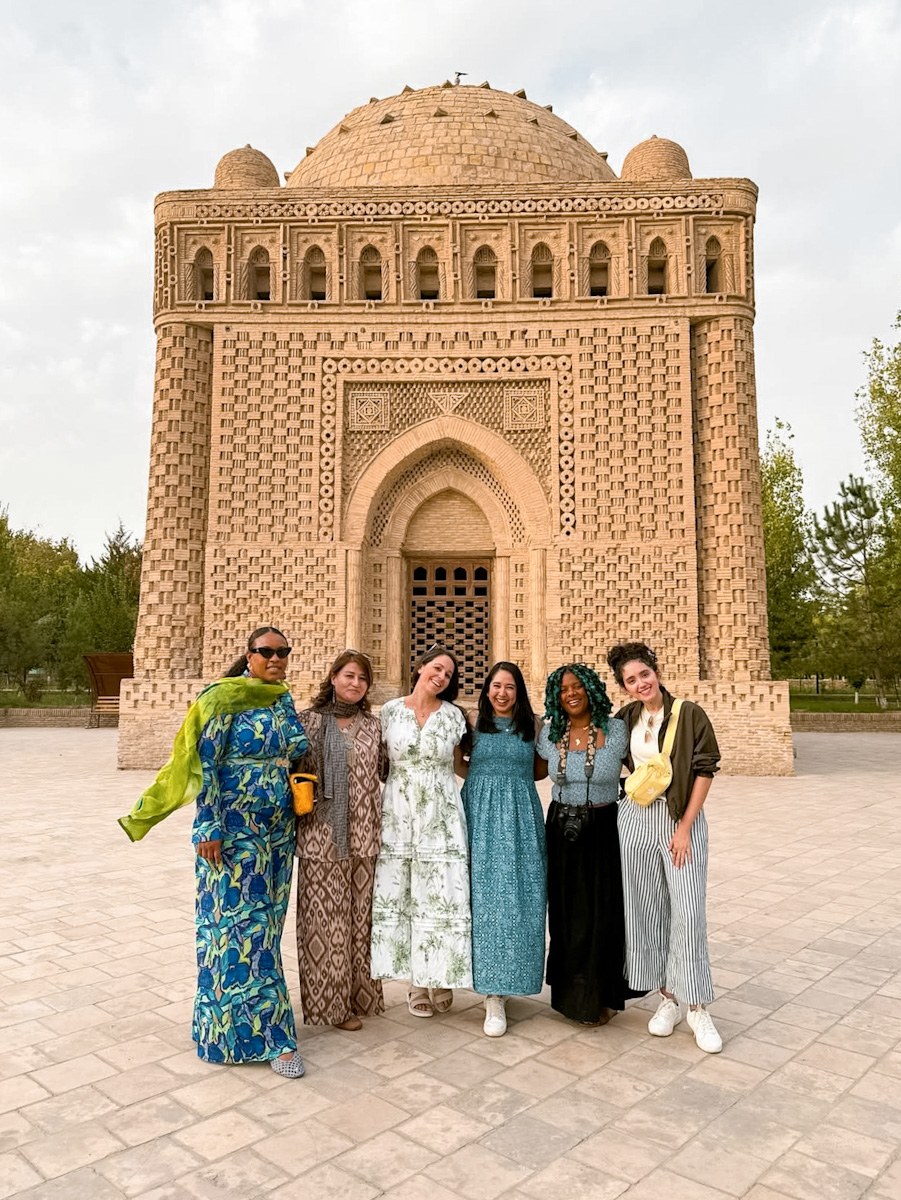
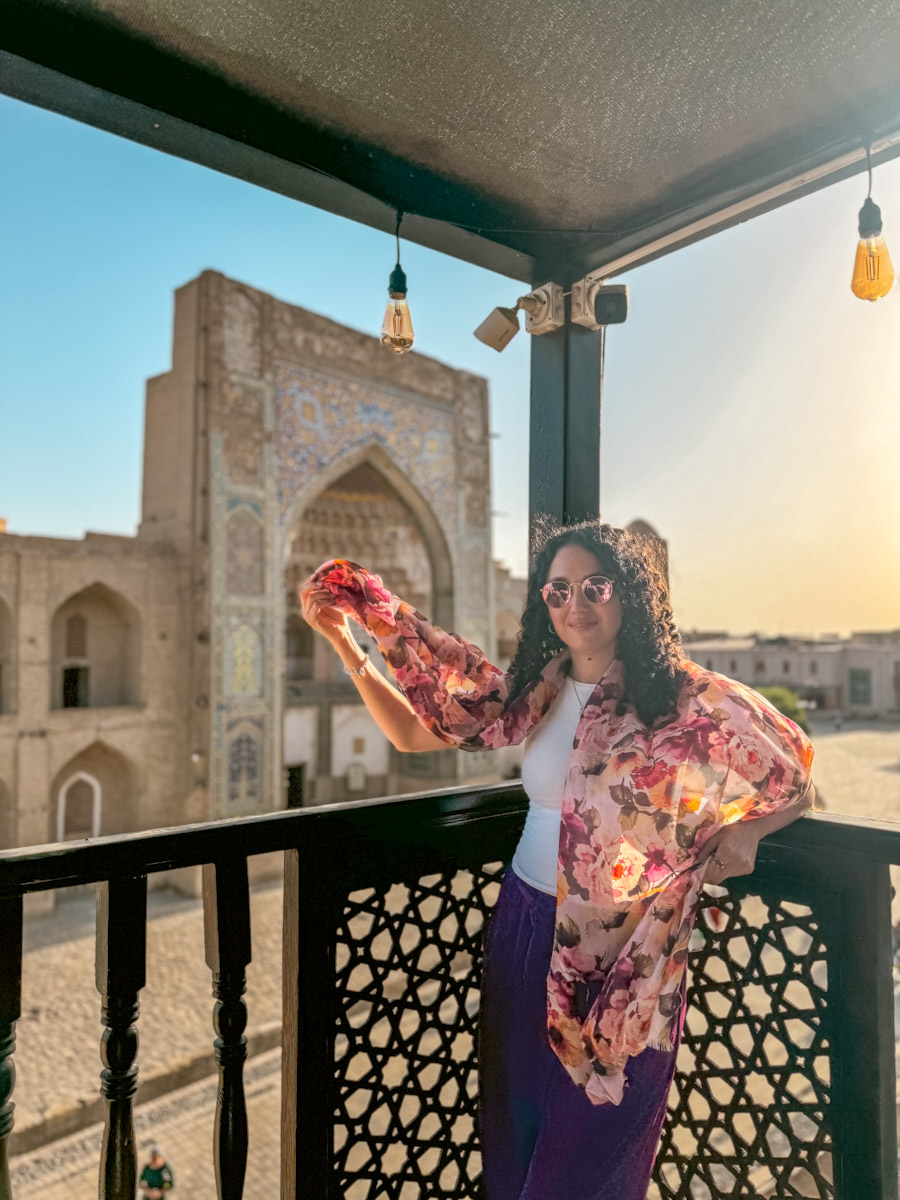
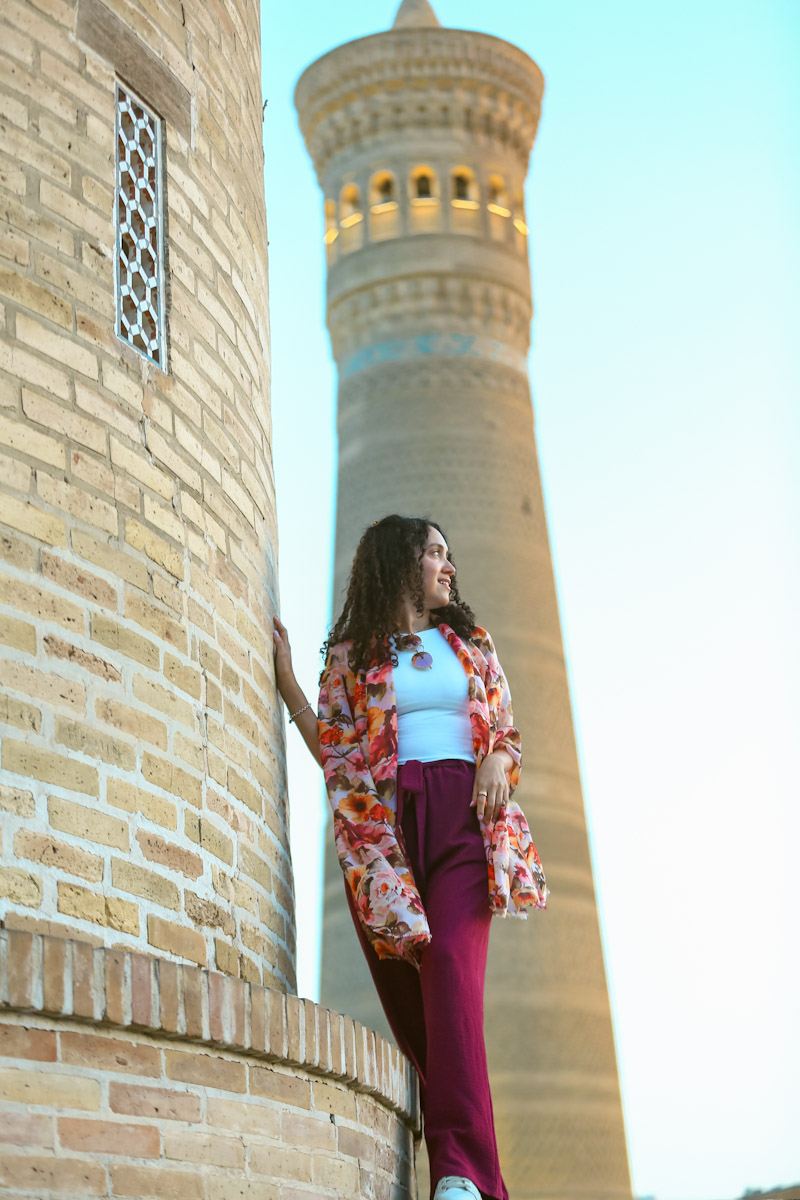
Bukhara has plenty of other historic spots, especially as you walk along the Old Town. Bolo Hauz Mosque is known for its elegant carved wooden columns. Nearby, the Ismail Samanid Mausoleum honors the rulers of the Samanid dynasty and stands as one of the oldest and most perfectly preserved examples of early Islamic architecture.
★ In the heart of the old city, Lab-i Hauz is one of Bukhara’s last remaining ponds and a favorite local hangout. It’s a spot surrounded by cafés where you can relax with tea or coffee beside the water.
Nadir Devanbegi Madrasah, an early 17th-century architectural monument nearby, is a lively stop with restaurants and is worth a quick wander rather than a dedicated visit.
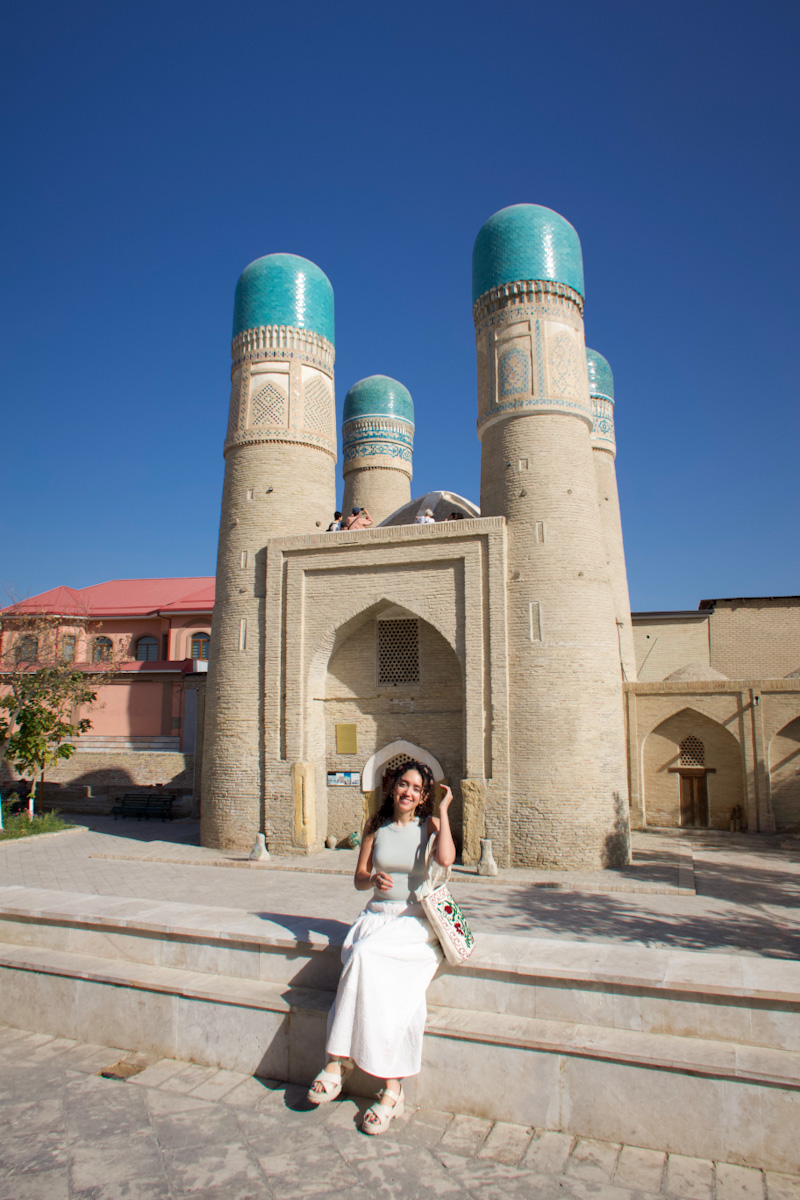
★ A short walk away, Chor Minor is easy to spot with its four turquoise towers, which are rumored to represent Judaism, Islam, Christianity, and Uzbekistan’s ancient Zoroastrian spirituality. I loved the antique shop right across from it for some really special finds, including antiques from the Soviet period.
For something quieter, head about 5 km outside the city to Chor-Bakr, a memorial complex built over the resting place of Abu-Bakr-Said a descendant of the Prophet Muhammad.
Day 7 & 8: Khiva
Khiva is home to Central Asia’s first UNESCO World Heritage Site, the walled inner city of Itchan Kala, which feels like an open-air museum where you can walk through centuries of history, surrounded by turquoise-tiled minarets, ancient mosques, and lively artisan workshops.
Take the 6-hour train ride from Bukhara to get here. Tickets start at $13.
The Khanate of Khiva was also a major center of the slave trade in Central Asia from the 17th century until Russian conquest in 1873.
Itchan Kala ★
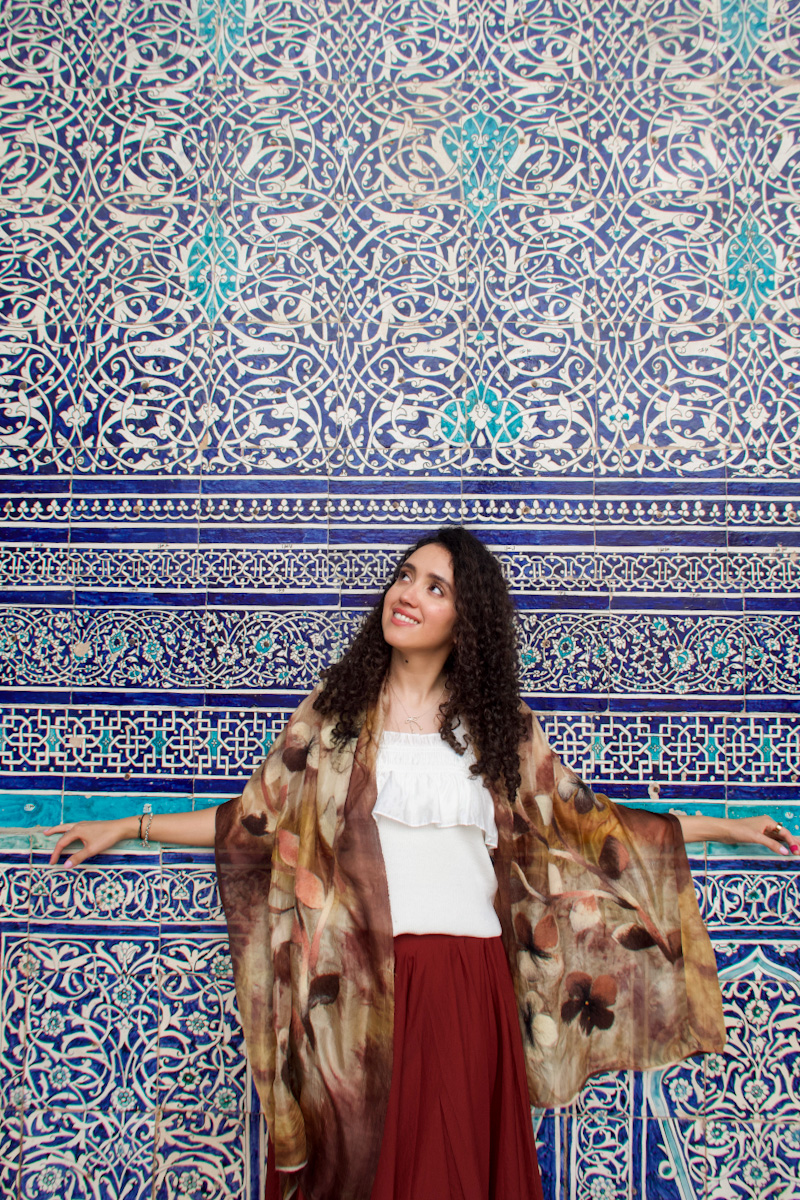
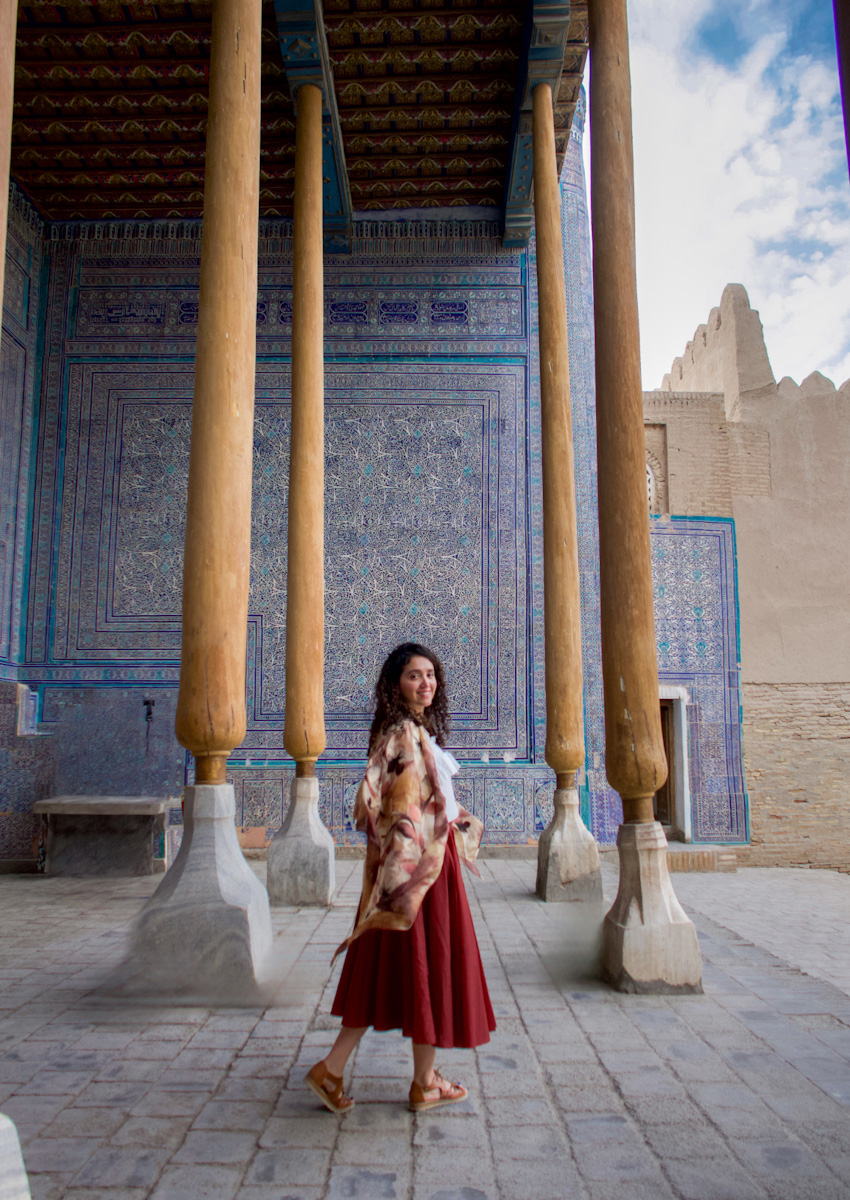
Spend 2-ish days slowly wandering through this fully preserved walled city that feels frozen in time. It’s enclosed by sunbaked mudbrick walls and four grand gates: Ota Gate (west), and Bogcha Gate (north), Tosh Gate (south), and Polvon Gate or Slave Gate (east).
Inside, you’ll find the striking Kaltaminor ★, an unfinished turquoise-tiled minaret that was meant to be the tallest in Central Asia. Nearby is the Muhammad Aminkhan Madrasah ★, once a center of Islamic learning and now a hotel, and the Juma Mosque ★, known for its ancient, beautifully carved wooden columns.
You can also explore the Konya Ark, the old fortress and palace complex where Khiva’s rulers once lived, and the Pahlavon Mahmud Mausoleum, the ornate resting place of the city’s revered poet-saint Pahlavan Mahmud.
The Toshhovli Palace ★, meaning “Stone House,” is one of Khiva’s most impressive royal residences and an important part of the Itchan Kala UNESCO World Heritage Site. Built in the 19th century for the Khivan khans, it was designed to display the finest local craftsmanship, with walls covered in colorful mosaics, hand-carved wooden pillars, and painted ceilings that reflect the grandeur of royal life.
Do not miss out on seeing Itchan Kala come alive at night with lights! It is gorgeous. For this, I recommend staying within the old city.
Go Shopping & Watch Artisans at Work
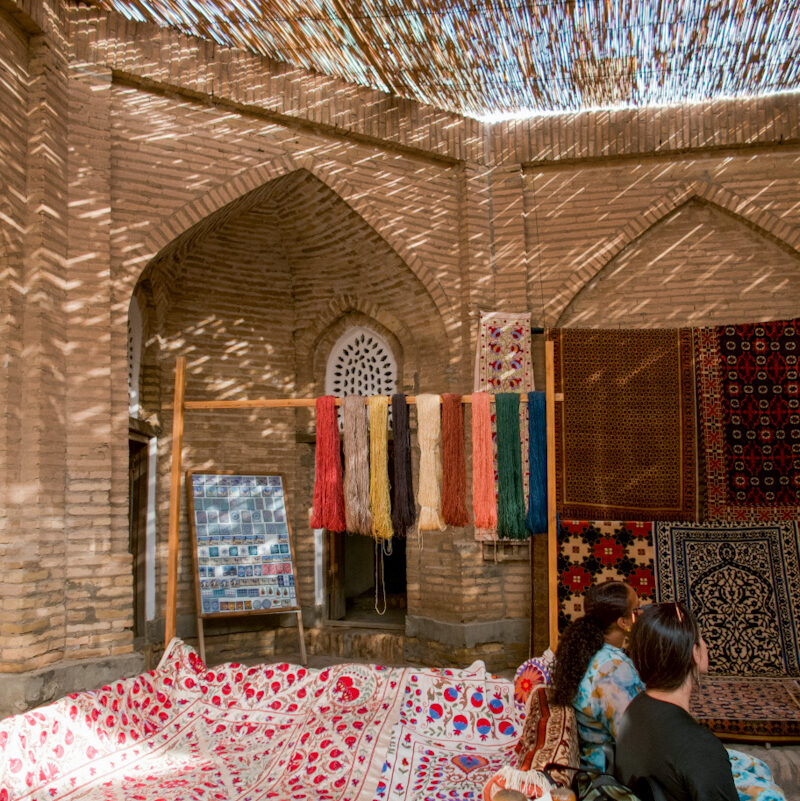
The streets of Khiva’s inner city have some of the coolest outdoor markets. Khiva’s crafts have their own distinct charm, shaped by the desert city’s rhythm and traditions. I visited a silk workshop and found scarves made from camel wool and hand-dyed silk, each one full of color and character. You’ll also find gorgeous fur and chugurmas hats made from sheep’s wool, detailed woodcarving, and bright handwoven rugs that can take months to finish. Everything here feels handmade and heartfelt, making Khiva one of the best places in Uzbekistan to shop for local crafts.
I passed a big bazaar market, but when I went back later to stop in, it was closed! So look out for that indoor market, it looked amazing.
Heading Back Home: Routes & Tips for Efficiency
When going back to the USA from Khiva, these are the best 3 options. Note: Uzbekistan Airways’ direct JFK route runs three times per week!
- Option 1: Take the domestic flight from Urgench airport to Tashkent with Uzbekistan Airlines (1 hour, 20 minutes). Layover in Tashkent may take 1 hour. Take the direct flight from Tashkent to New York.
- Option 2: Take a flight from Urgench to NYC with a layover in Istanbul. With 2-4 hours layover, then fly from Istanbul to NYC.
A quick heads-up before your long flight home: The Tashkent to JFK route, nonstop with Uzbekistan Airways in economy, can fill up and get very busy, with lots of families and kids, so the cabin can feel lively. If possible, upgrade to business class or reserve your seat early, as the flight is usually overbooked and lines form hours before boarding. You’ll actually wait less in line if you get there later (like 1 hour and 40 minutes before the flight, and no more than that). It’s all part of the experience, but a little preparation goes a long way toward making the flight more comfortable.
Where to Stay in Uzbekistan
- Tashkent: Hilton Tashkent City is a great luxury option with a spa experience that you shouldn’t miss! It’s right across the Tashkent City Park and is a few steps from Tashkent City Mall.
- Khiva: Farovon Khiva Hotel for luxury or Ulli Oy Boutique Hotel & Terrace if you want to stay within the fortress wall, which I highly recommend.
- Bukhara: Mercure Bukhara Old Town is a nice luxury option with pool and hammam. For something more budget-friendly, Minzifa Boutique Hotel is an excellent choice that’s a few steps from Lab-i Hauz.
- Samarkand: Stay at Kosh Havuz Boutique Hotel for an high-end experience just steps from Registan Square. For somewhere quieter, consider Savitsky Plaza Hotel or the 5-star hotel Hilton Samarkand Regency, a mid-range option 20 minutes away.
Key Tips for Your Uzbekistan Trip
- READ THIS BOOK before you go. It is SUCH a great account of Central Asian culture, history, and travels.
- Secure your visa in advance, as the website is a bit antiquated and prone to glitches, including photo upload issues.
- The major languages in Uzbekistan are: (1) Uzbek, a Turkic language, (2) Russian, and (3) Tajik, a Persian dialect.
- Try to get a good guide who loves history and storytelling. They will bring historic places to life with context and insights!
- Hop on the high-speed train (Afrosiyob) to get between these major cities. It’s fast, easy, clean, and starts around $20 for a 200-mile (2-hour) ride.
- Use Yandex for local rides. It’s their version of Uber, and fares are super affordable at about $2 for 20 minutes. Download it BEFORE you get to Uzbekistan, as sometimes there are issues with getting the verification code text.
- Leave room in your luggage (or bring an extra duffel) for crafts/souvenirs. You’ll find beautiful local artisan treasures you won’t want to leave behind! Silk scarves here are so beautiful that I ended up getting one in every city I visited, usually priced between $10 and $40.
- Bring cash; while cards are accepted in big cities, everywhere else, cash is king, especially outside Tashkent.
- Stay hydrated and pack sunscreen to beat the summer heat, especially when exploring outdoor sites.
- Wear loose clothing and pack layers. Remember, this is desert topography, so the weather swings from day to night.
- Pack this EU electrical outlet.
My Other Posts About Central Asia
- How to Plan the Best 10-Day Turkey Itinerary
- 10 Amazing Experiences in Istanbul (and 2 to Skip!)
- Mongolia Travel Tips for First-Time Visitors
- Is Georgia (the Country) Worth Visiting?