


Who are the taino*?
The Taino* people are believed to have originated from an Arawak tribe in Venezuela, where they voyaged from and to the Caribbean islands (likely on a canoe) around 400 BC. Some sources think there were already other indigenous people on these islands long before that. But either way, it’s interesting that some of the first Dominicans came from Venezuela because in recent years thousands (if not hundreds of thousands) of Venezuelans have been migrating in waves to the Dominican Republic due to the political turmoil.
*Who the Taino are comprised of exactly is also largely debated with some researchers claiming that the Taino were just one sect of different types of indigenous groups on the island along with others such as the Ciboney and Caribs.
Their exact numbers before European colonization is not known. However, “some scholars estimate the Taíno population may have reached more than three million on Hispaniola alone as the 15th century drew to a close, with smaller settlements elsewhere in the Caribbean” – Smithsonian
It’s important to remember that a lot of the information that we have about the Tainos and much of our Dominican history today is by the Europeans who committed genocide and slavery against them all.
Historians say that the Taino people called the island Quisqueya (mother of all lands) and/or Ayiti (land of high mountains). “Ayiti has been verified as a word the Tainos used, though that is not the case for Quisqueya. Nonetheless, the Dominican Republic has identified with the name Quisqueya and Haiti kept Ayiti.” – ChinoSurf.
TAINO CULTURE
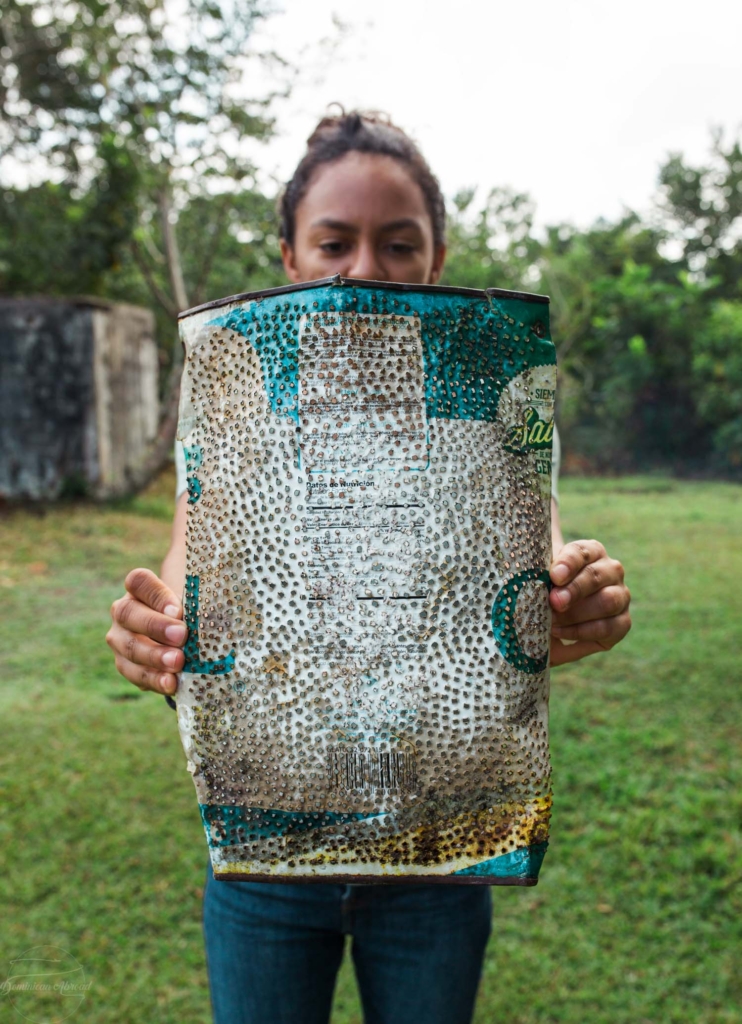
The Taino people were said to be very clean (especially relative to Europeans), used palms for roof, smoked tobacco, and ate yuca (cassava). Yuca was the principal root crop followed by sweet potato (batata). Yuca could be grown for 10-12 months and then kept in the ground for up to 3 years (Source: Irving Rouse). Yuca was grated in a “guayo” (Taino word used today) with the poison squeezed out and the flour was used to make casabe which could be preserved for longer periods of time.
TAINO HIERARCHY
The Taino had a hierarchy of three classes:
- Naborias: the working class
- Nitainos: included religious leaders, noble bloodline, and medicinal leaders
- Cacique: Chiefs. A hereditary position and both men and women could serve as chiefs.
Source: To Puerto Rico
TAINO RELIGION
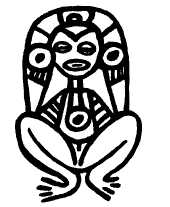
Taino religion had several figures.
Atabey: Pictured here is the supreme goddess of the Taino people symbolizing fertility, the earth and its water. Her son is Yúcahu the Taino figure of fertility, water, and yuca.
The European colonizers explored the world in the name of spreading Christianity and finding gold. They would send missionaries to forcefully convert the Taino to Christianity.
The First Taino Converts/Martyrs: The Taino would sometimes plant figurines representing deities in the fields in the hopes of a successful crop harvest, and then they would water them down with their urine. So when they did the same thing to the Christian images given to them, Columbus’ brother Bartholmew ordered them burned alive in a public execution. Source: Ramon Pane.
CHIEFDOMS/CACICAZGOS
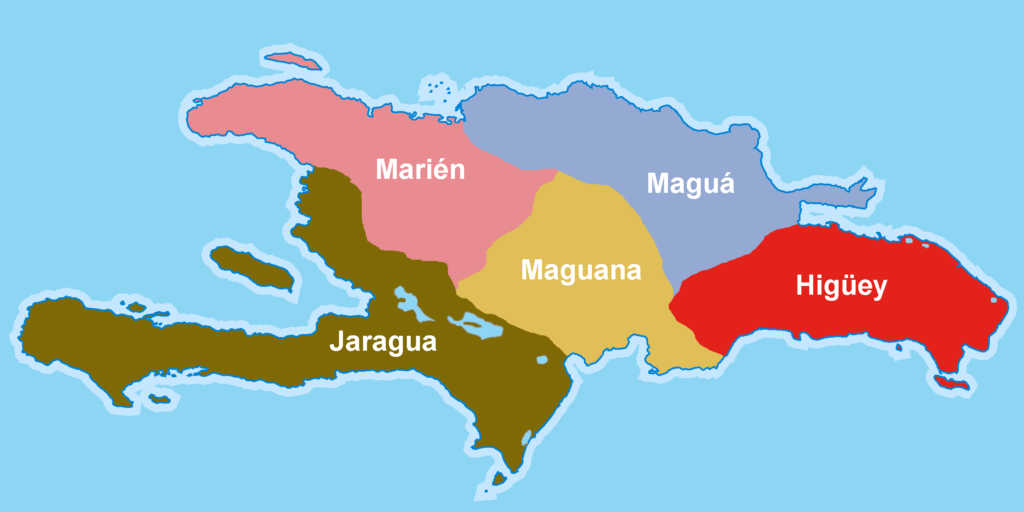
The island of Hispaniola (Haiti & DR) consisted of five chiefdoms (cacicazgos):
- Marién
- Maguá
- Maguana
- Jaragua
- Higüey
Taino Legacy Today
taino legacy today
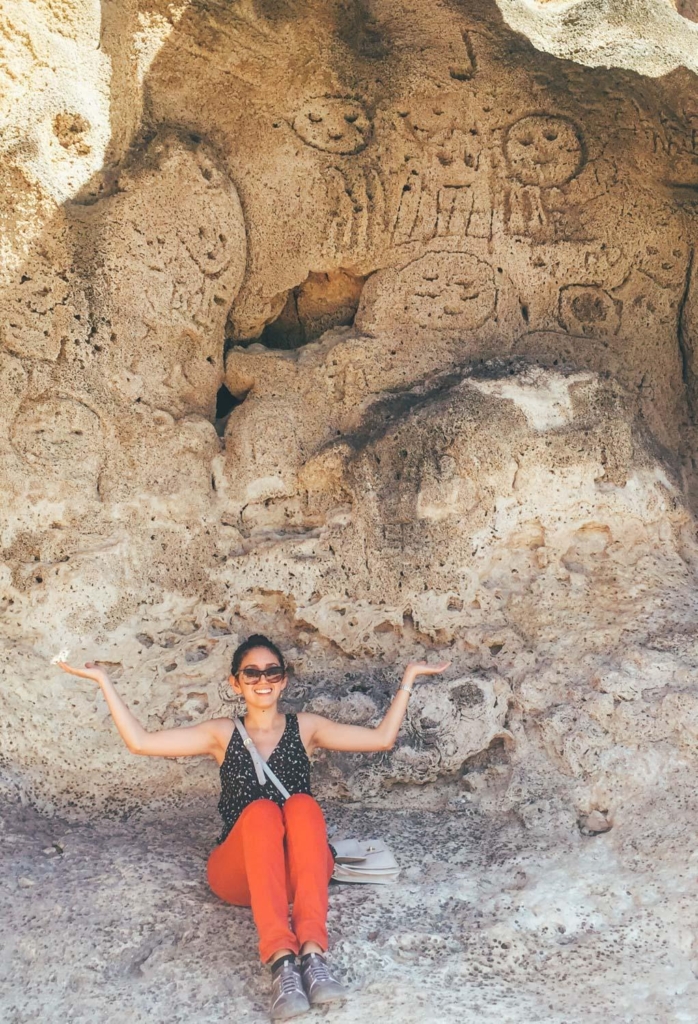
There is no known written history from the Taino/Arawak people. What is left of their legacy is in our cultural influences (such as food, medicine, crafts, words, art, cave symbols, and music). The legacy can be found more prominently in “isolated communities [like the campos where we’re going] where people carry on traditional methods of architecture, farming, fishing and healing.” -Smithsonian
And of course, in our genetic heritage. By 1514 (20 years after Columbus’ arrival) approximately half of Spaniard men had married Taino women (source). The pocket of a famous Taino settle where Enriquillo led his 600 followers is in the town of Sabana de los Javieles in Monte Plata. In the 1950s, researchers found “high percentages of the blood types that are predominant in Indians in blood samples they took here. In the 1970s, dental surveys established that 33 out of 74 villagers retained shovel-shaped incisors, the teeth characteristic of American Indians and Asians.” –Smithsonian
Taino words used today: hamaca, barabacoa, canoa, tabaco, huracan, yuka, batata, guayo, papaya, etc.
“They came to the ship with dugouts that are made from the trunk of one tree, like a long boat, and all of one piece, and worked marvelously in the fashion of the land, and so big that in some of them 40 and 45 men came. And others smaller, down to some in which came one man alone. They row with a paddle like that of a baker and go marvelously. And if it capsizes on them they then throw themselves in the water, and they right and empty it with calabashes that they carry.” – Christopher Columbus’ Journal
ICONIC TAINO LEADERS TO KNOW
GOOD READS ON THE SUBJECT
THE DOMINICAN READER
Lorem ipsum dolor sit amet, consectetuer adipiscing elit, sed diam nonummy nibh euismod tincidunt ut laoreet dolore magna aliquam erat volutpat.
What Became of the Taino?
Lorem ipsum dolor sit amet, consectetuer adipiscing elit, sed diam nonummy nibh euismod tincidunt ut laoreet dolore magna aliquam erat volutpat.
CHRISTOPHER COLUMBU'S JOURNAL
ASFASFAA